Prøve GULL - Gratis
A Tale of Two Hot Sauces: Spicing Up Diversification
MIT Sloan Management Review
|Summer 2024
The contrasting paths of two hot sauce manufacturers show that managing exposure on multiple fronts is essential.

IT WAS THE BEST OF TIMES, IT WAS THE worst of times. The divergent fates of two rival condiment businesses — the best of times for McIlhenny Company, maker of well-known Tabasco-brand hot sauces, and the worst of times for Huy Fong Foods, originator of the U.S. version of the popular Sriracha pepper sauce — highlight the power and perils of diversification. While McIlhenny took strategic steps to diversify with future performance and risk in mind, Huy Fong failed to capitalize on its wild initial success, making missteps that ultimately rendered the former market leader an also-ran in hot sauce, even in the subcategory Huy Fong itself created.
The cases of McIlhenny and Huy Fong illustrate the right and wrong ways to diversify.
150 Years of Hot Sauce
Hot sauces, used to spice up a wide variety of main dishes, sides, and snacks, are simple products containing a limited set of ingredients such as pepper mash, vinegar, salt, garlic, and sugar. With the exception of the peppers, these are typically commodity inputs. Thus profit in this industry is realized by selling a unique product at scale with strict control over input costs.
McIlhenny, now in its fifth generation of family ownership, has been producing food products since the late 1800s, starting with its best-known “original” line of hot sauce. The business carefully manages the particular kind of peppers its contract farmers must grow and source from multiple suppliers on multiple continents, as we’ll discuss below. In 2014, McIlhenny started producing its own brand of Sriracha sauce based on the growing demand for these products.
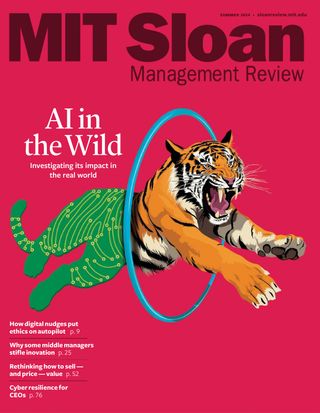

Denne historien er fra Summer 2024-utgaven av MIT Sloan Management Review.
Abonner på Magzter GOLD for å få tilgang til tusenvis av kuraterte premiumhistorier og over 9000 magasiner og aviser.
Allerede abonnent? Logg på
FLERE HISTORIER FRA MIT Sloan Management Review

MIT Sloan Management Review
Assess What Is Certain in a Sea of Unknowns
Understanding what won't change clarifies what might — and strengthens decision-making in volatile times.

13 mins
winter 2026

MIT Sloan Management Review
Ask Sanyin: Why Is It So Hard to Pull the Plug on a Project?
We're finding it difficult to wind down projects that no longer serve our priorities.
2 mins
winter 2026

MIT Sloan Management Review
Integrate Sustainability and Innovation to Find New Opportunities
Five common innovation practices can help leaders pursue sustainability as a growth strategy.
12 mins
winter 2026

MIT Sloan Management Review
The Case for Quiet Corporate Activism
Leaders concerned that they will be penalized for championing sustainability and diversity can still sustain their commitments.
11 mins
winter 2026

MIT Sloan Management Review
The Perils of Algorithmic Pricing
Some revenue management systems based on algorithms may lead to unintended collusion and antitrust violations.
9 mins
winter 2026

MIT Sloan Management Review
Broadening Future Perspectives at the Bank of England
Leaders at the U.K’s central bank sought to broaden their thinking about future risks and opportunities. Here’s how they built longer-term horizon-scanning capabilities and what they learned along the way.
9 mins
winter 2026

MIT Sloan Management Review
How Nesting Changes Platform Strategy
Should your platform host another platform — or be hosted by one? Here's how to think through the choices.
14 mins
winter 2026
MIT Sloan Management Review
Are You an Authentic Leader or an Authentic Jerk?
Leaders who are true to their values can inspire trust and respect, but not if \"being yourself\" becomes the problem.
13 mins
winter 2026

MIT Sloan Management Review
How to Make Scenario Planning Stick
Developing future scenarios can deepen leaders’ strategic insights. Establishing scenario planning as an ongoing capability and reaping its full benefits require linking it to other processes.
16 mins
winter 2026

MIT Sloan Management Review
A Faster Way to Build Future Scenarios
This streamlined approach to scenario planning incorporates AI and helps managers navigate future uncertainties more efficiently.
13 mins
winter 2026
Listen
Translate
Change font size