Prøve GULL - Gratis
The Reclusive Retailer
Fortune India
|November 2025
A PRIVATE BRAND STRATEGY, ALONG WITH A BUSINESS MODEL FOCUSSING ON SHORT-TERM 'PAIN', BUT LONG-TERM GROWTH—P. VENKATESALU HAS FOLLOWED HIS MENTORS' RULEBOOK ΤΟ Α ΤΕΕ.
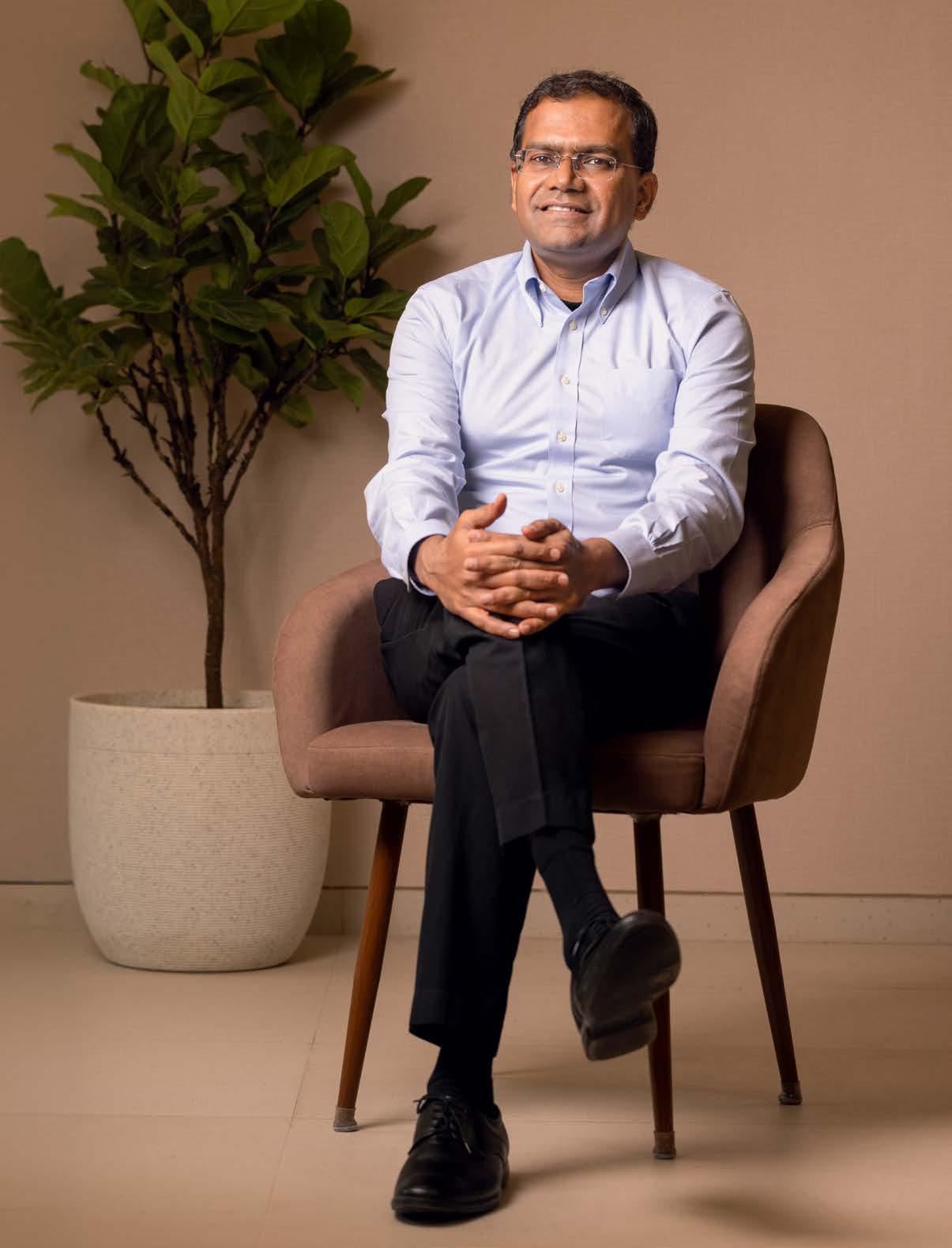
P. VENKATESALU, managing director, Trent, comes across as shy and reclusive, quite similar to his boss, chairman Noel Tata. “We have preferred to stay quiet unlike some of our group companies which are more outgoing,” he says, visibly conscious and uncomfortable of the cameras focussing on him. Once he settles down in the couch with some piping hot chai in the signature blue and green stripped Westside mug, he seems more at ease. A thoroughbred Tata employee, Venkatesalu joined the group through TAS (Tata Administrative Services) in 2001 and has been with Trent since 2008, first as CFO and now MD.
Like most Tata companies, the playbook at Trent was also to build a robust business rooted in the Tata culture. Chasing growth was never the plan. The retail industry playbook, on the contrary, was to run after hyperactive growth. When Trent launched its flagship format, Westside, in 1998, it already had competition from the likes of Shoppers Stop and Lifestyle, which were a house of third-party brands. The departmental store concept was new, and selling a portfolio of brands under a single roof did lead to fast-paced growth. But the growth came at the cost of profitability. The per-sq.-ft revenue of most retailers wasn’t sustainable, and they often ended up with unsold inventory. While competition kept tweaking inventory and cutting down not just the number of stores but also the size of each store, Noel and his mother Simone Tata decided to stay away from the brand frenzy. They chose to be a private label store, a concept that global stalwarts such as Zara, H&M, and Marks & Spencer had mastered quite well.
“What Mr Tata and his mother said was that we need to be differentiated. They said, let’s take an approach where, even if it is slower to build equity, let's build something more differentiated from what’s available in the market. That ethos has stayed with the business even today,” says Venkatesalu.

Denne historien er fra November 2025-utgaven av Fortune India.
Abonner på Magzter GOLD for å få tilgang til tusenvis av kuraterte premiumhistorier og over 9000 magasiner og aviser.
Allerede abonnent? Logg på
Listen
Translate
Change font size