Prøve GULL - Gratis
Stolen Style
Forbes India
|March 06, 2026
The increasing problem of plagiarism in the fashion industry raises pressing questions about originality, ownership and survival in the digital age, despite laws in place
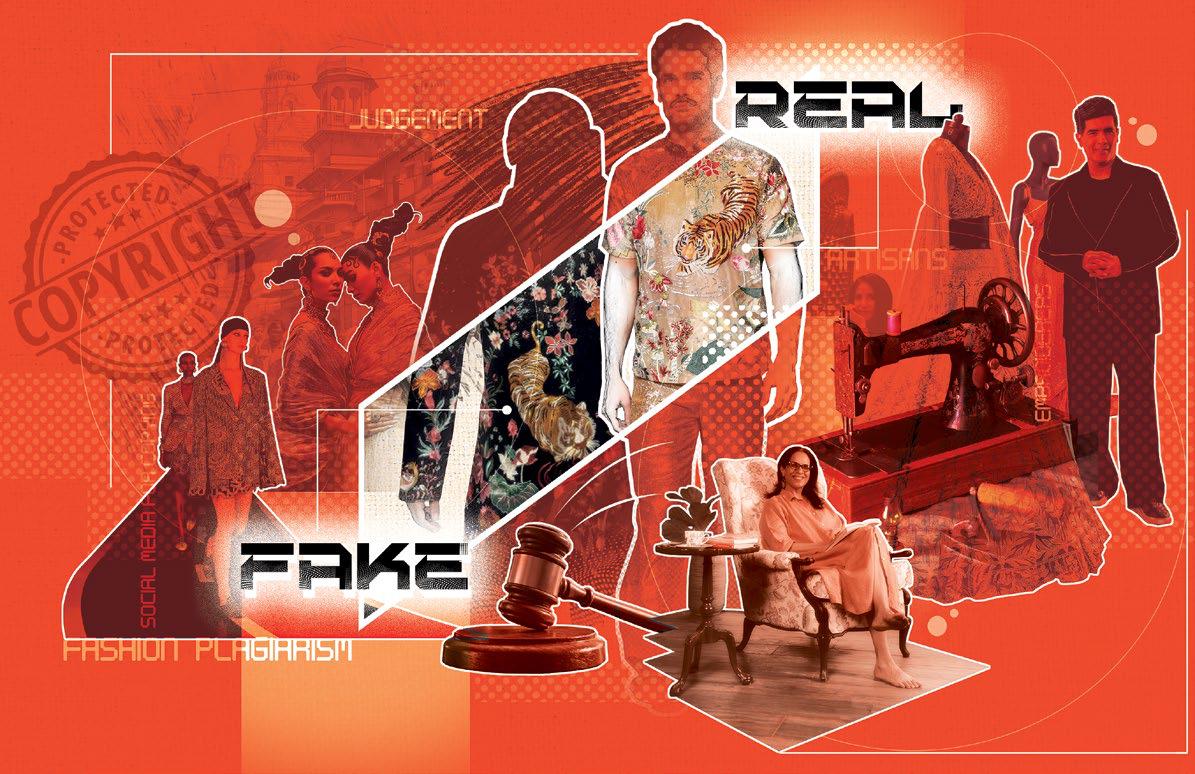
Yeh toh copy kar liya, hume kaam kahan se milega! (This has been copied. How will we earn our livelihood?)" The question came from one of Rahul Mishra's embroiderers when he spotted a celebrity wearing a copy of Mishra's Tigress Artistic Work designs on a television show. This happened in November 2024, laying bare the invisible cost of fashion plagiarism—not just lost designs, but also lost dignity and livelihoods.
Mishra was unaware of how the copy of his Sunderbans Collection was made—whether it was a buyer who replicated the design, or one of the hundreds of photographers at India Couture Week who sell CDs or pen drives with high-resolution images of collections for a paltry sum of ₹5,000-odd, which may have made their way to the big mills of Surat.
It was not merely the existence of a cheaper replica that disturbed him. What was especially concerning was that these replicas were publicly patronised by individuals who had both access to and awareness of the original work. For Mishra, the issue went beyond mere violation. He was troubled that when individuals with visibility and means are seen endorsing copies, it sends a damaging message—not just about ownership, but also about the value we collectively place on originality, labour and craft.
Mishra’s designs being plagiarised was not one episode, but a recurring reality. In 2017, one of his Paris Couture Week collections was copied by an Indian brand. “Maybe I did not have the wherewithal to pursue a case then, as a case like this handled by a senior counsel costs several lakhs,” he recalls. “So, finally, I just settled with an apology.”


Denne historien er fra March 06, 2026-utgaven av Forbes India.
Abonner på Magzter GOLD for å få tilgang til tusenvis av kuraterte premiumhistorier og over 9000 magasiner og aviser.
Allerede abonnent? Logg på
Listen
Translate
Change font size