Prøve GULL - Gratis
Rags, Not Riches
Forbes Africa
|December 2022 - January 2023
Ghana is fast fashion’s dumping ground, and unwanted apparel is throwing up on the beaches leading to an environmental crisis.

AT OXFORD CIRCUS IN THE HEART OF London, Rebecca Mossop, a store manager for George at ASDA, is getting ready to deliver October’s haul of clothing – that didn’t quite meet the exacting standards of the British consumer – to a delivery truck parked behind the store.
“The clothes are manufactured in China and sometimes some items fail quality control and that is where the store’s management decided on the idea of donating items of clothing they didn’t need to some of the poorest nations in Africa,” says Mossop.
The truck will make various stops at London’s high street stores before returning to its base in Lewisham, an area of southeast London. There, Michael Ofori, the managing director of a shipping company, will ensure that the thousands of piles of used and unused clothing are assembled and shipped to Tema, the largest port in Ghana, where his local team will transport them to the informal markets.
According to the Observatory of Economic Complexity (OEC), in 2020, the top exporters of Used Clothing (worn clothing and articles) were the United States, China, United Kingdom, Germany and South Korea, while the top importer of Used Clothing was Ghana. With a population of over 31 million, Ghana took in over $180 million of Used Clothing, with Ukraine, Pakistan and Nigeria following suit.
“We are providing a service to thousands of [informal female entrepreneurs] all over Ghana who rely on these items for their livelihoods,” says Ofori.
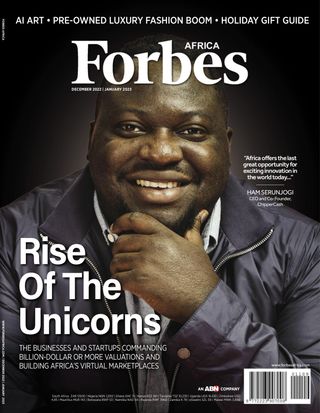

Denne historien er fra December 2022 - January 2023-utgaven av Forbes Africa.
Abonner på Magzter GOLD for å få tilgang til tusenvis av kuraterte premiumhistorier og over 9000 magasiner og aviser.
Allerede abonnent? Logg på
FLERE HISTORIER FRA Forbes Africa

Forbes Africa
Power-ful CURRENCY
AS AFRICA'S DIGITAL TRANSFORMATION ACCELERATES, GREEN ENERGY IS BECOMING A MARKER OF ECONOMIC STRENGTH. WITH VAST UNTAPPED RENEWABLE RESOURCES, AFRICA HOLDS A STRATEGIC ADVANTAGE, BUT HIGH FINANCING COSTS AND FRAGMENTED INFRASTRUCTURE THREATEN TO SLOW ITS MOMENTUM.

3 mins
February - March 2026

Forbes Africa
POD POWER
MADAGASCAR'S CALLING CARD TO THE WORLD MAY BE VANILLA, BUT TAOLAGNARO, ON ITS SOUTHEASTERN TIP, DRAWS IN VISITORS WITH ITS UNASSUMING CHARM AND STARTLINGLY BEAUTIFUL SEA.
3 mins
February - March 2026

Forbes Africa
TRAILBLAZER!
BENJAMIN ROSMAN'S RESEARCH IS POWERING AFRICA'S GEOPATRIATED AI FUTURE.
3 mins
February - March 2026

Forbes Africa
THE MIRACLE OF OMAHA
AFTER ESCAPING AN IMPOVERISHED CHILDHOOD AND SURVIVING A GUNSHOT WOUND AT 20, TERENCE CRAWFORD EARNED MORE THAN $100 MILLION IN HIS CAREER AS A BOXER. WITH WARREN BUFFETT IN HIS CORNER, THE 38-YEAR-OLD CHAMPION IS NOW STARING DOWN THE ULTIMATE OPPONENT-FATHER TIME.
4 mins
February - March 2026

Forbes Africa
THE NEW BOARD-ROOM PRIORITY
WHO GOVERNS THE CLOUD? AI HAS MADE DATA POWERFUL, BUT SOVEREIGNTY DECIDES WHO GETS TO USE IT, STORE IT AND PROTECT IT.
3 mins
February - March 2026

Forbes Africa
THINKING A-HEAD
INTERFACES ARE AN INEVITABLE STEP IN HUMAN EVOLUTION. WITH THE TECHNOLOGY MOVING INSIDE OF OUR HEADS, THE QUESTION IS NO LONGER IF WE'LL MERGE WITH IT, BUT WHEN. HEAR FROM THOSE WHO HAVE HAD A HEAD START.
3 mins
February - March 2026

Forbes Africa
VOICES FROM THE LAB
FROM CLEAN WATER INNOVATION TO CANCER RESEARCH, THESE SOUTH AFRICAN SCIENTISTS REVEAL HOW MENTORSHIP, INCLUSIVE FUNDING AND SUPPORTIVE ECOSYSTEMS CAN ENABLE WOMEN TO PARTICIPATE IN STEM SECTORS AND RESHAPE AFRICA'S SCIENTIFIC LANDSCAPE.
3 mins
February - March 2026

Forbes Africa
ALPINE AMBITIONS
THE SOUTH AFRICAN SKI-RACER TAKING THE SPORT TO NEWER HEIGHTS.
2 mins
February - March 2026

Forbes Africa
ONE MIC, MANY STORIES
FROM ACCRA TO CAPE TOWN, IS PECHAKUCHA BECOMING THE PERFECT STAGE FOR AFRICAN IDEAS AND STORYTELLING?
4 mins
February - March 2026
Forbes Africa
MICRO-SHIFTING AND CLOCKING OUT OF THE NINE-TO-FIVE
For years, the nine-to-five day ruled working lives. It was predictable, easy to follow and very rarely questioned. This neat and tidy arrangement, however, is starting to get a little messed up. That's because people are increasingly shaping their days around life rather than watching the clock. The shift even has a name. It is called micro-shifting. It's not for everyone, but for those who enjoy it, it works something like this. Instead of sitting through eight straight hours or work, some people break the day up and work in shorter bursts when it suits them.
2 mins
February - March 2026
Translate
Change font size