
Gå ubegrenset med Magzter GOLD
Få ubegrenset tilgang til over 9000 magasiner, aviser og premiumhistorier for bare
This is how carbon policies can prevent food insecurity
Farmer's Weekly
|23 June 2023
The race to net-zero carbon emissions has implications for agriculture and food security. Whether the outcome will be positive or negative for society, the environment and farmers, depends largely on how government formulates emissions policies. Lindi Botha reports on why agriculture’s role should not be confused.

“Soil that has the texture of a chocolate sponge cake. That’s what I am working towards!” says Hendrik Odendaal, cradling a handful of freshly dug soil on his maize land near Standerton in Mpumalanga. He certainly seems to have made progress; plant roots of various sizes from a diversity of cover crops drill down into the soil, creating aeration and pathways for water, and loosening up what would otherwise have been dense clay.
Earthworms and a host of other beneficial insects wriggle and crawl their way through the clumps, transporting nutrients and organic matter deeper into the soil profile.
Odendaal switched from conventional tillage to a no-till, regenerative agriculture system 16 years ago. Focusing on soil health, he has reduced herbicide and insecticide usage, and increased the carbon in his soils while still achieving industry-average yields on his maize and soya crops.
“The primary aim of converting from conventional tillage to no-till is to prevent disruption of the soil’s natural, delicate ecosystem, and moisture loss from upending the soil into the sunlight,” explains Odendaal as he squeezes a handful of soil that is still wet from rain that fell a week ago.
“The hard part is to achieve loose soil without ripping by incorporating plant roots and insects to do the work instead. It takes time, but over the years I’ve been able to increase the health and carbon in my soil by leaving crop residues to decompose, planting cover crops to protect the soil, and feeding the whole system with worm tea and compost.”

Denne historien er fra 23 June 2023-utgaven av Farmer's Weekly.
Abonner på Magzter GOLD for å få tilgang til tusenvis av kuraterte premiumhistorier og over 9000 magasiner og aviser.
Allerede abonnent? Logg på
FLERE HISTORIER FRA Farmer's Weekly

Farmer's Weekly
Christmas books to charm and delight
During the holiday season, one usually takes a well-earned break from the daily rutt, and there is no better time to catch up on some reading. Patricia McCracken has selected a wide spectrum of titles to tuck into.

4 mins
December 19-26, 2025

Farmer's Weekly
From chance to choice: a women's rise to farming success
Many raisin producers assume that retiring without a son to take over the farm means the end of the family business. Alcois Blaauw, this year's winner of the Raisins SA Female Producer Award, proves that assumption to be wrong. Glenneis Kriel reports.
4 mins
December 19-26, 2025

Farmer's Weekly
Grandparents below, and kids upstairs!
Dear Jonno,My wife and I want to escape to the countryside.
1 min
December 19-26, 2025
Farmer's Weekly
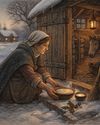
The Unseen Protector
The belief in the Unseen Protector or Unseen Shepherd endured for around 600 years, from the 13th century up until the 19th century. The farmer or his wife would provide a bowl of fresh cream and gruel to appease a spirit, whose blessing was imperative for a good summer harvest and animal health and fertility.
2 mins
December 19-26, 2025
Farmer's Weekly
THE HITCHING POST
I am a 67-year-old farmer residing on a farm near Harding in KwaZulu-Natal.
1 mins
December 19-26, 2025
Farmer's Weekly
Pet-friendly family accommodation in the Waterberg
With travel time of only a little over three hours from Johannesburg and 30 minutes from Vaalwater, guests will find Waterberg Cottages in Limpopo. Guests can plan a family-friendly holiday or weekend with plenty of activities to keep everyone occupied on this peaceful 2 500ha private game reserve.
4 mins
December 19-26, 2025
Farmer's Weekly
The Shuman legacy continues under the watchful eye of a fifth-generation farmer
Ken Shuman, co-owner of Hilson Shuman Farming, is committed to carrying on his father's towering legacy through innovation and adaptation.
9 mins
December 19-26, 2025

Farmer's Weekly
History's most famous musket
The Brown Bess musket was the standard issue firearm for British forces from 1722 to 1838. As Mike Burgess writes, this much-loved weapon contributed significantly to the consolidation of the British Empire that by 1922 was in control of a quarter of the earth's surface.
4 mins
December 19-26, 2025

Farmer's Weekly
Muddy soil can cause lameness due to footrot
It is important to clean legs and hooves and check for lameness in horses on a daily basis, especially when there is heavy rain
2 mins
December 19-26, 2025

Farmer's Weekly
The role of family farmers in sub- Saharan Africa
As part of the United Nations' recognition of family farming as a vital component of the global agricultural landscape, the decade between 2019 to 1928 was declared the Decade for Family Farming globally. Annelie Coleman compiled this report.
6 mins
December 19-26, 2025
Translate
Change font size