Prøve GULL - Gratis
The trends driving global tea production
Farmer's Weekly
|Farmer's Weekly 15 July 2022
Innovation and premium brands characterise the tea market, which is attracting a growing number of young buyers, according to the Food and Agriculture Organization of the United Nations.
-

Global tea production amounts to more than US$17 billion annually (about R275 billion), while world tea trade is valued at about US$9,5 billion (R161 billion).
Smallholders are responsible for 60% of world production. Tea provides productive jobs in rural areas, which enables households to meet their food security needs and improve their nutritional status.
Global per capita tea consumption has increased by 2,5% over the past decade, with marked expansion in tea-producing countries. Developing economies in East Asia, Africa, Latin America and the Caribbean have been driving the growth in demand. In the more mature European markets, as well as other advanced countries, demand for tea has dropped.
The need for innovation is evident, as consumers increasingly demand organic ingredients, and diversified blends and flavours. There is also growing interest in higher-quality speciality teas, with green teas and fruit teas gaining popularity, especially in Europe, owing to real or perceived health benefits.
CHALLENGES
Critically, the sector needs to balance the need for expansion and the requirements of sustainability at all stages of the value chain.
Growing consumption of tea in producing countries, driven by population and income growth, has seen a decrease in exportable production over the past two decades. Nevertheless, per capita consumption remains low in these countries compared with import markets. More must therefore be done to increase demand by exploring prevailing market opportunities.


Denne historien er fra Farmer's Weekly 15 July 2022-utgaven av Farmer's Weekly.
Abonner på Magzter GOLD for å få tilgang til tusenvis av kuraterte premiumhistorier og over 9000 magasiner og aviser.
Allerede abonnent? Logg på
FLERE HISTORIER FRA Farmer's Weekly
Farmer's Weekly
Infrastructure, policy, and finance will be the African continent's growth drivers
Africa's agricultural potential is vast, but inefficiencies in infrastructure, trade policy, and finance limit growth. Investments in transport, cold storage, irrigation, and digital trade systems, among others, are key to unlocking faster, cheaper, and more efficient agricultural trade.

3 mins
January 2-9, 2026

Farmer's Weekly
SAPPO Academy showcases skills development and small business success
The South African Pork Producers' Organisation (SAPPO) Academy, a training organisation that promotes animal, environmental, and public health in the pig industry through knowledge transfer, recently hosted a mini development symposium in Pretoria. The event included an afternoon of meaningful dialogue, strategic learning, and leadership exchange, effectively bridging academic insight with real-world industry innovation.
3 mins
January 2-9, 2026

Farmer's Weekly
Backing for SA Canegrowers as sugar imports soar
Coenie Snyman, winemaker and founder of Rock of Eye Wines, was named the 2025 Diners Club Winemaker of the Year for his Rock of Eye Cabernet Sauvignon 2022, while Marnich Aucamp, assistant winemaker at Stellenbosch Vineyards, won the Young Winemaker of the Year award for his Stellenbosch Vineyards Credo Chenin Blanc 2024 at a gala dinner near Kleinmond in the Western Cape.
1 mins
January 2-9, 2026

Farmer's Weekly
New or used? A practical guide to second-hand farm equipment
Second-hand farm machinery can deliver excellent value, if you know what to look for. Western Cape equipment broker Debbie Smit gave Lindi Botha practical advice to help farmers decide when to buy new, when pre-owned is the smarter choice, and how to avoid the costly pitfalls that often catch buyers off-guard.
4 mins
January 2-9, 2026
Farmer's Weekly
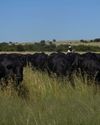
The story of the Drakensberger beef cattle breed's evolution in Africa
The Drakensberger cattle breed has been part of the South African landscape for ages. So-called black indigenous cattle existed in South Africa as early as the 15th and 16th centuries and formed the foundation of the current Drakensberger beef cattle breed.
4 mins
January 2-9, 2026
Farmer's Weekly
Man vs machine - which works best in SA's farming sector?
South African farmers have embraced both mechanisation and staffing solutions to improve farm level efficiency. Sabrina Dean investigated the pros and cons of both and filed this report.
9 mins
January 2-9, 2026
Farmer's Weekly
SA's poultry industry must be more inclusive and sustainable
In spite of great progress made over the past 30 years in South Africa's poultry value chain, setbacks such as avian influenza and trade restrictions are calling for official intervention
2 mins
January 2-9, 2026
Farmer's Weekly
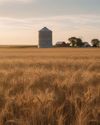
An introduction to forward contracts and commodity futures for South African farmers
The agriculture sector is notoriously volatile, but producers can find stability using financial derivative tools. This article clearly defines and differentiates between two key instruments: forward contracts and futures contracts.
3 mins
January 2-9, 2026
Farmer's Weekly
Less tillage, more life: the machines and techniques behind soil recovery
Soil health is the foundation of global food security, environmental quality, and agricultural sustainability. According to expert Dr Hendrik Smith, reversing the cycle of soil degradation requires the continuous application of regenerative conservation agriculture principles, with no-tillage cultivation being nonnegotiable.
4 mins
January 2-9, 2026

Farmer's Weekly
Five Joburg hotels that make business a pleasure
Even with its well-documented problems, Johannesburg remains the centre of business in South Africa. And unlike some cities with their mountains and oceans, you'll get value and quality for a fraction of the price at these hotels. There are also great views in the mix. By .
6 mins
January 2-9, 2026
Translate
Change font size