Prøve GULL - Gratis
Maximise dairy profits with beef semen
Farmer's Weekly
|September 23, 2022
Improved breeding technologies and practices have resulted in many dairies ending up with more replacement heifers than they need. To add value to surplus animals, farmers can use beef semen on some of their cows. Glenneis Kriel explains what this process entails, and how it should be approached and implemented.

Two remarkable scientific developments, namely sexed semen and genomic evaluation (DNA analysis), have proved hugely beneficial to dairies in recent years, thanks to the way they improve selection.
Rebekah Mast, associate vice-president of genetic dairy solutions and talent development at World Wide Sires and Select Sires, explains that genomic evaluations improve the accuracy of genetic predictions, thereby accelerating genetic gains, while sexed semen gives better control over the number of female animals produced, enabling farmers to be more intensive in their selections.
Mast was speaking at the Dairy Management Consulting conference held in August at Durbanville in the Western Cape.
Indeed, so successful are these techniques, that many dairies today end up with an excess of heifers, which then have to be culled.
According to Mast, using sexed semen on a cow increases her chance of producing a heifer to 90%, compared with 50% with conventional semen. Improved calf-rearing systems, in turn, ensure that 90% of these heifers make it to first lactation. With sexed semen, this translates into about 80 replacement heifers in a 100-cow herd, in comparison with only 40 with conventional semen. "Improved efficiencies have actually created new problems for us, with the average dairy now sitting with a culling rate of 40%. Most heifers, in effect, don't make it beyond the third lactation, when cows become most profitable, because farmers are eager to use the new genetics coming into the herd," she explains.
Fortunately, the solution to this problem is already here: the strategic use of beef semen on some of the cows.
Beef-dairy crosses, Mast points out, are sold from one day to one week old in the US, with prices ranging from US$50 (about R860) to US$250 (R4 300), depending on the market, type of cross and the buyer's requirements.


Denne historien er fra September 23, 2022-utgaven av Farmer's Weekly.
Abonner på Magzter GOLD for å få tilgang til tusenvis av kuraterte premiumhistorier og over 9000 magasiner og aviser.
Allerede abonnent? Logg på
FLERE HISTORIER FRA Farmer's Weekly

Farmer's Weekly
Cash flow budgets: keeping farmers in control of liquidity, risk, and their survival
Profit doesn't guarantee a farm's survival - cash does. Cobus du Plessis explains why cash flow budgets are one of the most important yet underused financial tools on South African farms.

5 mins
February 27 - March 06, 2026

Farmer's Weekly
The toast of the Navy
The incredible story of the World War II-era Great Dane dog Nuisance being enlisted in the Royal Navy is well documented. Graham Jooste shared some entertaining anecdotes involving the canine shipmate.
6 mins
February 27 - March 06, 2026
Farmer's Weekly
Healthier soils deter destructive locusts
Locust swarms remain a serious global threat, capable of devastating crops, livelihoods and local economies across vast regions.
1 min
February 27 - March 06, 2026
Farmer's Weekly
Wheat crisis dominates Grain SA regional meetings
As the ongoing wheat crisis continues to erode producers' margins, emotions ran high at Grain SA's regional meeting in Moorreesburg in the Western Cape.
2 mins
February 27 - March 06, 2026

Farmer's Weekly
A FARMER'S EXPERIENCE
Street Wallet has been a game-changer for Mario Athanasopoulos, hydroponic production consultant and owner of Green City Farms.
1 mins
February 27 - March 06, 2026
Farmer's Weekly
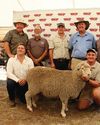
Kesieberg Merino Stud Production Sale
The Kesieberg Merino Stud Production Sale was held on the farm Leeuwfontein on 4 February on behalf of Willie and Herman Henning.
1 min
February 27 - March 06, 2026

Farmer's Weekly
Not cheaper, just different: what you should know about farming in Mozambique
Although Mozambique is often viewed as a cheaper, easier farming location than South Africa, cost comparisons tell a more complex story. But while cross-border production presents real challenges, it also offers opportunities for complementary trade, diversification and regional food security, particularly when it comes to subtropical crops such as bananas.
10 mins
February 27 - March 06, 2026
Farmer's Weekly
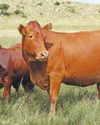
The all-rounder anchoring South Africa's beef value chain
Louis Steyl, CEO of the Bonsmara Cattle Breeders' Society of South Africa, spoke to Octavia Avesca Spandiel about how the versatile Bonsmara breed anchors the country's beef value chain, delivering balanced performance, reproductive and feed efficiency, and carcass traits across extensive and intensive systems.
6 mins
February 27 - March 06, 2026

Farmer's Weekly
THE HITCHING POST
I'm a 60-year-old white woman who loves camping, animals, the outdoors, and watching sport.
2 mins
February 27 - March 06, 2026
Farmer's Weekly
Foot-and-mouth disease in pigs
Recently, the radio news mentioned an outbreak of foot-and-mouth disease (FMD) in pigs in South Africa.
2 mins
February 27 - March 06, 2026
Translate
Change font size