Prøve GULL - Gratis
breaking down barriers
Issue 133
|d+a
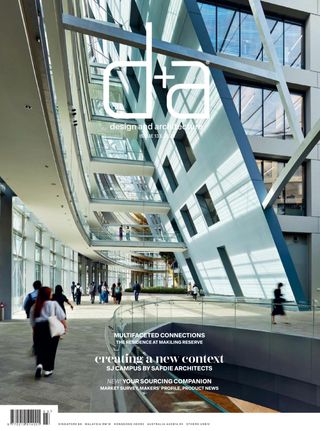
SJ Campus, designed by Safdie Architects in collaboration with Surbana Jurong, is an exemplary case study in working with the site to create a new context for both the community and company

In the western part of Singapore is the new 742,000-square-foot SJ (Surbana Jurong) Campus, designed by Safdie Architects in collaboration with Surbana Jurong. The latter is a well-respected consultancy in the building industry, whose expertise extends to the fields of urban planning, architecture, mechanical engineering, civil and structural engineering, infrastructure, environment and sustainability, and landscape design.
The estimated S$400-million-dollar project anchoring the emerging Jurong Innovation District business park is the new workplace of 4,000 on-site employees. Due to its proximity to the Western Water Catchment, the architecture focuses on incorporating sustainability and nature. It is poised on sloped land, edged by Nanyang Technological University (NTU) on the west and Jurong Eco-Garden towards the east; both feature lush environments. On the southern side is the on-going construction of the future Tawas MRT train station, presenting the opportunity to create a neighbourhood nexus.
Safdie Architects’ design team had two main goals. “First: to design for the Surbana Jurong community and the community-at-large. Secondly, to integrate nature and the urban street life in a ‘campus’ design,” says Charu Kokate, who leads Safdie Architects’ efforts in Asia. The Campus consists of 10 six- to seven-storey office blocks spread across the site, connected by a ‘spine’ – a pedestrian street open to the public for 24 hours that forms a direct connection between the public transport and the larger neighbourhood.

Denne historien er fra Issue 133-utgaven av d+a.
Abonner på Magzter GOLD for å få tilgang til tusenvis av kuraterte premiumhistorier og over 9000 magasiner og aviser.
Allerede abonnent? Logg på
FLERE HISTORIER FRA d+a

d+a
designing the future
Happening in Frankfurt, Germany, Ambiente 2026 expands with fresh concepts in interiors, hospitality, and lifestyle

1 mins
Issue 136

d+a
mastering water
From water-saving innovation to smart toilets, Geberit continues to set benchmarks in bathroom technology, delivering solutions where design and function are inseparable.
2 mins
Issue 136
d+a
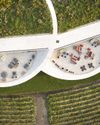
a winery that floats above the vines
Sauska Tokaj winery is an architectural statement set amid one of the world's great wine regions. Its hovering form, immersive visitor experience, and cutting-edge design celebrate both the legacy and future of Tokaj winemaking.
1 min
Issue 136
d+a
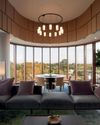
mountains and gardens
Forbes Residences takes WOHA's discourse on residential high-rise living to Perth's Applecross suburb.
3 mins
Issue 136

d+a
craft, culture, and contemporary living
Zucchetti continues to innovate through visionary collaborations, sustainable practices, and a design culture that bridges past and present.
3 mins
Issue 136
d+a
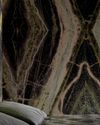
the new language of stone
Timeless yet forward-looking, Antolini's natural stone redefines luxury through sustainability, durability, and design – a vision brought to Singapore by Hafary.
2 mins
Issue 136

d+a
augmented forms
Kuala Lumpur Architecture Festival's mainstay event, DATUM:KL, fielded a star-studded international roster showcasing a breadth of contemporary designs and ideas across the globe.
4 mins
Issue 136

d+a
DESIGN TRENDS OF 2026
Innovation meets responsibility: from adaptive furniture and tactile linens to sustainable bathrooms, smart lighting, and timeless stone surfaces, D+A explores trends set to shape design in the coming year.
11 mins
Issue 136
d+a
shaped with clay
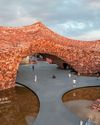
KKAA'S UCCA Clay not only showcases traditional pottery craft but uses clay products to create a unique, authentic architecture.
3 mins
Issue 136

d+a
celebration of craft
An exclusive collaboration that transforms natural fibres, artisanal dyeing and intricate weaving into resort wear and amenities.
3 mins
Issue 136
Listen
Translate
Change font size