Prøve GULL - Gratis
Photo bombing
BBC Wildlife
|January 2025
Wildlife is being harmed by our need to get the perfect shot - and share it

JONATHAN AND ANGIE SCOTT HAVE been documenting the lives of predators in Kenya's Masai Mara since the late 1970s, with shows such as Big Cat Diary popularising the ecosystem and its worldfamous wildebeest river crossings.
There have always been tourists that break safari protocols, they say-standing on top of vehicles to get a better view of a big-cat kill or getting out of the Jeep at a river crossing to snap a selfie.
But two things have exacerbated the impact of this behaviour. One, the sheer numbers visiting the Mara every year; and two, our smartphones and how we use them. "Social media is turning us all into paparazzi," says Jonathan. "Images are so transitory snap, forward to our feed and never look at that image again."
According to a group of Australian scientists, promoting wildlife experiences on social media - Facebook, Instagram, Twitter and, if you're young enough, TikTok - is now having a negative impact on the very wild species we claim to love.
Smartphones and social media heighten the 'honeypot' effect, says Rob Davis, a senior lecturer in vertebrate biology at Edith Cowan University in Western Australia, and lead author of a paper entitled Liked to death: the Impacts of Social Media and Photography on Biodiversity. They enable us to promote to thousands the delicate habitats or species that are unable to cope with the avalanche of visitors that this precipitates.
As an example, Davis cites a mindnumbingly rare orchid called the Queen of Sheba, which (partly due to habitat loss and fragmentation, and partly due to taxonomic splits) is now entirely restricted to a single site in Western Australia. When a Facebook group promoted this site to its 15,000 followers, the result was catastrophic.


Denne historien er fra January 2025-utgaven av BBC Wildlife.
Abonner på Magzter GOLD for å få tilgang til tusenvis av kuraterte premiumhistorier og over 9000 magasiner og aviser.
Allerede abonnent? Logg på
FLERE HISTORIER FRA BBC Wildlife
BBC Wildlife
"I was terrified the elephant would ram us"
African elephant in Kenya

2 mins
January 2026
BBC Wildlife
ALL YOU EVER NEEDED TO KNOW ABOUT THE Fennec fox
THE FENNEC FOX IS THE SMALLEST fox in the world, with a body length that can be as little as 24cm.
3 mins
January 2026
BBC Wildlife
INTO THE PLASTISPHERE
A unique synthetic ecosystem is evolving in our oceans – welcome to the plastisphere
7 mins
January 2026
BBC Wildlife
“More than half of all animal life exists in a parasitic relationship, and all life lives in symbiosis”
Our survival depends on species evolving to live together - but some relationships take dark turns
7 mins
January 2026
BBC Wildlife
Are animals able to dream?
SLEEP IS A MYSTERIOUS THING. FOR A long time, we weren't sure why we do it.
1 mins
January 2026
BBC Wildlife
Does a cuckoo know it's a cuckoo?
ABSURD LITTLE BIRDS ACROSS THE world lay their eggs in the nests of other species, leaving the hapless parents to raise a changeling at the expense of their own offspring.
2 mins
January 2026
BBC Wildlife
Orcas killing young sharks
Juvenile great whites are easy prey for orca pod
1 mins
January 2026
BBC Wildlife
Ocean goes on tour
Acclaimed film touring the UK, backed by live orchestra and choir
1 min
January 2026
BBC Wildlife
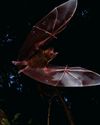
Feisty bats hunt like lions
Winged mammals use a 'hang and wait' strategy to take down large prey
1 mins
January 2026
BBC Wildlife
SNAP-CHAT
Richard Birchett on magical merlins, wily coyotes and charging deer
2 mins
January 2026
Listen
Translate
Change font size