Prøve GULL - Gratis
SHOW & TELL
BBC Wildlife
|September 2022
Teaching was once considered a uniquely human behaviour, but science now recognises a small and very diverse group of species as animal teachers

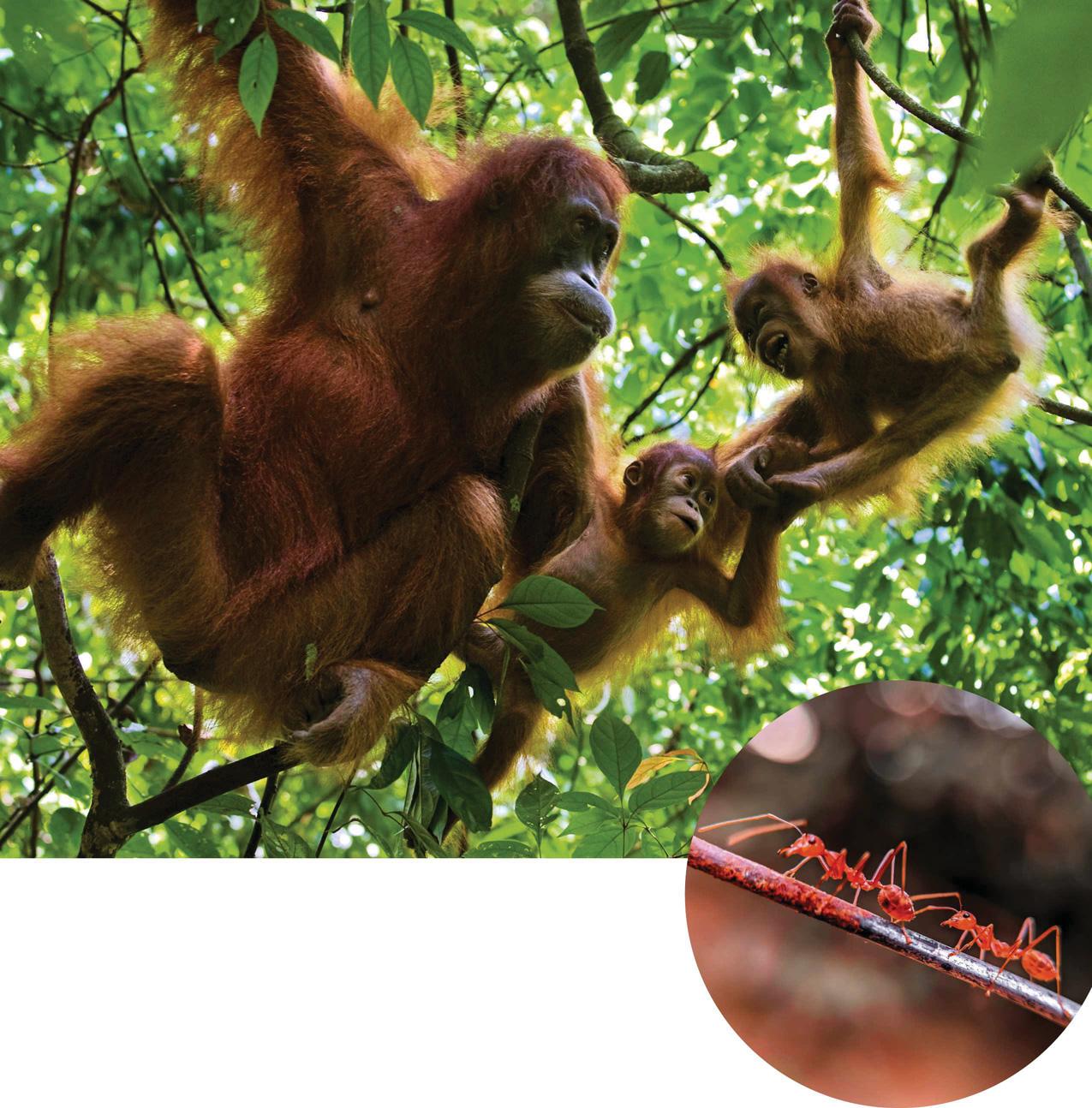
SOMETIMES, AN ORANGUTAN mother must step in to stop her progeny from eating poo or poisonous leaves. Baby orangutans, like all youngsters, have a lot to learn about life. The mother is the infant's primary role model - for up to nine years, the longest dependency period of any non-human primate - and it is from watching and interacting with her that the youngster learns many of its survival skills, including the technical know-how for processing more than 200 food items.
The word 'teaching' comes to mind. But this is where things get tricky. Because, while the concept of animals 'teaching' their young may not seem controversial, it elicits lively discussions in the scientific world.
Teaching is so fundamental to how our children learn that historically it was considered a uniquely human trait. We are, after all, intelligent, intentional beings, so surely teaching must reflect these traits? At the heart of this is the assumption that when we teach, we are using our big brains to work out the best method, balancing our own beliefs and motivations with what we know about those of our pupils.
This capability to predict what others are thinking is termed 'theory of mind'. For a long time, other animals were thought to lack any of these 'mind-reading' abilities, so they were also assumed incapable of teaching.
IMAGINE THE SHOCKWAVES WHEN, in 2006, a little species of ant overturned this assumption. "It was the last thing people expected," says Nichola Raihani, professor of evolution and behaviour at University College London. "For such a long time, people were looking for examples of teaching in chimpanzees. And the next thing is it comes from an ant."

Denne historien er fra September 2022-utgaven av BBC Wildlife.
Abonner på Magzter GOLD for å få tilgang til tusenvis av kuraterte premiumhistorier og over 9000 magasiner og aviser.
Allerede abonnent? Logg på
FLERE HISTORIER FRA BBC Wildlife
BBC Wildlife
"I was terrified the elephant would ram us"
African elephant in Kenya

2 mins
January 2026
BBC Wildlife
ALL YOU EVER NEEDED TO KNOW ABOUT THE Fennec fox
THE FENNEC FOX IS THE SMALLEST fox in the world, with a body length that can be as little as 24cm.
3 mins
January 2026
BBC Wildlife
INTO THE PLASTISPHERE
A unique synthetic ecosystem is evolving in our oceans – welcome to the plastisphere
7 mins
January 2026
BBC Wildlife
“More than half of all animal life exists in a parasitic relationship, and all life lives in symbiosis”
Our survival depends on species evolving to live together - but some relationships take dark turns
7 mins
January 2026
BBC Wildlife
Are animals able to dream?
SLEEP IS A MYSTERIOUS THING. FOR A long time, we weren't sure why we do it.
1 mins
January 2026
BBC Wildlife
Does a cuckoo know it's a cuckoo?
ABSURD LITTLE BIRDS ACROSS THE world lay their eggs in the nests of other species, leaving the hapless parents to raise a changeling at the expense of their own offspring.
2 mins
January 2026
BBC Wildlife
Orcas killing young sharks
Juvenile great whites are easy prey for orca pod
1 mins
January 2026
BBC Wildlife
Ocean goes on tour
Acclaimed film touring the UK, backed by live orchestra and choir
1 min
January 2026
BBC Wildlife
Feisty bats hunt like lions
Winged mammals use a 'hang and wait' strategy to take down large prey
1 mins
January 2026
BBC Wildlife
SNAP-CHAT
Richard Birchett on magical merlins, wily coyotes and charging deer
2 mins
January 2026
Translate
Change font size