
Gå ubegrenset med Magzter GOLD
Få ubegrenset tilgang til over 9000 magasiner, aviser og premiumhistorier for bare
Prøve GULL - Gratis
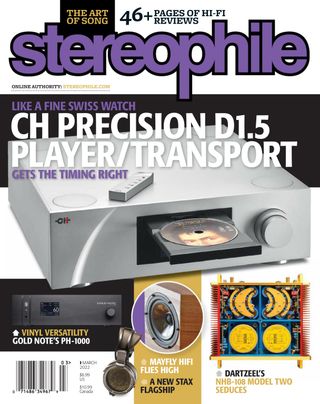
CH Precision D1.5 SACD/CD/MQA-CD Player/Transport
Stereophile
|March 2022
There’s a school of thought that maintains that among all hi-fi components, the D/A converter is easiest to perfect or come close to perfecting. Just make sure that every sample is converted accurately, that there’s little rolloff in the audioband, that aliased images are suppressed almost completely, and that background noise is extremely low, and you have a top-quality D/A processor. Use of a high-quality DAC chip is assumed.

The transport part of the player is even easier to nail, this thinking goes, because all it needs to do is extract the data accurately, something any box-store CD player can do. Jitter? No need to worry about that, or anything happening in the time domain, as long as the data are transferred to a decent DAC via an asynchronous isochronous interface and reclocked inside the converter. Reclocking salves all digital wounds, or so this thinking goes.
What’s especially reassuring to like-minded audiophiles is that all this can be verified with a simple set of measurements that almost anyone can do; all you need is some affordable software and a $150 USB computer interface—or, at most, an Audio Precision analyzer, which isn’t cheap but costs half as much as Michael Fremer’s reference phono preamplifier.
Such an approach allows the manufacture of players and DACs that can be sold for perhaps $1000, or even several hundred less than that, assuming it’s manufactured in a low-wage country. Manufacture it in the US or Europe and, even if it’s built to an exceptionally high standard, the price can remain quite low.
A top-quality digital source, then, is a commodity, like gasoline, a dozen eggs, or flash drives. It’s pointless to spend more, or so the thinking goes. Or perhaps not.
Digital is analog

Denne historien er fra March 2022-utgaven av Stereophile.
Abonner på Magzter GOLD for å få tilgang til tusenvis av kuraterte premiumhistorier og over 9000 magasiner og aviser.
Allerede abonnent? Logg på
FLERE HISTORIER FRA Stereophile

Stereophile
The Rolling Stones v3.0
In the Rolling Stones' long history, the Mick Taylor era was a peak, if not the peak. Taylor, who replaced cofounder Brian Jones in the late 1960s, proved a great musical foil for Keith Richards. He was a technical wizard on the guitar; those fluid higher-octaves riffs and runs were the perfect counterpoint to Richards's jabbing and stabbing and growling style. At heart, he was a bluesman, so a great fit for a band named after a Muddy Waters tune. The run of albums from Let It Bleed through It's Only Rock 'n Roll took the Stones' music in new directions and set the standard for tight, fast, and loose arena rock circa the early 1970s.

3 mins
March 2026

Stereophile
Bob Dylan Through the Open Window
Columbia Legacy has released Vol.18 of the Bob Dylan Bootleg Series. Through the Open Window covers the years 1956–1963. The collection is available as three physical sets: two-CD or four-LP “Highlights” versions that contain 42 tracks, and an eight-CD “Deluxe Edition Box Set” that contains 139 tracks and has a running time of 8 hours, 59 minutes. The “Highlights” package is available streaming at 24/192, but the other 97 tracks are only available in the big box. That big box also includes a 124-page hardback book containing full credits, 100 photos, and liner notes—really a substantial monograph—by Sean Wilentz, professor of American History at Princeton University and author of the book Bob Dylan in America.
7 mins
March 2026
Stereophile
Technics SL-50C
Every first love leaves a strong impression. Hopefully it’s a good one.
15 mins
March 2026

Stereophile
The passing of two Americana greats
Just before Christmas 2025, American music suffered two irreplaceable losses with the passings of Raul Malo (December 8) and Joe Ely (December 15). While a lot of musicians exist on the artistic and commercial fringes, Malo and Ely were foundational artists, gifted creators and performers who refused to be confined by artistic boundaries. Though not without their struggles, each eventually found widespread respect and success. Each leaves behind a significant body of wonderful recordings.
3 mins
March 2026
Stereophile
HI-FI as ART
Since founding Ojas in the 1990s and applying the name to his audio components, Devon Turnbull has mined a young audience that the traditional hi-fi industry has struggled to reach.
14 mins
March 2026
Stereophile
Burmester 232
My first response, upon being offered for review the new Burmester 232 Classic Line modular class-AB dual mono integrated amplifier ($25,000), was apprehension—but not because of the product itself, and certainly not because of the Burmester brand. My first response, upon being offered for review the new Burmester 232 Classic Line modular class-AB dual mono integrated amplifier ($25,000), was apprehension—but not because of the product itself, and certainly not because of the Burmester brand.
23 mins
March 2026

Stereophile
Kind of a 'pinch me' situation
In these days of industry transformation, acquiring a brick-and-mortar hi-fi store is not for the faint of heart. That's just what 41-year-old Brandon Bartee did in August 2025. Bartee acquired Audio Concepts from Mark Ashworth, who was celebrating the store’s 40th anniversary, all 40 years under his ownership. Ashworth has been consulting for the store since the acquisition and will continue to do so for another few more months. Audio Concepts has been in the same location in North Dallas, near Preston Hollow, an affluent neighborhood about six miles north of downtown, for 37 of its 40 years. The store has four isolated demo rooms and a few other listening areas.
3 mins
March 2026
Stereophile
Collecting used records. And cleaning them
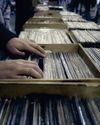
I own a lot of records. Way too many if we're being honest. It's hard for me to come up with an accurate count, and I'm not even remotely organized enough to have a formal inventory, but if I had to make a guesstimate based on linear feet I figure I must have around 10,000. About 10 years ago, I started to recognize that I owned far more records than I could ever hope to listen to, even once, in my remaining time on the planet, and since that realization my record purchasing rate has slowed to a trickle. These days, my worst weakness kicks in when I'm visiting my friend of over 45 years, Alan B out in L.A. Our idea of great social interaction is to head out and visit some of the record stores near his home in Pasadena, such as Amoeba and Freakbeat Records. Ten years ago on these trips, I would pick up enough records over a weekend to fill three big boxes that I would then ship back home to New York, using the US Postal Service's bargain Media Mail service. Times have changed, and on my most recent visit I came home with just a dozen or so new acquisitions, few enough to easily slip into my suitcase.
11 mins
March 2026
Stereophile
Steve played it
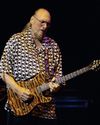
Legendary Stax guitarist/producer Steve Cropper hated when deejays talked over song intros. He decided to do something about it for the countless hit singles cut at the label's Memphis studio in the 1960s. As a result of his efforts, Cropper—who passed away on December 3, 2025, at age 84—became known as “The Intro Guy,” a sobriquet he was proud to honor.
3 mins
March 2026
Stereophile
New digs
It's difficult to put a positive spin on moving. A recent survey ranked it as life's most stressful event, ahead of divorce, losing a job, or becoming a parent. Forty-two percent of respondents said it brought them to tears. Thirteen percent said it was worse than a week in jail.
11 mins
March 2026
Translate
Change font size