Prøve GULL - Gratis
Out For A Duck
The Field
|February 2017
The foreshore fowling season ends on 20 February. Here are nine species that may feature in the bag and on the table

1 MALLARD
The mallard is our most familiar duck and the species most studied; the Game and Wildlife Conservation Trust’s investigations into duckling survival are key to our knowledge of wildfowl conservation. Way back in the 1960s, and faced with a “new” wildlife habitat in the form of flooded gravel pits, the Trust worked out that nesting success could be improved using artificial nest sites, but duckling survival was still low.
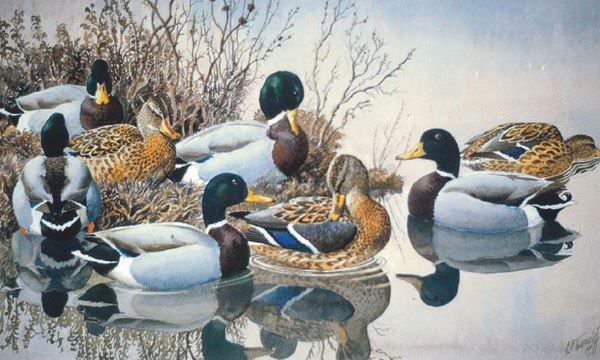
It became clear that, just as partridge chicks need insects, so do ducklings. Indeed, the peak hatch of wild mallard populations is synchronised with the emergence of midges, so that the ducklings can gorge on them as they break through the surface. The trouble is, most gravel pits have fish that mop up the midge larvae and pupae before they reach the surface, leaving ducklings hungry.
2 SHOVELER
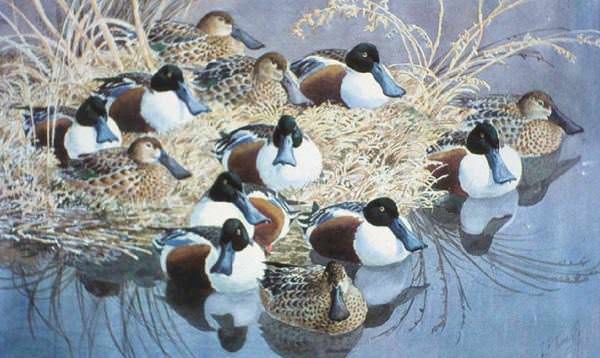
With its huge, spatulate bill the shoveler looks faintly comical. It is specially adapted to filter feed from the water surface, taking planktonic crustaceans as well as seeds and insect larvae. Our modest home breeding population is supplemented by a significant winter influx.
As an apprentice wildfowler, I was told shoveler were poor eating so avoided them. Through membership of the Dorset wild fowlers, and a sub group whose marsh was popular with shoveler and not much else, I decided to give them a try. My first offer resulted in a right and left from a small pack flying low towards me. As the second bird folded the first hit me square in the sternum and I discovered what a dense little duck they are. A taste test against mallard proved that most folk cannot tell which is which.

Denne historien er fra February 2017-utgaven av The Field.
Abonner på Magzter GOLD for å få tilgang til tusenvis av kuraterte premiumhistorier og over 9000 magasiner og aviser.
Allerede abonnent? Logg på
FLERE HISTORIER FRA The Field

The Field
The Holland & Holland Edition by Overfinch
This exquisitely detailed bespoke Range Rover is built for the field and showcases the best in fine British craftsmanship

3 mins
January 2026

The Field
Digging into terrier breeds
From the Jack Russell to the Australian to the Czesky, every one of the 27 recognised terrier types is either native British or has British ancestry
3 mins
January 2026

The Field
100 O years of The Browning B25 Superposed
Often imitated but rarely bettered, Browning's B25 Superposed is among the most influential and enduring shotgun designs in gunmaking history
8 mins
January 2026

The Field
A princely pair
Probably built for the Prince of Lobkowicz and dating to 1727, these handsome flintlocks boast both Spanish and Austrian influence
3 mins
January 2026
The Field
Adventure in a bottle
From lively, zingy Sauvignon Blanc to cassis-laden Cabernet Sauvignon, Chilean wine opens the door to a world of incredible value and diversity
3 mins
January 2026

The Field
Patrick Grant
The Great British Sewing Bee judge, former Savile Row tailor and founder of Community Clothing talks to Amanda Morison about nature, scything and sustainable fashion
4 mins
January 2026
The Field
The ultimate winter warmer
An exhilarating day following the Ross Harriers across picture-perfect Herefordshire countryside proves an ideal way to banish the January blues
7 mins
January 2026

The Field
An impact that can only grow
As a landmark report reveals the impressive environmental, social, economic and health benefits of gardening, Ursula Buchan hopes policymakers are taking note
3 mins
January 2026

The Field
'Karamojo Bell'
The last of his kind, elephant hunter Captain Walter Dalrymple Maitland Bell left an indelible mark on African hunting history, says Sir Johnny Scott
4 mins
January 2026

The Field
Deer manager shortage fears
Plans to make deerstalking training mandatory in Scotland risk leaving the country short of deer managers, rural groups have warned.
1 min
January 2026
Translate
Change font size