Prøve GULL - Gratis
Time ticking for coal
Down To Earth
|September 16, 2020
Business-as-usual will not work to combat climate crisis. Difficult targets must be set to reduce carbon emissions

THE WORLD has been stuck with coal for years. The carbon-spewing fossil is still the biggest source of energy. The transport, manufacturing, construction and power industries are driven majorly by coal. But with 72 per cent of the world’s greenhouse gas emissions arising from the energy sector, it’s now time to kick this dirty habit.
Already, frequent and extreme weather events like cyclones, bushfires, floods and droughts have wreaked global havoc. The average atmospheric CO 2 level has crossed the permissible 350 parts per million (ppm) to as much as 415 ppm. If the world does not abandon its business-as-usual approach, global warming will rise to 1.5°C above pre-industrial levels within just 10 years. This will have serious implications on natural and human systems. Global warming has already hit the 1.2°C mark.
The COVID-19 pandemic has given temporary relief to environment, but countries must not use it as an excuse to lower their ambitions to combat the climate crisis. Instead, the pandemic must work as the springboard to build back a better world. At the International Energy Agency’s Clean Energy Transition Summit held recently, UN Secretary- General Antonio Guterres said that coal and fossil fuels have no place in COVID-19 recovery plans. “It’s time to embrace the vast opportunity of a clean energy future—a future that protects people and planet, and promotes prosperity,” he said.
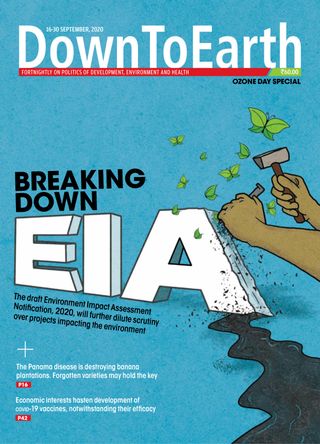

Denne historien er fra September 16, 2020-utgaven av Down To Earth.
Abonner på Magzter GOLD for å få tilgang til tusenvis av kuraterte premiumhistorier og over 9000 magasiner og aviser.
Allerede abonnent? Logg på
FLERE HISTORIER FRA Down To Earth
Down To Earth
Popular distrust
THE WORLD seems to be going through a period of stasis despite facing an unfathomable polycrisis.

2 mins
February 01, 2026

Down To Earth
CONSERVE OR PERISH
Periyar Tiger Reserve has rewritten Indian conservation by turning poachers into protectors and conflict into coexistence
5 mins
February 01, 2026

Down To Earth
'Rivers need to run free'
From Tibet to West Bengal, the Brahmaputra is the pulse of communities and ecosystems along its course. But what are the risks the river faces through human interventions, particularly dams, discusses journalist, author and filmmaker SANJOY HAZARIKA in his new book, River Traveller.
4 mins
February 01, 2026

Down To Earth
India is facing up to its innovation lag
There are signs now that India is acknowledging the superior strides made by China in a frontier technology like Al
4 mins
February 01, 2026

Down To Earth
Competing concerns
What are the repercussions of the EU-Mercosur pact that have made European farmers protest against the free trade agreement?
4 mins
February 01, 2026

Down To Earth
From fryer to flight
Sustainable fuel made from used cooking oil can play a pivotal role in helping India achieve its aviation emission reduction goals. Measures to collect this oil must be revamped
4 mins
February 01, 2026

Down To Earth
ACCESS OPEN
An amendment to India's nodal forest conservation law opens up forests across India to commercial exploitation by the paper industry
6 mins
February 01, 2026
Down To Earth
DRINK FROM TAP CAN BE A REALITY
As cities across India struggle to supply safe piped water, Odisha offers a success story
2 mins
February 01, 2026

Down To Earth
GREAT DRYING
The Earth is hotter than at any point in the past 100,000 years, with 2023-25 becoming the warmest three-year period on record and also breaching the 1.5°C threshold for the first time. One fallout is dwindling freshwater.
22 mins
February 01, 2026

Down To Earth
Green redemption
Restoration of grasslands of Kerala's Pampadum Shola National Park, once dominated by invasive Australian wattles, see a return of streams and native species
1 mins
February 01, 2026
Translate
Change font size