
Gå ubegrenset med Magzter GOLD
Få ubegrenset tilgang til over 9000 magasiner, aviser og premiumhistorier for bare
Prøve GULL - Gratis
Kumbh Raises A Stink
Down To Earth
|May 16, 2019
A city that celebrated the festival of faith months ago, is on the verge of an epidemic.

THE 240 million people who thronged Prayagraj to take a dip in the river Ganga between January 4 and March 14 this year, were presented a “swachh” picture of Ardh Kumbh. It was the cleanest ever in the history of modern India, said Prime Minister Narendra Modi. The Union and Uttar Pradesh governments spent a massive 4,200 crore to organise the world’s largest gathering of faith. But faith and filth don’t go together. On April 22, the National Green Tribunal (NGT) said Prayagraj was on the verge of an epidemic and must be dealt with “on an emergency basis”.
The Kumbh Mela generated more than 2,000 tonnes of unsegregated solid waste. This was dumped into the city’s only solid waste treatment plant at Baswar village. This, despite the fact that the administration knew the plant has been closed since September 2018. The waste now lies in the open—untreated and uncovered. The NGT order was based on the report submitted by retired judge Arun Tandon, chairperson of the supervisory committee set up by the tribunal to review how Kumbh had affected the Ganga.
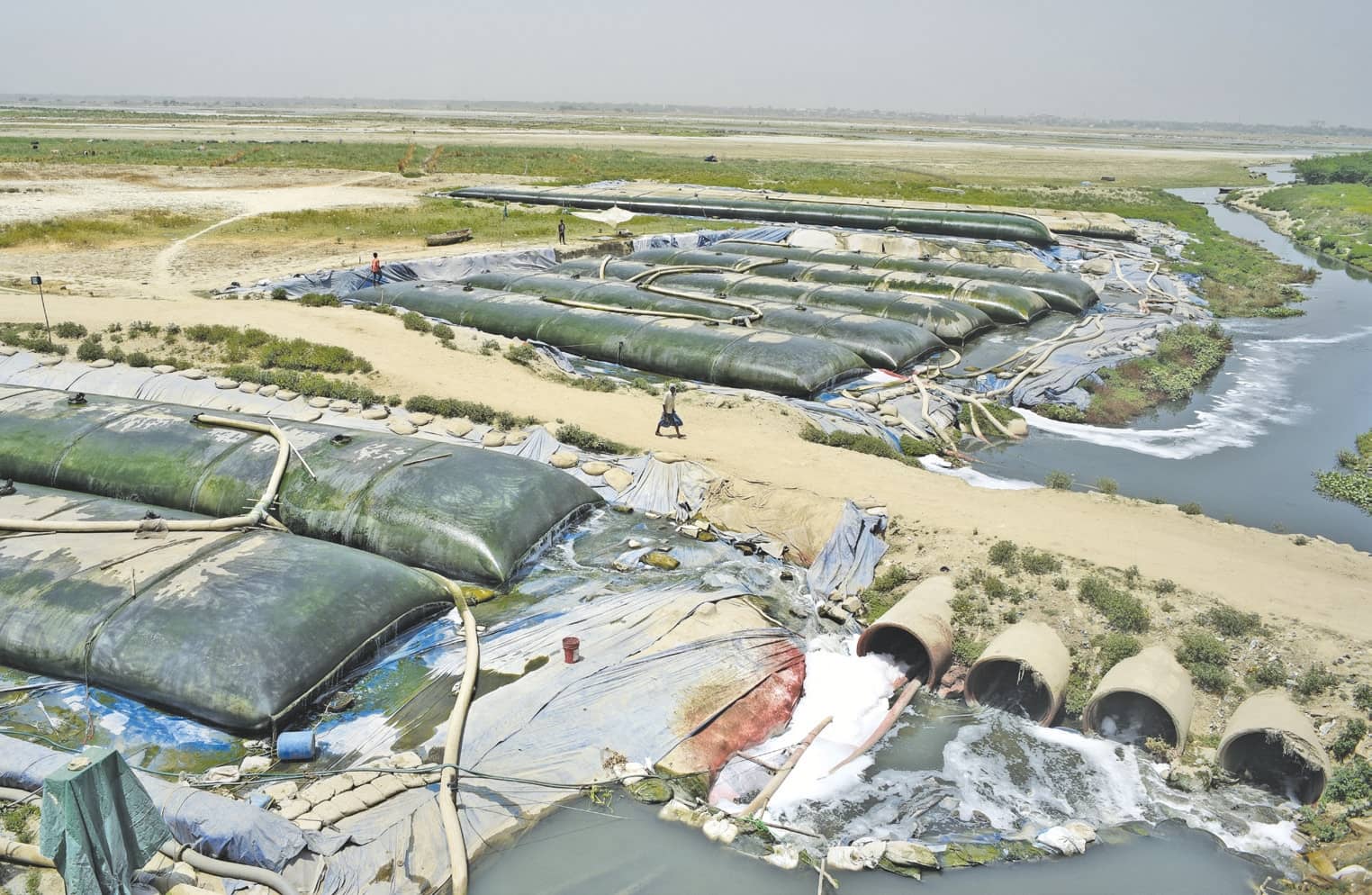
When Down To Earth (DTE) visited the plant at Baswar, about 10 km from the city, a mountain of untreated solid waste stood behind the boundary wall (see photograph). Anil Kumar Shrivastava, representative of Hari Bhari, the private firm engaged by the Allahabad Municipal Corporation to treat waste, did not allow DTE to enter the premises. But at the back of the plant, a huge cavity in the boundary wall clearly revealed how it was making way for untreated waste to fall directly into the nearby Yamuna river, which finally flows into the Ganga.

Denne historien er fra May 16, 2019-utgaven av Down To Earth.
Abonner på Magzter GOLD for å få tilgang til tusenvis av kuraterte premiumhistorier og over 9000 magasiner og aviser.
Allerede abonnent? Logg på
FLERE HISTORIER FRA Down To Earth

Down To Earth
THINK TWICE BEFORE FELLING SAL TREES
Many trees considered to be affected by sal borer in the 1990s are still alive today

1 mins
February 16, 2026

Down To Earth
EDGE OF SURVIVAL
Caste divides deny marginalised communities land, resources and essential aid, leaving them more vulnerable to climate disasters
6 mins
February 16, 2026

Down To Earth
A WISH LIST?
Union Budget for 2026-27 conveys the impression of a roll-call of intentions and ambitious proposals, with little detail on their formulation
6 mins
February 16, 2026
Down To Earth
Break down the gender wall
THE RULING National Democratic Alliance (NDA) government has been heavily invested in the goal to make India a developed economy by 2047.
2 mins
February 16, 2026

Down To Earth
MENSTRUAL HEALTH, NOW A FUNDAMENTAL RIGHT
In a landmark judgement, the Supreme Court has recognised menstrual health and hygiene as a fundamental right under Article 21 of the Constitution of India, which guarantees the right to life and dignity.
8 mins
February 16, 2026

Down To Earth
Of devolution and new disasters
The 16th Finance Commission pushes for changes in view of new fiscal and climatic conditions
11 mins
February 16, 2026
Down To Earth
Rising risks of plastics
NEGATIVE IMPACTS on human health due to emissions linked to the plastic lifecycle could double by 2040, according to a study published in The Lancet Planetary Health in January.
1 min
February 16, 2026

Down To Earth
GAP BETWEEN EPIDEMICS NARROWING
A watershed-based and landscape-level approach is needed to address forest degradation
2 mins
February 16, 2026
Down To Earth
WAITING TO STRIKE
Sal heartwood borer is considered the biggest threat to forestry in India, especially to the sal tree, where it lives and breeds.
11 mins
February 16, 2026
Down To Earth
A SPRING DELIGHT
Mustard flowers are not meant only for the eyes. Invite them to your plate once in a while
3 mins
February 16, 2026
Translate
Change font size