Prøve GULL - Gratis
"Indian vegetarians do not eat vegetables"
Down To Earth
|May 01, 2022
FROM A RACE OF TALL, GRACILE PEOPLE WITH GOOD HEALTH AND LONG LIVES, INDIANS HAVE NOW BECOME OBESE AND UNHEALTHY. FOOD HISTORIAN AND PHYSICIAN MANOSHI BHATTACHARYA TELLS ROHINI KRISHNAMURTHY THAT THE PROBLEM LIES IN THE WAY OUR DIETS HAVE CHANGED OVER THE CENTURIES.

You have studied 2,000 years of Indian diets. Do you see intense political or public focus on food in the past?
Our ancestors largely followed the Mesolithic (8000-2700 BCE) concept of frugal meals, which included vegetables and meat. In India, the overall food intake was limited, with days of fasting interspersed. The demands on the plant and animal worlds were low. There were some aberrations though.
In 500 BCE when Jainism emerged, its followers became vegetarian. It was a choice of the rich and the elite who could eat frugally, while maintaining a plant diet. It was not popular. Today, the Jains are a minority community, despite the fact that most of them are recent converts to the faith. Buddhism, too, saw something similar. The Buddha used to eat meat. Buddhists all over the world eat meat even today. But when Hiuen Tsang (a Chinese Buddhist monk and scholar) visited India in 630 CE, he was shocked to find that Indian Buddhists had turned vegetarian. They would eat lavishly in monasteries several times a day and drink rice starch throughout the day. In 600 BCE, emperor Harshavardhana, who was ruling Haryana, tried to impose vegetarianism. He did not succeed. In the same period, Meghavahana, king of Gandhara (now Afghanistan), who ruled over Kashmir, also unsuccessfully tried to introduce vegetarianism.
How have trade and migration changed our dietary habits?
Wherever humans travel, they carry their food with them. They also eat new kinds of food, which over time gets assimilated into their diet. For example, some 80,000 years ago, people from Africa migrated and settled in India, and this had an influence on our cuisine.
Brinjal is native to India. When people from Mesopotamia in West Asia visited the Harappan civilisation in the Indus Valley, they could have eaten fried brinjal there, taken it back home, added curd, and it became what is now called the

Denne historien er fra May 01, 2022-utgaven av Down To Earth.
Abonner på Magzter GOLD for å få tilgang til tusenvis av kuraterte premiumhistorier og over 9000 magasiner og aviser.
Allerede abonnent? Logg på
FLERE HISTORIER FRA Down To Earth

Down To Earth
Bitter pill
THE WEB SERIES PHARMA EXPOSES HARSH TRUTHS OF THE PHARMACEUTICAL INDUSTRY, WHERE PROFIT OFTEN BECOMES MORE IMPORTANT THAN HUMAN HEALTH

3 mins
January 16, 2026
Down To Earth
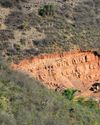
CHAOS IN-DEFINITION
The Aravallis are perhaps India's most litigated hill range. More than 4,000 court cases have failed to arrest their destruction. The latest dispute concerns a narrow legal definition of this geological antiquity, much of which has been obliterated by mining and urban sprawl. While the Supreme Court has stayed its own judgement accepting that definition, it must see the underlying reality and help reconcile development and national security with conservation.
19 mins
January 16, 2026

Down To Earth
BITS: INDIA
Indore has recorded 16 deaths and more than 1,600 hospitalisations between December 24 and January 6.
1 min
January 16, 2026
Down To Earth
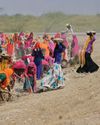
GUARANTEE EXPIRES
India's rural employment guarantee law is replaced with a centrally controlled, budget-capped scheme. Is this an attack on the right to work?
3 mins
January 16, 2026
Down To Earth
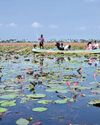
BLOOM OR BANE
Surge of vibrant pink water lilies in Kuttanad, Kerala, provides socio-economic benefits, but the plant's ecological impacts must be understood
4 mins
January 16, 2026
Down To Earth
INVISIBLE EMPLOYER
Field and academic evidence shows sharp falls in casual agricultural employment at places where groundwater access declines
3 mins
January 16, 2026

Down To Earth
Schemed for erasure
Does the VB-G RAMG Act address structural weaknesses long observed in MGNREGA's implementation?
10 mins
January 16, 2026

Down To Earth
School of change
An open school in Panagar, Madhya Pradesh, aims to protect children of tribal settlements from falling into the trap of addiction
2 mins
January 16, 2026

Down To Earth
PULSE OF RESILIENCE
As a climate-ready crop, cowpea shows potential for widespread use in India
3 mins
January 16, 2026
Down To Earth
BITS GLOBAL
Britain recorded its hottest and sunniest year ever in 2025, the country's meteorological office said on January 2.
1 min
January 16, 2026
Translate
Change font size