Prøve GULL - Gratis
Where are all the aliens? ROSWELL AT 75
BBC Sky at Night Magazine
|July 2022
Nick Pope looks at back at the most famous UFO story of all, and why more people are reporting strange sights in the sky

This summer sees the 75th anniversary of the Roswell incident, where believers say an extraterrestrial spacecraft crashed in the New Mexico desert, with debris - and possibly alien bodies - being recovered by the US government, marking the beginning of a decades-long cover-up. What really happened, and why does this mystery still attract such interest and controversy, decades later?
On 24 June 1947, a pilot, Kenneth Arnold, was flying over the Cascade Mountains of Washington State in the US, helping to search for a crashed military aircraft. He saw nine crescent-shaped objects flying in formation at a height of around 3km (10,000ft) and an estimated speed of approximately 1,900km/h: seemingly impossible at the time. Arnold described the jerky movement of the objects as being, "...like a saucer would if you skipped it over water".
The mystery begins
The media got hold of the story, coined the phrase 'flying saucer' and a modern mystery was born. It wasn't the first sighting of what we now call a UFO (unidentified flying object), but it was the first to capture the public imagination, making news headlines around the world. More reports were received, suggesting these sightings were commonplace but had previously gone unreported. As this 'summer of the saucers' progressed, media coverage intensified to a point of near-hysteria, until matters came to a head and it seemed the mystery might be resolved.
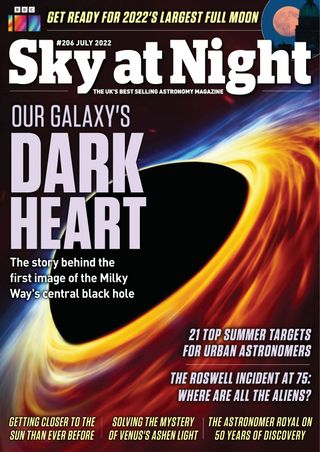

Denne historien er fra July 2022-utgaven av BBC Sky at Night Magazine.
Abonner på Magzter GOLD for å få tilgang til tusenvis av kuraterte premiumhistorier og over 9000 magasiner og aviser.
Allerede abonnent? Logg på
FLERE HISTORIER FRA BBC Sky at Night Magazine
BBC Sky at Night Magazine
The Giant Leap: Why Space is the Next Frontier in the Evolution of Life
“Earth is the cradle of humanity, but one cannot live in the cradle forever,” wrote Konstantin Tsiolkovsky in 1911.

1 mins
February 2026
BBC Sky at Night Magazine
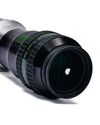
Tele Vue Nagler Type-7 series eyepieces
These premium optics were inspired by Apollo - and deliver a giant leap to your views
4 mins
February 2026
BBC Sky at Night Magazine
Once Upon a Time in Space
While the Space Race of the Cold War years was ultimately a geopolitical contest between the USA and the Soviet Union, the rivalry sparked rapid innovation and inspired multiple generations to look skyward.
1 mins
February 2026
BBC Sky at Night Magazine
The Multiverse: When One Universe Isn't Enough
The concept of a 'multiverse' – the idea that our Universe may be just one of many – is widespread in science fiction and a common thread of online discussions.
1 mins
February 2026
BBC Sky at Night Magazine
Q&A WITH A GAMMA RAY SPECIALIST
In 2025, astronomers detected a blast from space that lasted seven hours. Now they're uncovering the strange processes behind the exceptional outburst
3 mins
February 2026
BBC Sky at Night Magazine
Astronomy Photographer of the Year
The world-leading astrophotography competition returns. Could your image take the top prize of £10,000?
2 mins
February 2026
BBC Sky at Night Magazine
MOONWATCH
February's top lunar feature to observe
2 mins
February 2026
BBC Sky at Night Magazine
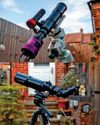
NOVAStar Scarlet A62Q 62mm f/8.4 quadruplet achromatic refractor
Well-built and capable, this beginner scope punches well above its bargain price
4 mins
February 2026
BBC Sky at Night Magazine
STAR OF THE MONTH
Rasalas, Leo the Lion's metal-rich crown
1 min
February 2026
BBC Sky at Night Magazine
Comet 24P/Schaumasse
Having reached perihelion on 8 January, comet 24P/ Schaumasse is now fading. Starting the month at a small-telescope-friendly mag. +10.5, it dims throughout February to below 12th magnitude.
1 min
February 2026
Translate
Change font size