
Gå ubegrenset med Magzter GOLD
Få ubegrenset tilgang til over 9000 magasiner, aviser og premiumhistorier for bare
Prøve GULL - Gratis
The Weird Science of Edgar Allan Poe
The Atlantic
|July - August 2021
Known as a master of horror, he also understood the power—and the limits—of empiricism.

In the early and macabre days of coronavirus shutdowns, Edgar Allan Poe was trending. “The Masque of the Red Death,” his Gothic tale from 1842, became in March of 2020 a go-to source for allegory: A prince whose state is overrun with something like hemorrhagic fever invites 1,000 noble friends to stay inside his well-stocked keep. They amuse themselves for months in quarantine with dancers and buffoons until, one night, a ghost appears and kills them all. This parable felt apropos during the early phase of COVID-19’s spread, when billionaires were hiding on their super-yachts and posting pics on Instagram. “Isolated in the Grenadines avoiding the virus,” the record producer David Geffen captioned one such photo. “I’m hoping everybody is staying safe.”
A Red Death wish for the ultrarich soon gave way to other, less parochial concerns, and “Masque” turned out to be less apt than some of Poe’s other writings on disease. Take “The Sphinx.” The story is set “during the dread reign of the Cholera in New York” in 1832, and the narrator has just bolted to a rustic cottage in the Hudson Valley. That summer, Manhattan was indeed abandoned to a morbid silence, according to Charles E. Rosenberg’s history The Cholera Years. Church bells went unrung, pedestrians disappeared, and tufts of grass sprouted from the streets. “By the end of the first week in July, almost everyone who could afford to had left the city,” Rosenberg writes.
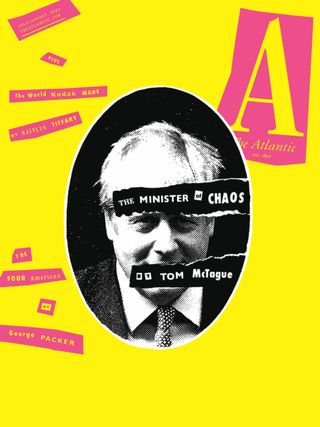

Denne historien er fra July - August 2021-utgaven av The Atlantic.
Abonner på Magzter GOLD for å få tilgang til tusenvis av kuraterte premiumhistorier og over 9000 magasiner og aviser.
Allerede abonnent? Logg på
FLERE HISTORIER FRA The Atlantic
The Atlantic
The Eighth Deadly Sin
Humankind has devised a new form of debasement.

5 mins
May 2026

The Atlantic
The Art of the (New) Deal
What the murals of the Wilbur J. Cohen Federal Building can teach us about patriotism, propaganda, and beauty
12 mins
May 2026

The Atlantic
New Chairs
Collaboration, for Robert Rauschenberg and Merce Cunningham, began with the arrangement of chairs.
1 mins
May 2026
The Atlantic
HISTORY IS RUNNING BACKWARDS
Why reactionaries are taking over the world
21 mins
May 2026

The Atlantic
SOMEDAY IN TEHRAN
Like Donald Trump, I, too, once underestimated the Islamic Republic of Iran.
16 mins
May 2026

The Atlantic
On Losing a Daughter
The people we were died at the exact moment our child did.
19 mins
May 2026

The Atlantic
I Found It: The Best Free Restaurant Bread in America
Thirteen thousand miles. Infinite contenders. One beautiful loaf.
15 mins
May 2026

The Atlantic
EVERYTHING IS FREE AND NOTHING MATTERS
What I saw at Jeff Bezos's Campfire retreat
9 mins
May 2026

The Atlantic
Who Is Black Comedy For?
A new book is nostalgic for the '90s. But the era of crossover success was not necessarily the pinnacle of Black comedic achievement.
8 mins
May 2026

The Atlantic
The Feeling of Becoming Less and Less of a Person
In Ben Lerner's new novel, technology divides us further from one another, and ourselves.
9 mins
May 2026
Translate
Change font size