
Gå ubegrenset med Magzter GOLD
Få ubegrenset tilgang til over 9000 magasiner, aviser og premiumhistorier for bare
The Making of a Model Minority
The Atlantic
|January - February 2021
Indian Americans rarely stop to ask why our entrance into American society has been so rapid—or to consider what we have in common with other nonwhite Americans.

In 1978, several years after leaving India and coming to Texas, my parents decided to move out of our middle-class neighborhood in southwest Houston. Our new home, a few miles away, was a custom-designed contemporary structure on a one-acre lot in the exclusive Piney Point Village, population 3,419, a community that vies for the title of “richest city in Texas.” We had a swimming pool and a three-car garage, where my dad, an immaculately tailored allergist, parked his silver Cadil lac and my mom parked her ivory Mercedes. We had, quite clearly, arrived.
Like countless other immigrants, my parents had come to the United States, in 1969, with little cash in hand. Within a few years, my devout Hindu mother, orphaned at an early age, had switched from a sari to tennis skirts and was competing at Houston’s swankiest clubs. My father, who hadn’t owned a pair of shoes until he was 10, was buying season tickets to the Houston Symphony, where he promptly fell asleep during every performance.
Our world was filled with Indian doctors and engineers. We never stopped to ask why their entrance into American society had been so rapid. We simply accepted that their success was a combination of immigrant pluck and the right values: Indians were family-oriented, education-oriented, and work-oriented.
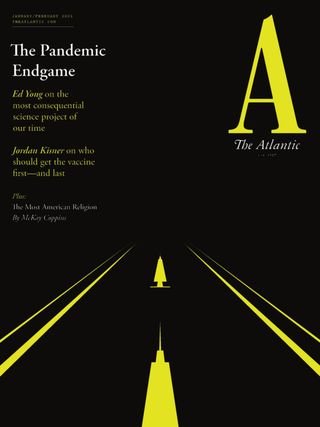

Denne historien er fra January - February 2021-utgaven av The Atlantic.
Abonner på Magzter GOLD for å få tilgang til tusenvis av kuraterte premiumhistorier og over 9000 magasiner og aviser.
Allerede abonnent? Logg på
FLERE HISTORIER FRA The Atlantic
The Atlantic
You Had to Be There
An emerging field of history asks if we can ever really understand how our forebears experienced love, anger, fear, and sorrow.

23 mins
January 2026

The Atlantic
By the Horns
The week before the biggest bullfight of her career, in Cádiz, Spain, this past July, 24-year-old Miriam Cabas posted a carefully produced video on Instagram.
1 mins
January 2026

The Atlantic
The New German War Machine
After World War II, Germany embraced pacifism as a form of atonement. Now the country is arming itself again.
18 mins
January 2026
The Atlantic
The Eloquence
The prime minister was watching a disaster movie when we found him.
4 mins
January 2026

The Atlantic
What's for Dinner, Mom?
The women who want to change the way America eats
12 mins
January 2026

The Atlantic
How Terror Works
A 1947 German novel explores the sometimes corrosive, sometimes energizing nature of fear.
8 mins
January 2026

The Atlantic
Yesterday's Idea of a Modern Man
Sam Shepard, a self-made cowboy, was also a poet of masculine angst.
7 mins
January 2026

The Atlantic
ACCOMMODATION NATION
America's colleges have an extra-time-on-tests problem.
11 mins
January 2026

The Atlantic
Respect the Drummer
A new history of rock, told through its overlooked heroes
5 mins
January 2026

The Atlantic
THE MOST POWERFUL MAN IN SCIENCE
WHY IS ROBERT F. KENNEDY JR. SO CONVINCED HE'S RIGHT?
42 mins
January 2026
Translate
Change font size