
Gå ubegrenset med Magzter GOLD
Få ubegrenset tilgang til over 9000 magasiner, aviser og premiumhistorier for bare
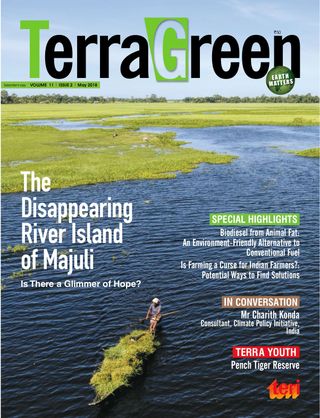
Biodiesel From Animal Fat
TerraGreen
|May 2018
An Environment-Friendly Alternative to Conventional Fuel
Animal fats and oils are lipid materials derived from animals. This includes beef tallow, pork lard, and chicken fat. Animal fat is currently added to pet food and animal feed, and used for industrial purposes such as soap making. In this article, Dr S Talukder, Dr Arvind Soni, and Dr Sagar Chand discuss that animal fats are attractive feedstocks for biodiesel because their cost is substantially lower than the cost of vegetable oil. Animal fat feedstocks can be made into high-quality biodiesel that meets the standard specifications for biodiesel. The authors also briefly discuss the process of biodiesel production from animal fat while also highlighting the drawbacks and challenges to using animal fat feedstocks for producing biodiesel.
-

Fossil fuels support the majority of global energy needs, and the demand for these sources continues to rise, despite the efforts to shift towards renewable sources of energy. Due to the limited supply of fossil fuels there is a persistent search for alternative renewable energy sources, such as biofuels (biodiesel, bio-ethanol, etc.). Biofuels can be considered a renewable source of energy as long as they are based on sustainable biomass production. The advantages of biodiesel over conventional diesel fuel are its portability, ready availability, renewability, higher combustion efficiency, lower sulphur and aromatic content, higher cetane number, higher biodegradability, better emission profile, safer handling, besides being non-toxic. These characteristics make it more greener and eco-friendly than diesel.

Denne historien er fra May 2018-utgaven av TerraGreen.
Abonner på Magzter GOLD for å få tilgang til tusenvis av kuraterte premiumhistorier og over 9000 magasiner og aviser.
Allerede abonnent? Logg på
FLERE HISTORIER FRA TerraGreen

TerraGreen
Pollution Rises in Bengaluru Lakes Post Monsoon: Study
A new lake health study, covering three major water bodies in Bengaluru-Ulsoor, Doddabommasandra and Shivapura-has revealed dangerous levels of pollution and a clear link between rapid urbanization and deteriorating water quality.

1 min
November 2025
TerraGreen
Seven-month Fishing Ban Along Three River Mouths in Odisha for Olive Ridley Nesting
In a bid to ensure safe and harmonious mass nesting of Olive Ridley turtles, Odisha has imposed a seven-month fishing ban from November, 2025 to May 31, 2026 at three river mouths along the coastline.
1 min
November 2025

TerraGreen
A New Track Record
Formula 1, long defined by speed, spectacle, and cutting-edge engineering, is now racing towards a different kind of victory—sustainability.
4 mins
November 2025
TerraGreen
Extreme Floods are Slashing Global Rice Yields Faster than Expected
WMO Report Highlights Increasingly Erratic Water Cycle
3 mins
November 2025
TerraGreen
Renewable Energy Adoption and Corporate Sustainability
Future of Responsible Enterprise
5 mins
November 2025
TerraGreen
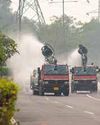
Nature-based Solutions for Delhi's Pollution Crisis
Delhi's annual struggle with toxic air has become an unfortunate ritual. Each winter, the Air Quality Index (AQI) spikes to hazardous levels often above 300, amid school shut downs, masks returning, and public outrage-only to fade until the next smog season.
1 min
November 2025

TerraGreen
Your Pumpkin Might Be Hiding a Toxic Secret
Pumpkins, squash, zucchini, and other members of the gourd family have a surprising trait-they can take up pollutants from the soil and store them in their edible parts.
1 min
November 2025

TerraGreen
Echoes of Love
Why the Forest Can't Live Without Its Hornbills
4 mins
November 2025

TerraGreen
Forests on the Fence
Can Uttarakhand's Van Panchayats Take Root Again?
6 mins
November 2025

TerraGreen
Sacred Tank, Sinking City The Urban Threat to 'Mini-Kashi'
Nestled amid the urban sprawl of Malabar Hill, Mumbai's Banganga Tank stands as a living relic where myth, memory, and modernity intersect.
4 mins
November 2025
Translate
Change font size