
Gå ubegrenset med Magzter GOLD
Få ubegrenset tilgang til over 9000 magasiner, aviser og premiumhistorier for bare
Prøve GULL - Gratis
On A Board: No Permit To Rebels
Outlook
|November 13, 2017
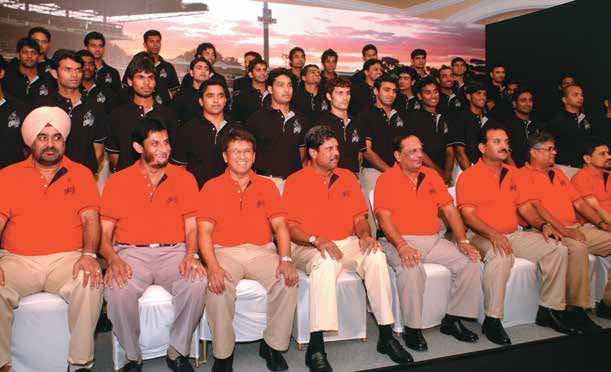
The BCCI is stamping out unauthorised T20 leagues through harsh diktats. At stake is its mastery over Indian cricket.

At exactly 12.45 pm on April 3, 2007, a letter from Zee TV owner Subhash Chandra lands in the fax machine of then BCCI president Sharad Pawar. A couple of hours later, Chandra announces plans for the ambitious Indian Cricket League (ICL) in New Delhi—a step that forced the BCCI, which was aware of the impending ‘unauthorised’ league, to wake up from deep slumber and act.
In the three-page letter, Chandra reminded Pawar that he had ‘cautioned’ him over the phone on March 18, 2007, about a cricket “initiative that Essel Group was planning”. “This [ICL] I see as an inevitable necessity in the present context of the game in India and of the changes and the modifications needed in its contents and models from the search for new talent to innovative playing methods,” Chandra said. “Thus, I am conceiving the ICL as a transparent and innovative laboratory, off the establishment-managed cricket field, for the game and its promotion and remodelling.”
ICL was the first major unauthorised—that is, unapproved by the Board, the top body that makes cricketing decisions in India—tournament that challenged the BCCI’s authority, though it shut shop after only two seasons, with several players and officials remaining unpaid. Shaken, the BCCI—or more precisely, then BCCI vice-president Lalit Modi—renewed the push for his pending proposal with the Board for an inter-city 50-over league. But after ICL, Modi changed the format to 20 overs an innings and convinced Pawar to give him a Rs 200-crore ‘loan’ to start the IPL in 2008. The rest is history.

Denne historien er fra November 13, 2017-utgaven av Outlook.
Abonner på Magzter GOLD for å få tilgang til tusenvis av kuraterte premiumhistorier og over 9000 magasiner og aviser.
Allerede abonnent? Logg på
FLERE HISTORIER FRA Outlook

Outlook
Joy Words Club
Lit fests are defined by their audience. Organisers, speakers, curators are all replaceable but not the readers, not the audience

4 mins
February 01, 2026

Outlook
The Sting of the Bar
India today has more than 4.3 lakh undertrial prisoners. A significant number of them are linked to political cases
8 mins
February 01, 2026
Outlook
The Dispossessed
The systematic creation of criminal and security legislations view Adivasis as an inherently suspect class of criminals and terrorists
8 mins
February 01, 2026

Outlook
The Hypocrisy of Liberals
Favour of the self-proclaimed 'liberals' is lost the minute religion intervenes
5 mins
February 01, 2026
Outlook
Inside the Phansi Yard
Death row intensifies the structured brutalities of the penal system and reminds us why the struggle against the death penalty must also include the fact of prison violence
9 mins
February 01, 2026
Outlook
The Detention Legacy
Since Independence, a number of laws have been enacted that allow preventive detention which have been widely used by all regimes against their political opponents
7 mins
February 01, 2026
Outlook
“This Could Happen to You
The Bhima Koregaon case is not only about those who were imprisoned. It is also about the fate of democracy itself
8 mins
February 01, 2026

Outlook
"I Remember Swinging Between Hope and Despair"
HOPE and despair are basic human emotions and I believe that all human beings, now and then, swing between these two ends of the spectrum in life.
2 mins
February 01, 2026

Outlook
Think Ink
In 2026-the 'year of analog'-how will our relationship with literary festivals evolve?
6 mins
February 01, 2026

Outlook
Who Stole My Youth?
A Delhi district court granted Mohammad Iqbal bail in the riots case within three months. On March 18, 2025, he was discharged in the Babbu murder case, even as the riots trial continues
6 mins
February 01, 2026
Translate
Change font size