
Gå ubegrenset med Magzter GOLD
Få ubegrenset tilgang til over 9000 magasiner, aviser og premiumhistorier for bare
Prøve GULL - Gratis
Improving Anti-Tank Missiles
Geopolitics
|June 2018
Anti-tank guided missiles have been in widespread use since the 1960s and have undergone multiple modifications to improve their range and hit probability. However, the most recent developments in guidance systems have the possibility of vastly improving the hit probability of the missile with consequent implication for the survivability of armour on the battlefield, writes SANJAY BADRI-MAHARAJ

At the outset, the argument that Anti-tank guided missiles (ATGMs) could replace the tank or substitute for the same is a nonsensical one. ATGMs are primarily defensive weapons and while they can be aggressively deployed – as done by the Egyptians during the 1973 war and by Syrian Special Forces during operations against the Israelis in 1982, their defensive nature remains. Furthermore, despite specialised platforms, air, vehicle and ground launched modes, ATGMs remain less mobile and flexible than tanks as weapon systems. The two must perforce be seen as complimentary to each other rather than being mutually exclusive or in some way one being preferable to the other.
First Generation ATGMs
The first generation of widely deployed ATGMs used what is known as manual control to line of sight (MACLOS) and had a typical range of 1.5-3 km suffered from the following disadvantages:
(a) The difficulties faced by the operator in simultaneously tracking the target as well as the missile and then transferring commands through the guidance wires through a joystick. The kill probability of the missile system depended on the operator's skill and training and his capability to perform in an actual battlefield scenario.
(b) The speed of the missile was limited to a modest 100-180 m/s owing to the guidance wire being dispensed from the missile and the operator's response time for guiding the missile limited the missile speed to 100-180 m/s.
(c) The slow speed led to the target being able to take remedial action against such a missile with a consequent reduction in kill probability. Furthermore, a long flight time to target made the operator vulnerable from retaliatory fire.

Denne historien er fra June 2018-utgaven av Geopolitics.
Abonner på Magzter GOLD for å få tilgang til tusenvis av kuraterte premiumhistorier og over 9000 magasiner og aviser.
Allerede abonnent? Logg på
FLERE HISTORIER FRA Geopolitics
Geopolitics
Tata expands Morocco push with LAMV offer
After securing an order for its WhAP 8x8 armoured vehicle from the Royal Moroccan Army, Tata Advanced Systems Limited is now actively promoting its Light Armoured Multipurpose Vehicle in the same market.

1 min
February 2026
Geopolitics
Armenia eyes India's Astra Missile for Su-30SM fleet
Armenia is in advanced discussions with India to acquire the Astra beyond-visual-range air-to-air missile, signalling a deepening of defence ties between the two countries.
1 min
February 2026
Geopolitics
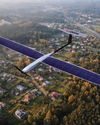
SUVI V1 becomes India's first Type-Certified UAV
In India's unmanned aviation sector has reached a significant regulatory milestone with Okulo Aerospace announcing that its SUVI V1 platform has received Type Certification from the Directorate General of Civil Aviation.
1 min
February 2026
Geopolitics
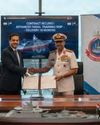
Swan Defence wins Oman naval training ship contract
Swan Defence and Heavy Industries has secured a defence export contract from the Government of the Sultanate of Oman for the construction and supply of an advanced naval training ship for the Royal Navy of Oman.
1 min
February 2026

Geopolitics
HAL'S 'DHRUV' BET
Hindustan Aeronautics Limited (HAL) is attempting a careful reset of the Dhruv helicopter narrative, positioning the platform simultaneously as a cornerstone of India's future civil helicopter market and as a rehabilitated workhorse returning to frontline maritime service.
2 mins
February 2026
Geopolitics
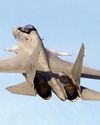
India Offers Su-30MKM Upgrade to Malaysia
India has offered a midlife modernisation package for Malaysia's fleet of 18 Sukhoi Su-30MKM fighters, marking a significant step in bilateral defence-industrial cooperation.
1 min
February 2026
Geopolitics
Astra upgrade rooted in indigenous R and D
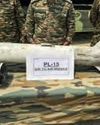
Recent reports linking the Indian Air Force's Astra missile upgrades to Chinese PL-15 technology have been firmly dismissed by defence officials and scientists.
1 min
February 2026

Geopolitics
COMMAND OR COMPLIANCE? RECLAIMING THE SPIRIT OF MILITARY INITIATIVE
What does it truly mean to be a military leader in a democracy? It is a question sparked by the recent controversy surrounding General Manoj Naravane's memoir. While the government always has the final say, a great general shouldn't just wait for instructions; they must lead with confidence, give honest advice, and take decisive action on the battlefield. KARAN KHARAB highlights why India needs a military culture that rewards bold Initiative over hesitation and \"seeking orders.\"
8 mins
February 2026
Geopolitics
India's integrated air combat plan from Mk1A to MkIII
India's combat aviation landscape is entering a defining phase, marked by parallel developments in aircraft production and missile technology that together reflect a broader push toward operational self-reliance.
3 mins
February 2026

Geopolitics
DEFENCE BUDGET 2026-27: FOCUS ON CAPITAL ACQUISITIONS
While there is an overall increase in the latest defence budget, the statistics only tell half of the story, explains AMIT COWSHISH
11 mins
February 2026
Translate
Change font size