
Gå ubegrenset med Magzter GOLD
Få ubegrenset tilgang til over 9000 magasiner, aviser og premiumhistorier for bare
Prøve GULL - Gratis
Finding A Niche
Geopolitics
|August 2019
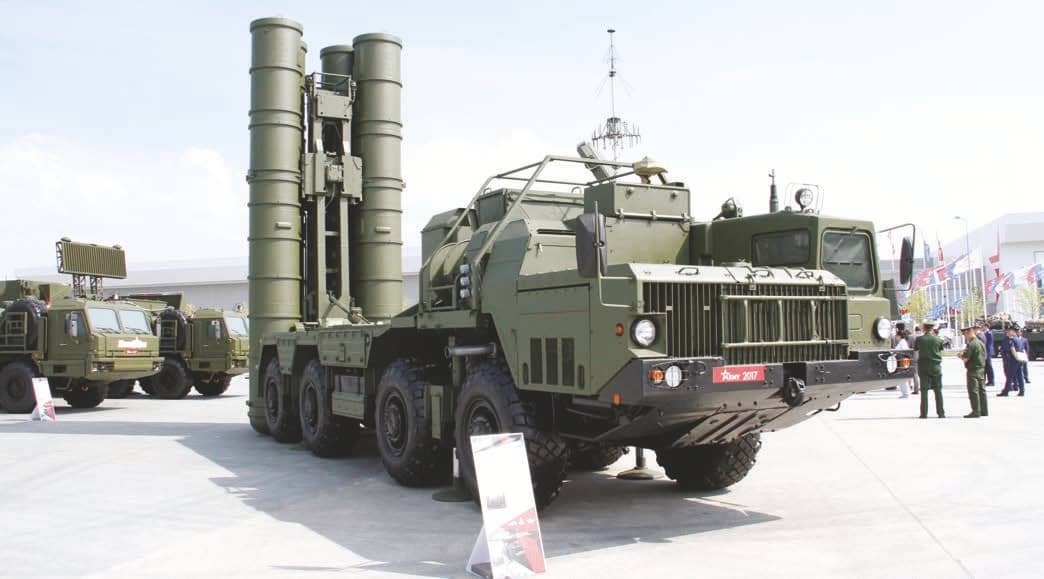
India’s procurement of an estimated five squadrons of s-400 Triumf Sam Systems from Russia has evoked the ire of the united states which has threatened sanctions over the deal. Whether or not this comes to pass, the threat has soured the heretofore positive defence relationship between India and the United States. But then, S-400 is crucial for filling in India’s existing Sam inventory. This is not a mere weapons acquisition, but part of a much broader upgrade of the entire iIndian ground-based Air Defence Network, argues Sanjay Badri Maharaj

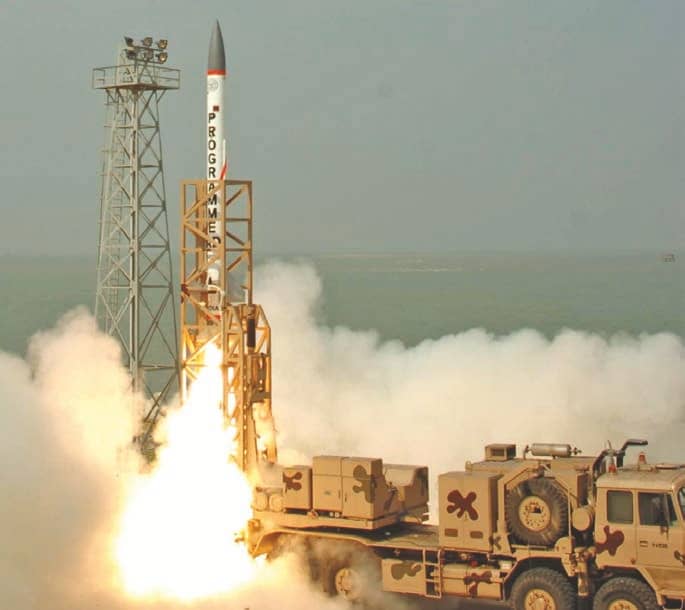
The procurement of S-400 by India is, perhaps, underexplained. It is not supposed to be seen alone. Along with it, there is also the induction of new radars and communication systems, a full integration of civil and military radars as well as the induction of new SAMs and the development of a broad-based SAM and cruise missile defence network. In addition, the first steps towards a limited BMD (Ballistic Missiles Defence) system are part of this overall upgrade process in the entire Indian Ground-Based Air Defence network. It is into this modernisation programme that the procurement of the S-400 needs to be considered and assessed for importance.
India’s Ground-Based Air Defences
The Indian Air Defence Ground Environment System (ADGES) employs a three-tier detection network. While this system is currently in the process of a major modernisation programme, the basic structure of the ADGES network will remain unchanged. The first layer, rather surprisingly, consists of Mobile Observation Posts (MOP). These remain among the most reliable of the early-warning mechanisms available to the Indian Air Force. The MOPs consists of two-man teams equipped with a HF/VHF radio set and field glasses. The personnel in the MOP are well versed in the visual identification of aircraft as well as their general direction of flight. The MOPs are scattered along the borders at random intervals, ranging between 25 and 45 kilometres. The MOPs usually give the first warning of airborne intrusion, the general direction of the attack and, more often than not, the number of aircraft and their type.

Denne historien er fra August 2019-utgaven av Geopolitics.
Abonner på Magzter GOLD for å få tilgang til tusenvis av kuraterte premiumhistorier og over 9000 magasiner og aviser.
Allerede abonnent? Logg på
FLERE HISTORIER FRA Geopolitics
Geopolitics
IAF seeks Ecuador Jaquar airframes
The Indian Air Force has initiated discussions with the Ecuadorian Air Force to acquire its remaining grounded SEPECAT Jaguar airframes, as part of a broader effort to extend the service life of India's Jaguar strike fleet through 2035.

1 min
January 2026
Geopolitics
INDIA TO LAUNCH INDIGENOUS 6-TONNE HALE UAV
India's effort to build an indigenous High Altitude Long Endurance (HALE) unmanned aerial vehicle has moved into a critical transition stage. The Aeronautical Development Establishment has issued an Expression of Interest to identify a Development-cum-Production Partner for the proposed six-tonne class HALE UAV, while simultaneously preparing to seek cabinet committee on Security approval to formally initiate the development phase.
2 mins
January 2026
Geopolitics
IAF evaluates SPICE 250 for precision strikes
The Indian Air Force is evaluating the SPICE 250 precision-guided munition as part of its effort to strengthen standoff strike capabilities against a wide range of targets in contested environments.
1 min
January 2026
Geopolitics
Russia offers S-350 Vityaz with full tech transfer to India
Russia has renewed its offer to supply the Rundian Armed Forces with the S-350 Vityaz air defence system, positioning it as a complementary layer to India's existing S-400 Triumf regiments.
1 min
January 2026

Geopolitics
India inducts first indigenous Pollution Control Vessel
Defence Minister Rajnath Singh recently commissioned Indian Coast Guard Ship Samudra Pratap, the first of two Pollution Control Vessels, calling it a reflection of India's increasingly mature and capable defence industrial ecosystem.
1 min
January 2026
Geopolitics
DAC clears indigenous EW suite for IAF's Mi-17 V5 fleet
The Defence Acquisition Council has accorded Acceptance of Necessity (AON) for multiple DRDO-developed systems, including an advanced Electronic Warfare (EW) Suite for the Indian Air Force's Mi17 V5 helicopter fleet.
1 min
January 2026

Geopolitics
WHY PSLV-C62 FAILURE WILL BADLY HURT INDIA
In space research, satellite launch failures are not uncommon. Yet the failure of ISRO's PSLV-C62 will hurt India, its space ambitions, and its military capabilities for years to come
5 mins
January 2026

Geopolitics
Prime Toolings targets 10 kN thrust milestone by March
Prime Toolings has reiterated its confidence in achieving a 10 kN thrust benchmark by March 2026, even after recent propulsion trials initially fell short of expectations. The company said the development effort was originally structured around an 8 kN thrust objective, but early test runs stabilised at approximately 6 kN. Rather than treating this outcome as a setback, the company views it as a valuable learning phase inherent to complex propulsion development.
1 min
January 2026
Geopolitics
IRRELEVANT UNITED NATIONS
If anything, the U.S. invasion of Venezuela and the capture of its President Nicolás Maduro, or, for that matter, President Donald Trump's habit of imposing economic sanctions on countries effortlessly, constitute a trend that makes the existence of the United Nations (U.N.) irrelevant in its present form. It is an affront to the world body by undermining the principles of collective security and multilateralism.
4 mins
January 2026

Geopolitics
Indian startup Carbine Systems tests first private DEW prototype
Belgaum-based Carbine Systems has testing of its first directed-energy weapon prototype, H.A.R.A. Mk 1 (Hyper Amplification Radiant Array),. marking a notable milestone for India's indigenous laser-weapons ecosystem.
1 min
January 2026
Translate
Change font size