Prøve GULL - Gratis
An Effective Sea-Based Deterrent For India
Geopolitics
|February 2018
In order to complete its nuclear triad, the Arihant-class and its successor submarines have to deploy missiles of ranges exceeding 7000km to enable them to strike targets within China – should the need arise – from well within Indian waters and from either coast of the Indian mainland.

In 2009, the INS Arihant – the lead vessel of a class of at least three ballistic missile submarines (SSBN) was launched. The vessel is still undergoing evaluation and sea trials, although reports had emerged of its commissioning in August 2016, an ambitious attempt to give India an operational and survivable nuclear triad. Many Indian nuclear theorists and strategists have held that a force of SSBNs is essential for India to have a fully survivable nuclear deterrent and the development of the INS Arihant has been welcomed as a major step forward in the development of the aforesaid triad.
With a displacement of 6000 tonnes, a length of 111 metres and powered by an 83 MW pressurised water reactor, the INS Arihant has a maximum speed of some 24 knots and has been tested to a depth of some 350 metres. The submarine, though there was significant input from Russia, is the first nuclear powered vessel to be built in India and represents a remarkable technical achievement for both India’s defence research and development agencies as well as its ship-building industry. Its armament consists of 533mm torpedoes and, as befits its task as a ballistic missile submarine, between four and twelve submarine-launched ballistic missiles fitted with nuclear warheads with the number of missiles being dependent on the type carried.
However, in January 2018 it was reported that the INS Arihant was out of commission for 10 months following an incident caused by sea-water ingress following a hatch being left open, leading to fears of reactor contamination. Following checks, the vessel has returned to service. On the face of it, while one may not dispute the fact that the vessel was out of commission for 10 months, the cause of its misfortune is somewhat dubious as stated to date.


Denne historien er fra February 2018-utgaven av Geopolitics.
Abonner på Magzter GOLD for å få tilgang til tusenvis av kuraterte premiumhistorier og over 9000 magasiner og aviser.
Allerede abonnent? Logg på
FLERE HISTORIER FRA Geopolitics
Geopolitics
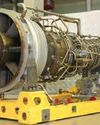
Navy Flags Critical Engine Dependency Gap
Despite significant advances in indigenous warship construction, India's continued reliance on foreign marine propulsion systems remains a critical vulnerability in its defence framework.

1 mins
April 2026

Geopolitics
GTRE Advances Engine Testing With Su-30
India's aero-engine development programme is set to accelerate as GTRE proceeds to convert two Su-30 MKI fighters into dedicated flying testbeds, enabling real-time validation of indigenous propulsion technologies.
1 mins
April 2026
Geopolitics
Indigenous Anti-Tank Missile Nears Production Clearance
India's indigenous man-portable anti-tank guided missile is approaching final clearance for mass production following successful validation trials against moving targets.
1 min
April 2026
Geopolitics
A RE-LOOK AT INDIAN MILITARY LOGISTICS & THEATRE COMMANDS
JOSEPH P CHACKO explains why logistics systems must be integrated to be capable of seamlessly supporting modern warfare operations, which necessitate rapid, coordinated responses across multiple domains
14 mins
April 2026
Geopolitics
Defence Spending Drives Acquisition Surge
India's defence modernisation programme has entered a phase of rapid implementation, with FY 2025-26 seeing full utilisation of capital expenditure and a clear focus on addressing critical capability gaps across the armed forces.
3 mins
April 2026

Geopolitics
K9 Vajra Hits mega Indigenisation
India's India's flagship tracked artillery programme has reached a crucial turning point, with the K9 Vajra-T now achieving over 82 per cent indigenous content at the work package level, marking a fundamental shift in domestic defence manufacturing capability.
1 min
April 2026

Geopolitics
NUCLEAR SHARKS OF STEEL!
India’s third Arihant-class submarine, INS Aridhaman, was commissioned into the Indian Navy on April 3, 2026, at Visakhapatnam by Defence Minister Rajnath Singh.
2 mins
April 2026

Geopolitics
Army Eyes Tank-Launched Drone Strikes
The Indian Army is advancing a new concept to equip its main battle tanks with indigenous loitering munitions that can be deployed directly from existing 81mm smoke grenade launchers.
1 min
April 2026

Geopolitics
THE ANATOMY OF A POLARISED FRONTIER
West Bengal has changed from a longtime “Red Bastion” to one of the most hotly contested states in Indian politics.
2 mins
April 2026

Geopolitics
Navy Advances Drone-Ready Amphibious Carriers
India's next-generation amphibious warfare programme has entered a crucial -phase as the Navy advances its evaluation of four large-deck platforms designed to revolutionise expeditionary operations.
1 mins
April 2026
Translate
Change font size