Prøve GULL - Gratis
Mayhem In Mandsaur
FRONTLINE
|July 7, 2017
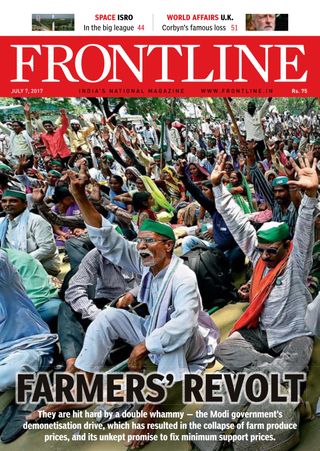
The Shivraj Singh Chouhan government remained complacent as resentment was building up among the farmers of Madhya Pradesh over the unremunerative prices of farm produce. Then came Mandsaur to wake it up.

AN OUTBURST OF INDIGNATION FROM members of the farming community, who had been loosely gathered for a protest at Pipliya Mandi near Mandsaur in the Malwa region of Madhya Pradesh on June 6, spiralled out of control. Blood and thunder followed.
Farmers’ resentment had been gathering strength for some weeks in the State. Distressed farmers had called for a 10-day agitation from June 1 to draw the government’s attention to their plight: abundant crops but low returns. On June 6, thousands of farmers gathered at Pipliya Mandi to stage a protest. Soon they went on the rampage, forcing shops, particularly vegetable shops, to down shutters. The agitation quickly spread to Indore, Dewas, Shajapur, Sehore, Bhopal and other places in the State. The government was not prepared for such a massive agitation. On June 5, completely unaware of the storm that was brewing, Chief Minister Shivraj Singh Chouhan had announced, in the presence of some farmers affiliated to the Bharatiya Kisan Sangh, that the farmers had called off their agitation in the State.
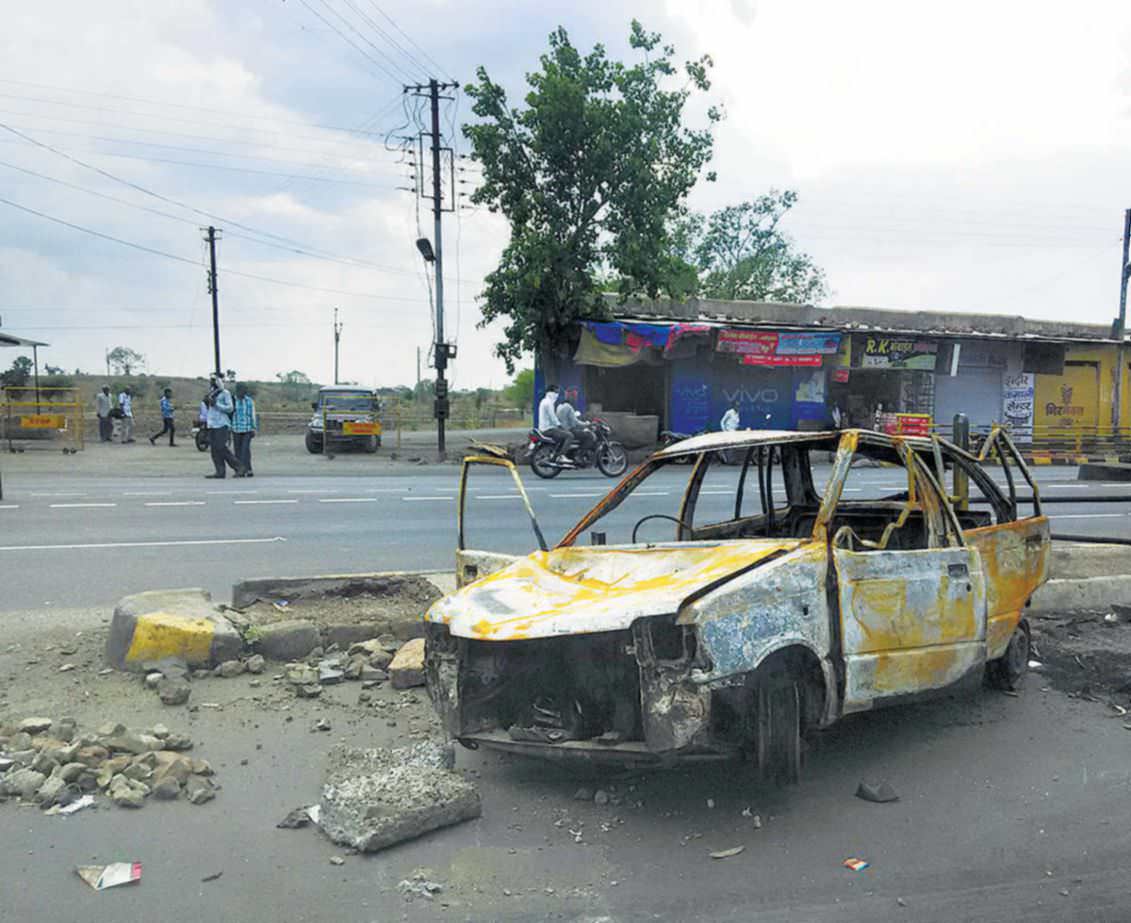
The next day, angry farmers blocked the national highway, torched buses and trucks, looted and set fire to shops and forced the closure of markets, especially fruit and vegetable mandis, in order to cut off supply to the cities. The police and paramilitary forces opened fire on the stone-throwing farmers, killing five of them instantly and injuring several others. One farmer succumbed to injuries three days later. What prompted the firing is a mystery. On camera, the District Collector, S.K. Singh (who was subsequently transferred), denied giving orders to open fire. The Home Minister also said no order had been given to open fire. The situation in Mandsaur was so volatile that the government imposed a curfew.

Denne historien er fra July 7, 2017-utgaven av FRONTLINE.
Abonner på Magzter GOLD for å få tilgang til tusenvis av kuraterte premiumhistorier og over 9000 magasiner og aviser.
Allerede abonnent? Logg på
FLERE HISTORIER FRA FRONTLINE

FRONTLINE
How Not To Handle An Epidemic
The lockdowns were meant to buy time to put in place appropriate health measures and contain the coronavirus’ spread, but they have failed to achieve the objective and heaped immense misery on the marginalised sections of society. India is still in the exponential phase of the COVID-19 infection and community transmission is a reality that the government refuses to accept.

9 mins
June 5, 2020
FRONTLINE
Tragedy on foot
As the COVID-19-induced lockdown cuts the ground beneath their feet in Tamil Nadu, thousands of migrant workers are trudging along the highway to the relative safety of their upcountry homes.
11 mins
June 5, 2020

FRONTLINE
Sarpanchs as game changers
Odisha manages to keep COVID-19 well under control because of the strong participation of panchayati raj institutions and the community at the grass-roots level under the leadership of Chief Minister Naveen Patnaik.
7 mins
June 5, 2020

FRONTLINE
Scapegoating China
As the COVID-19 death rate spikes and the economy tanks in the United States, Donald Trump and his advisers target China and the World Health Organisation with an eye to winning the forthcoming presidential election.
10 mins
June 5, 2020

FRONTLINE
New worries
Kerala’s measured approach to the pandemic and lockdown has yielded results. But it still has to grapple with their huge economic impact on its economy, which it feels the Centre’s special financial relief package does little to alleviate.
9 mins
June 5, 2020
FRONTLINE
No love lost for labour
Taking advantage of the lockdown and the inability of workers to organise protests, many State governments introduce sweeping changes to labour laws to the detriment of workers on the pretext of reviving production and boosting the economy.
8 mins
June 5, 2020
FRONTLINE
Capital's Malthusian moment
In a world that needs substantial reorienting of production and distribution, Indian capital is resorting to a militant form of moribund neoliberalism to overcome its current crisis. In this pursuit of profit, it is ready and willing to throw into mortal peril millions whom it adjudicates as not worth their means—an admixture of social Darwinism born of capital’s avarice and brutalism spawned by Hindutva. .
14 mins
June 5, 2020

FRONTLINE
Understanding migration
When governments and their plans are found to be blatantly wanting in addressing reverse migration, exercises such as the Ekta Parishad’s survey of migrant workers throughout India can be useful to work out creative long-lasting solutions.
10 mins
June 5, 2020
FRONTLINE
Waiting for Jabalpur moment
The Supreme Court’s role in ensuring executive accountability during the ongoing lockdown leaves much to be desired. Standing in shining contrast is the record of some High Courts.
15 mins
June 5, 2020

FRONTLINE
An empty package
The Modi regime, which has been unable to control the COVID-19 infection, restore economic activity and provide relief to millions exposed to starvation, trains its sights on Indian democracy, making use of the panic generated by fear and a lockdown that forecloses paths of resistance.
17 mins
June 5, 2020
Translate
Change font size