Prøve GULL - Gratis
Encounters With Reality
FRONTLINE
|February 14, 2020
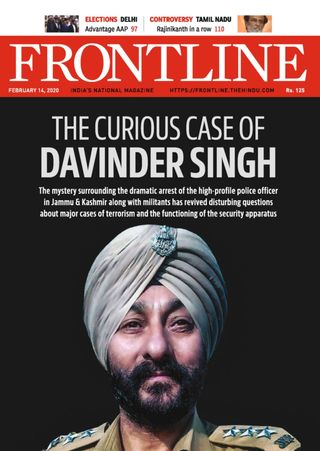
The news of Davinder Singh’s arrest brings a strange hope, of closure of wounds, for the besieged eight million people of Kashmir whose memories are alive with the past injustices of the Macchil, Chattisinghpora, Pathribal and Barakpora massacres.

THE ARREST OF DAVINDER SINGH HAS shaken Kashmir’s complex security grid like never before. He told his interrogators that he was helping the militants he had been with when he was arrested get outside the Kashmir Valley against payment of Rs.12 lakh. The motive and the final destination of the militants are still not known. But Davinder Singh’s initial confession instantly evoked memories of the Parliament House attack in 2001, which brought India and Pakistan to the brink of an all-out war.
According to a letter written to his lawyer by Afzal Guru, the accused in the Parliament House attack case who was hanged and then secretly buried inside Delhi’s Tihar jail, it was Davinder Singh who forced him to take a militant named Mohammad to Delhi. Mohammad was among five Pakistani militants who carried out the attack.
But despite Afzal Guru’s confession before the court, Davinder Singh’s role in the Parliament House attack was never probed. The court only believed the part that Afzal Guru brought Mohammad to Delhi, but not the part that he did so at Davinder Singh’s behest. While Afzal Guru was hanged “to satisfy the collective conscience of the nation”, Davinder Singh remained untouched.
As Davinder Singh’s name kept cropping up after the attack, he was transferred to the Traffic Police Department, apparently to let him cool his heels.
But the attempts to whitewash Davinder Singh’s crimes by the system only made Kashmiris certain that justice was far from their reach. Afzal Guru’s trial and subsequent hanging have become a benchmark of India’s justice system for ordinary Kashmiris.

Denne historien er fra February 14, 2020-utgaven av FRONTLINE.
Abonner på Magzter GOLD for å få tilgang til tusenvis av kuraterte premiumhistorier og over 9000 magasiner og aviser.
Allerede abonnent? Logg på
FLERE HISTORIER FRA FRONTLINE

FRONTLINE
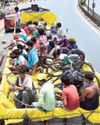
How Not To Handle An Epidemic
The lockdowns were meant to buy time to put in place appropriate health measures and contain the coronavirus’ spread, but they have failed to achieve the objective and heaped immense misery on the marginalised sections of society. India is still in the exponential phase of the COVID-19 infection and community transmission is a reality that the government refuses to accept.

9 mins
June 5, 2020
FRONTLINE
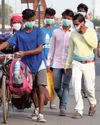
Tragedy on foot
As the COVID-19-induced lockdown cuts the ground beneath their feet in Tamil Nadu, thousands of migrant workers are trudging along the highway to the relative safety of their upcountry homes.
11 mins
June 5, 2020

FRONTLINE
Sarpanchs as game changers
Odisha manages to keep COVID-19 well under control because of the strong participation of panchayati raj institutions and the community at the grass-roots level under the leadership of Chief Minister Naveen Patnaik.
7 mins
June 5, 2020

FRONTLINE
Scapegoating China
As the COVID-19 death rate spikes and the economy tanks in the United States, Donald Trump and his advisers target China and the World Health Organisation with an eye to winning the forthcoming presidential election.
10 mins
June 5, 2020

FRONTLINE
New worries
Kerala’s measured approach to the pandemic and lockdown has yielded results. But it still has to grapple with their huge economic impact on its economy, which it feels the Centre’s special financial relief package does little to alleviate.
9 mins
June 5, 2020
FRONTLINE
No love lost for labour
Taking advantage of the lockdown and the inability of workers to organise protests, many State governments introduce sweeping changes to labour laws to the detriment of workers on the pretext of reviving production and boosting the economy.
8 mins
June 5, 2020
FRONTLINE
Capital's Malthusian moment
In a world that needs substantial reorienting of production and distribution, Indian capital is resorting to a militant form of moribund neoliberalism to overcome its current crisis. In this pursuit of profit, it is ready and willing to throw into mortal peril millions whom it adjudicates as not worth their means—an admixture of social Darwinism born of capital’s avarice and brutalism spawned by Hindutva. .
14 mins
June 5, 2020

FRONTLINE
Understanding migration
When governments and their plans are found to be blatantly wanting in addressing reverse migration, exercises such as the Ekta Parishad’s survey of migrant workers throughout India can be useful to work out creative long-lasting solutions.
10 mins
June 5, 2020

FRONTLINE
Waiting for Jabalpur moment
The Supreme Court’s role in ensuring executive accountability during the ongoing lockdown leaves much to be desired. Standing in shining contrast is the record of some High Courts.
15 mins
June 5, 2020

FRONTLINE
An empty package
The Modi regime, which has been unable to control the COVID-19 infection, restore economic activity and provide relief to millions exposed to starvation, trains its sights on Indian democracy, making use of the panic generated by fear and a lockdown that forecloses paths of resistance.
17 mins
June 5, 2020
Translate
Change font size