Prøve GULL - Gratis
Epicurus For Today
Philosophy Now
|December 2016 / January 2017
Luke Slattery argues that the ancient philosophy of the Garden offers an attractive answer to some of the challenges of the modern world.
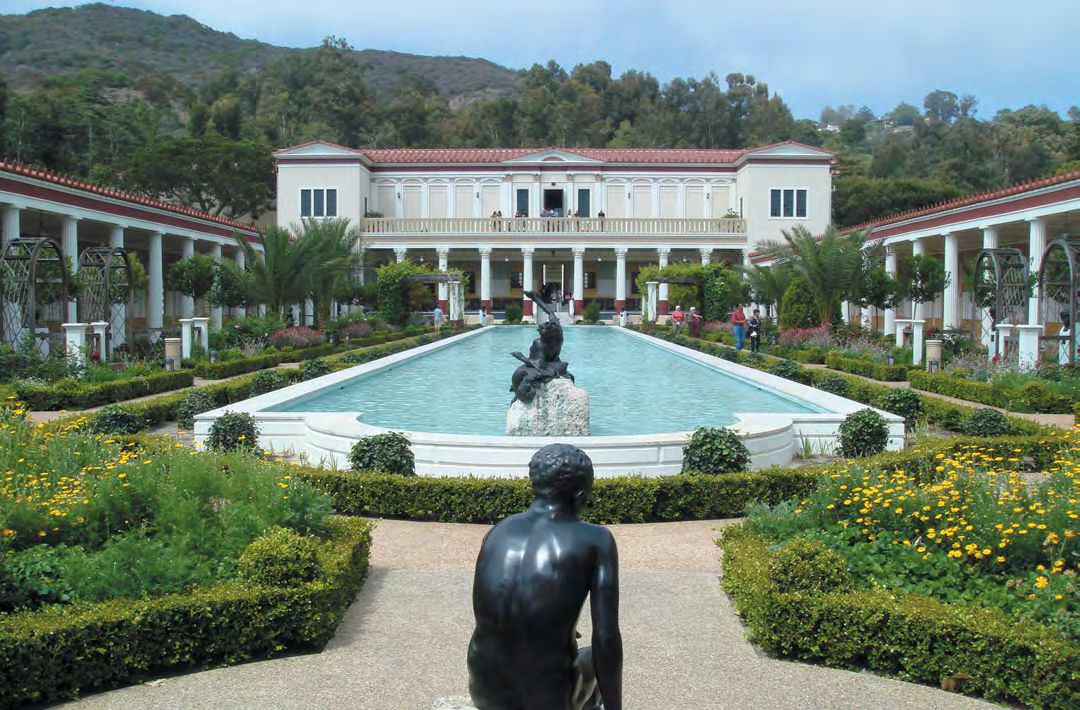
An elaborate faux Roman villa, replete with coffered ceilings and a lavish ‘Vesuvian’ color scheme, rises above the Pacific coast at Malibu. Why location scouts didn’t seize upon it for the Coen brothers’ comedy Hail, Caesar is anyone’s guess. But it’s best thought of as another kind of prop. Built by John Paul Getty to house his art collection, the Getty Villa connects the contemporary world with an ancient philosophy that could change the world for the better; or, at least, make a difference. Getty modelled his villa on a partially buried seaside mansion at Roman Herculaneum, a victim of the eruption of Vesuvius in 79 AD. It is known as ‘the Villa of the Papyri’ because it housed a vast collection of papyrus manuscripts. Most of these are on Epicurean themes.
Epicureanism was the world’s first ‘green’ philosophy. When people turn to the ancient therapeutic philosophies, or arts of life, they tend to look to resolute Stoicism for succor. But Epicureanism, which insists that we learn to be happy with less, is a better fit with the anxieties du jour.
The reason Epicureanism is not often mentioned in this context is that for more than two thousand years it has been misunderstood. Today Epicureanism is regarded as a form of gastronomic connoisseurship. In antiquity it was the exact opposite.

Denne historien er fra December 2016 / January 2017-utgaven av Philosophy Now.
Abonner på Magzter GOLD for å få tilgang til tusenvis av kuraterte premiumhistorier og over 9000 magasiner og aviser.
Allerede abonnent? Logg på
FLERE HISTORIER FRA Philosophy Now

Philosophy Now
Nosferatu
Stefan Bolea considers two very different artistic approaches to love and death.

6 mins
April/May 2025

Philosophy Now
Heidegger's Ghost
Raymond Tallis wonders where Heidegger's body went when he was philosophising.
7 mins
April/May 2025

Philosophy Now
Is Comedy Good For Us?
Damaris Stock has a laugh with Plato and friends.
10 mins
April/May 2025
Philosophy Now
In Defense of Idleness
Wendell O'Brien says, 'Just Don't Do It'.
10 mins
April/May 2025
Philosophy Now
Leaving Nothing to Chance by Carl Knight
LEAVING NOTHING TO Chance (2025) by Carl Knight, is an informed, proficient and lucid defence of luck egalitarianism.
3 mins
April/May 2025

Philosophy Now
Star Maker by Olaf Stapledon
THE 1937 SCIENCE FICTION novel Star Maker was written by philosophy professor Olaf Stapledon in the dark days as Europe awaited the onslaught of Nazi Germany. This casts a shadow over the whole book.
6 mins
April/May 2025
Philosophy Now
Love & Emptiness in the Sufi Tradition
Medha Ninad Tambe meditates on Rumi, love and self-negation.
7 mins
April/May 2025

Philosophy Now
The Hedgehog's Dilemma: A Metaphor About the Challenges of Human Intimacy
Krishna Chaubey explains Arthur Schopenhauer's poignant thought experiment.
4 mins
April/May 2025

Philosophy Now
The Mirror & the Flame
Rebwar Fatah imagines Attar's & Hegel's shared path.
4 mins
April/May 2025
Philosophy Now
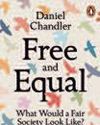
Free and Equal by Daniel Chandler
DANIEL CHANDLER, AN economist and philosopher based at the London School of Economics, begins Free and Equal: What Would a Fair Society Look Like? (2023) by asking an intriguing question. How is it, he wonders, that the most influential political philosopher of the last century has had almost no practical impact on politics or policy? The philosopher in question is John Rawls, whose magnum opus was A Theory of Justice (1971).
5 mins
April/May 2025
Translate
Change font size