
Gå ubegrenset med Magzter GOLD
Få ubegrenset tilgang til over 9000 magasiner, aviser og premiumhistorier for bare
Prøve GULL - Gratis
Social Media Ruined Social Climbing
New York magazine
|May 1–14, 2017
Popularity didn’t used to be quantifiable.

“How did people even measure popularity before social media?” I asked idly while a friend was cropping a selfie for Instagram. “They didn’t,” she replied. As she refreshed the app to watch the first wave of “likes” roll in, I felt a stab of nostalgia. Remember when popularity wasn’t quantifiable? Remember when “trends” were subjective, before there were algorithms to calculate them by analyzing words typed into search engines and shared Facebook posts? I miss the days when the most stressful thing about popularity was the sheer uncertainty of the whole enterprise. Back when popularity was cool and aloof, identifiable only by the feelings of desire, envy, and yearning experienced by those who looked upon it.
Today, there is no mystery. The metrics of popularity are pervasive and unavoidable. News stories, video clips, music play lists— everything comes with view counts, share counts, and crowd-sourced ratings. If you look up an address on Google, you see a rating of the location. (My subway stop has 3.9 stars.) If you order dinner on Seamless, you’ll see tabulations of popularity and quality. (If a two star sushi spot has been rated a thousand times and is still in business, it can’t be that bad, right?) If you add a new contact to your phone, Facebook will announce how much social overlap you have. Some messaging apps even force you to confront the mechanics of popularity head-on—Snapchat compares how much you message your friends versus how much they message you, and assigns heart and side-eye emoji to your contact list accordingly.
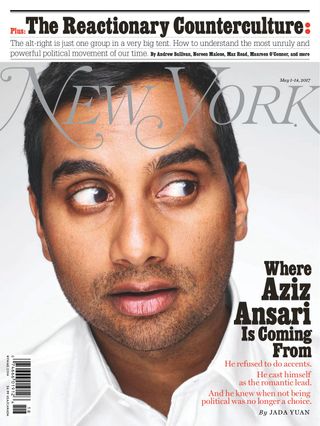

Denne historien er fra May 1–14, 2017-utgaven av New York magazine.
Abonner på Magzter GOLD for å få tilgang til tusenvis av kuraterte premiumhistorier og over 9000 magasiner og aviser.
Allerede abonnent? Logg på
FLERE HISTORIER FRA New York magazine

New York magazine
What’s an Artist Worth?
A wave of New York dealers are leaving galleries to start their own agencies with new ideas about how to build their clients’ careers.

6 mins
June 15–28, 2026

New York magazine
Joyce Carol Oates Can’t Quit
The octogenarian is on her 66th novel and 15th year as an X power user.
9 mins
June 15–28, 2026

New York magazine
Faux Is a Real McNally Restaurant
George McNally is building his first business without his famous dad. He's putting steak-frites on the menu anyway.
1 mins
June 15–28, 2026

New York magazine
Who Is Obama's Megalith For?
His presidential center in Chicago is a nice gesture, but it’s too centered on him.
5 mins
June 15–28, 2026

New York magazine
Days Not Left Behind Paul McCartney's new album feels like an elegant Beatles prequel.
EACH YEAR OR SO, a fresh occasion arises to gather in excitement about the Beatles.
5 mins
June 15–28, 2026

New York magazine
MOTHER F*CKER
After becoming a single mom, I began compulsively dating in order to figure out what kind of woman I wanted to be.
15 mins
June 15–28, 2026

New York magazine
Rom-coms Need an Update Jennifer Lopez and Brett Goldstein's Office Romance gets stuck in old ideas.
WHATEVER MAKES the romantic comedy worthwhile and delightful has been lost in Hollywood.
3 mins
June 15–28, 2026

New York magazine
Jesse Genet
The entrepreneur turned stay-at-home mom extols the joys of running her household with an ever-multiplying staff of AI agents.
6 mins
June 15–28, 2026

New York magazine
YOUR DIGITAL LIFE
We're each attached to years of texts, Slacks, searches, and pictures, an archive of self-incrimination and humiliation that could detonate at any time.
30 mins
June 15–28, 2026

New York magazine
Sam Bankman-Fried's Prison Experiment His life behind bars and his desperate campaign to get free.
SAM BANKMAN-FRIED IS INCARCERATED at a federal prison in Lompoc, California, which sits northwest of Santa Barbara and is dubbed “the City of Arts and Flowers.”
39 mins
June 15–28, 2026
Translate
Change font size