
Gå ubegrenset med Magzter GOLD
Få ubegrenset tilgang til over 9000 magasiner, aviser og premiumhistorier for bare
Save Energy (And Money, Too)
Kiplinger's Personal Finance
|April 2021
Tax breaks and the prospect of lower utility bills make these projects worth a look.

A big slice of the cost of owning a home is what you spend on energy. Average annual energy spending in the U.S. adds up to $1,472 for electricity, $416 for natural gas and $113 for fuel oil and other fuels, according to the U.S. Bureau of Labor Statistics Consumer Expenditure Survey. (Your own expenses will vary depending on utility costs in your area, the size of your home and how heavily you use energy.)
The federal government encourages energy-efficient home improvements by offering tax credits for certain upgrades. For existing primary residences, putting in energy=efficient windows and doors, furnaces, air conditioners, insulation, water heaters, roofs and some other items qualifies you to take a tax credit of either 10% of the cost or specific amounts ranging from $50 to $300, depending on the improvement. The credit is currently set to expire at the end of 2021, and a lifetime cap of $500 applies to the total value of credits you can get in all tax years after 2005. (A credit is a dollar-for-dollar reduction of your tax bill.)
You can snag a more lucrative tax credit for certain renewable energy systems— including solar panels, small wind turbines and geothermal heat pumps—on new and existing residences, including second homes. Congress recently extended the tax break; now you can get a 26% credit for projects placed in service by the end of 2022, or 22% for projects placed in service in 2023.
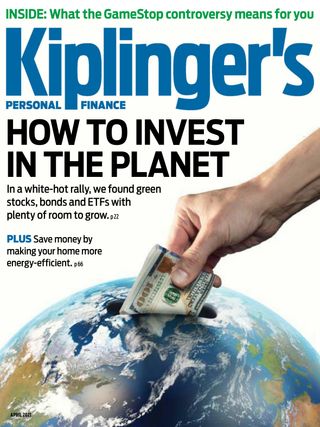

Denne historien er fra April 2021-utgaven av Kiplinger's Personal Finance.
Abonner på Magzter GOLD for å få tilgang til tusenvis av kuraterte premiumhistorier og over 9000 magasiner og aviser.
Allerede abonnent? Logg på
FLERE HISTORIER FRA Kiplinger's Personal Finance

Kiplinger's Personal Finance
A Helping Hand for the Homeless
This nonprofit offers shelters, job programs, support in finding a home and more.

2 mins
January 2026

Kiplinger's Personal Finance
Downsizing Advice, Part II
My column on downsizing (see “Living in Retirement,” Oct.) struck a chord with readers. I heard from many who offered advice on successfully culling clutter.
2 mins
January 2026
Kiplinger's Personal Finance
WHY COMPANY GUIDANCE MATTERS
Understanding how corporate profit forecasts affect analysts' estimates and stock ratings can help you make investment decisions.
4 mins
January 2026

Kiplinger's Personal Finance
WHAT SCIENCE REVEALS ABOUT MONEY AND A HAPPY RETIREMENT
Whether you're still planning or already retired, these research-based insights point the way to your best post-work life.
12 mins
January 2026

Kiplinger's Personal Finance
WHAT TO KNOW ABOUT FLOOD INSURANCE
Even if your home is outside a high-risk area, you may want to purchase coverage.
2 mins
January 2026

Kiplinger's Personal Finance
My Retirement Learning Curve
THE NEW WORLD OF RETIREMENT
2 mins
January 2026

Kiplinger's Personal Finance
CREATE A FINANCIAL PLAN WITH THESE TOOLS
Online programs for do-it-yourselfers are better than ever-and they're affordable, too.
9 mins
January 2026

Kiplinger's Personal Finance
2026 MONEY CALENDAR
These key dates and tips will help you make the most of your money in the new year.
7 mins
January 2026
Kiplinger's Personal Finance
Should You Renew Your CD?
AFTER you put money in a certificate of deposit, you can sit back while it collects interest over its term. Once it reaches maturity, you'll face a decision: renew it or withdraw the funds.
1 mins
January 2026

Kiplinger's Personal Finance
GIVING THE BULL THE BENEFIT OF THE DOUBT
KIPLINGER: What do you see ahead for financial markets in 2026? Do you have a target price for the S&P 500?
5 mins
January 2026
Translate
Change font size