
Gå ubegrenset med Magzter GOLD
Få ubegrenset tilgang til over 9000 magasiner, aviser og premiumhistorier for bare
Finally, on the Brink of Dow 36,000
Kiplinger's Personal Finance
|June 2021
In early 1998, my American EnterpriseInstitute colleague Kevin Hassett, a well-credentialed academic who would later become chairman of the Council of Economic Advisers during the Trump administration, came to me with an idea. Over the previous three-fourths of a century, stocks had returned an annual average of about 11% and government bonds 5.5%.

Yet over the long run, stocks were no more risky than bonds—a phenomenon that economist Jeremy Siegel had demonstrated in his 1994 classic, Stocks for the Long Run. “It is very significant,” Siegel wrote, “that stocks, in contrast to bonds or bills, have never delivered to investors a negative real return over periods lasting 17 years or more.”
In other words, stocks carried a big premium compared with bonds to compensate investors for the extra risk they were taking, but there was no extra risk!
This paradox is called the equity premium puzzle, and Kevin and I believed that people were solving the conundrum by bidding up the prices of stocks to their proper level. Higher prices today mean lower future returns, allowing the two asset classes to reach a logical equilibrium.
The road to 36,000. We went public with our insight in an op-ed that the Wall Street Journal published on March 3, 1998, with the headline, “Are Stocks Overvalued? Not a Chance.” At the time, the Dow Jones industrial average was 8782. We suggested, with many caveats, that the Dow ought to be 35,000. A year and a half later, with a few adjustments, our thesis became a book called Dow 36,000. As for the Dow itself, well, it has taken longer than we thought to reach the magic number, but arrival seems imminent with just 6.5% to go as of April 9.
The main thrust of our book was that buying and holding a diversified portfolio of stocks is by far the best investment strategy, and the second half of
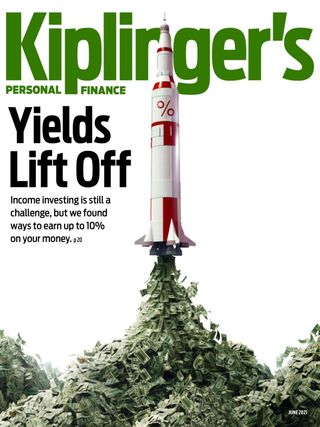

Denne historien er fra June 2021-utgaven av Kiplinger's Personal Finance.
Abonner på Magzter GOLD for å få tilgang til tusenvis av kuraterte premiumhistorier og over 9000 magasiner og aviser.
Allerede abonnent? Logg på
FLERE HISTORIER FRA Kiplinger's Personal Finance

Kiplinger's Personal Finance
A Helping Hand for the Homeless
This nonprofit offers shelters, job programs, support in finding a home and more.

2 mins
January 2026

Kiplinger's Personal Finance
Downsizing Advice, Part II
My column on downsizing (see “Living in Retirement,” Oct.) struck a chord with readers. I heard from many who offered advice on successfully culling clutter.
2 mins
January 2026
Kiplinger's Personal Finance
WHY COMPANY GUIDANCE MATTERS
Understanding how corporate profit forecasts affect analysts' estimates and stock ratings can help you make investment decisions.
4 mins
January 2026

Kiplinger's Personal Finance
WHAT SCIENCE REVEALS ABOUT MONEY AND A HAPPY RETIREMENT
Whether you're still planning or already retired, these research-based insights point the way to your best post-work life.
12 mins
January 2026

Kiplinger's Personal Finance
WHAT TO KNOW ABOUT FLOOD INSURANCE
Even if your home is outside a high-risk area, you may want to purchase coverage.
2 mins
January 2026

Kiplinger's Personal Finance
My Retirement Learning Curve
THE NEW WORLD OF RETIREMENT
2 mins
January 2026
Kiplinger's Personal Finance
CREATE A FINANCIAL PLAN WITH THESE TOOLS
Online programs for do-it-yourselfers are better than ever-and they're affordable, too.
9 mins
January 2026

Kiplinger's Personal Finance
2026 MONEY CALENDAR
These key dates and tips will help you make the most of your money in the new year.
7 mins
January 2026
Kiplinger's Personal Finance
Should You Renew Your CD?
AFTER you put money in a certificate of deposit, you can sit back while it collects interest over its term. Once it reaches maturity, you'll face a decision: renew it or withdraw the funds.
1 mins
January 2026

Kiplinger's Personal Finance
GIVING THE BULL THE BENEFIT OF THE DOUBT
KIPLINGER: What do you see ahead for financial markets in 2026? Do you have a target price for the S&P 500?
5 mins
January 2026
Translate
Change font size