Prøve GULL - Gratis
Lung Cancer- Risks and Prevention
Health & Nutrition
|JUNE 2018
A look at its risks and prevention.
-
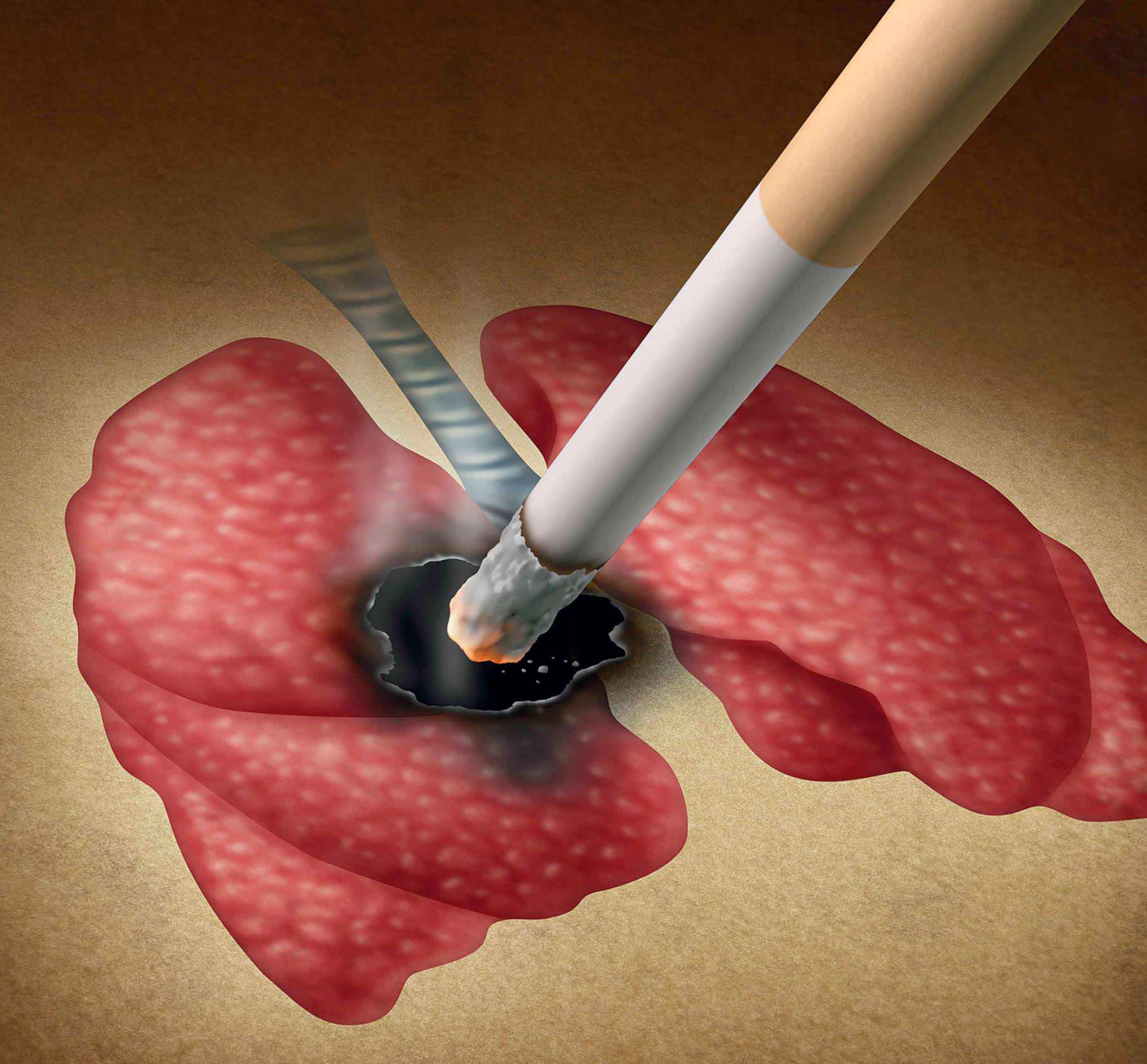
You know all those years of smoking weren’t good for your health. And even though you quit a long time ago, the years that you worked in an office where people routinely lit up only increases your concern.
You wonder if it’s too late to do something that might reduce your risk of lung cancer. And even if you have never had significant smoke exposure, there are steps you can take to protect your lungs. Read on to learn about lung cancer risks and prevention strategies.
Risk Factors
Lung cancer accounts for one in four cancer-related deaths. Smoking is by far the greatest risk factor for lung cancer. Your risk increases with the number of cigarettes, pipes or cigars you smoked each day and the number of years you smoked. But even if you’ve never smoked or you quit a long time ago, you may still be at risk.
Other factors that increase your risk of lung cancer include:
Exposure to secondhand smoke
Even if you don’t smoke, your risk of lung cancer increases if you’re exposed to smoke from others.
Exposure to radon gas
Radon is produced by the natural breakdown of uranium in soil, rock and water. Unsafe levels of radon can accumulate in buildings, including some homes.
Exposure to asbestos and other carcinogens
Workplace exposure to asbestos and other substances known to cause cancer – including arsenic, chromium and nickel – can increase your risk of lung cancer.
Family history of lung cancer


Denne historien er fra JUNE 2018-utgaven av Health & Nutrition.
Abonner på Magzter GOLD for å få tilgang til tusenvis av kuraterte premiumhistorier og over 9000 magasiner og aviser.
Allerede abonnent? Logg på
FLERE HISTORIER FRA Health & Nutrition

Health & Nutrition
Internet Can Boost The Health Of The Elderly!
Here are five ways the Internet can help boost your health.

3 mins
October 2016

Health & Nutrition
Hair Today, Gone Tomorrow
Going through major hairfall? These could be the reasons…
2 mins
November 2018

Health & Nutrition
What's Your Sleep IQ?
Answer these questions so you can identify poor sleep patterns or symptoms and seek treatment.
2 mins
November 2018

Health & Nutrition
Digital Mindfulness To Curb The Modern-Day Screen Addiction
…is the need of the hour, to curb the modern-day vice of screen addiction.
2 mins
FEBRUARY 2019

Health & Nutrition
6 Ways …to Stay Fit And Healthy In The Cold.
6 ways …to stay fit and healthy in the cold.
2 mins
December 2018

Health & Nutrition
A Diet For Your Skin
Eat according to your skin type. We show you how…
2 mins
December 2018

Health & Nutrition
What To Eat And What Not Before And After A Workout
Your guide to what to eat and what not before and after a workout.
2 mins
December 2018

Health & Nutrition
5 Lifestyle Changes To Adopt This Party Season
A peek at how binge smart, in this season of parties.
2 mins
December 2018

Health & Nutrition
BRA-VO
!In this month of creating awareness for breast cancer, we show you how to choose the right bra to maintain goodbreast health…
3 mins
October 2016

Health & Nutrition
Lose Weight
…Without getting hungry. Here’s how…
3 mins
October 2016
Translate
Change font size