
Gå ubegrenset med Magzter GOLD
Få ubegrenset tilgang til over 9000 magasiner, aviser og premiumhistorier for bare
Letting our oldest vertebrate back in
The Field
|April 2020
Glaciers and waterwheels have blocked the path of the salmon, our oldest native vertebrate. Can it, yet again, stage a comeback?

I read an interview many years ago with the palaeontologist Richard Fortey, in which he perfectly summarised the sibylline link between geology, natural history and human history. “Far from being the driest of sciences,” Fortey said, “geology informs almost everything on our planet and is rich with human entanglements. The rocks beneath us are like an unconscious mind beneath the face of the earth, determining its shifts in mood and physiognomy.”
The natural and unnatural history of our wonderful but beleaguered Atlantic salmon has been greatly determined by geology and the forces of the Earth’s evolution, suggesting one hopeful thought – that somehow the salmon will survive – and one terrible thought – that even so we may yet lose them from the British Isles.
Knowing exactly why the salmon is in such decline remains a Holy Grail of fisheries science, and the driving force behind much urgent research. But the shaping influence of that deeper geological history is not only fascinating, it may offer useful insights into how we hold on to what we’ve got.
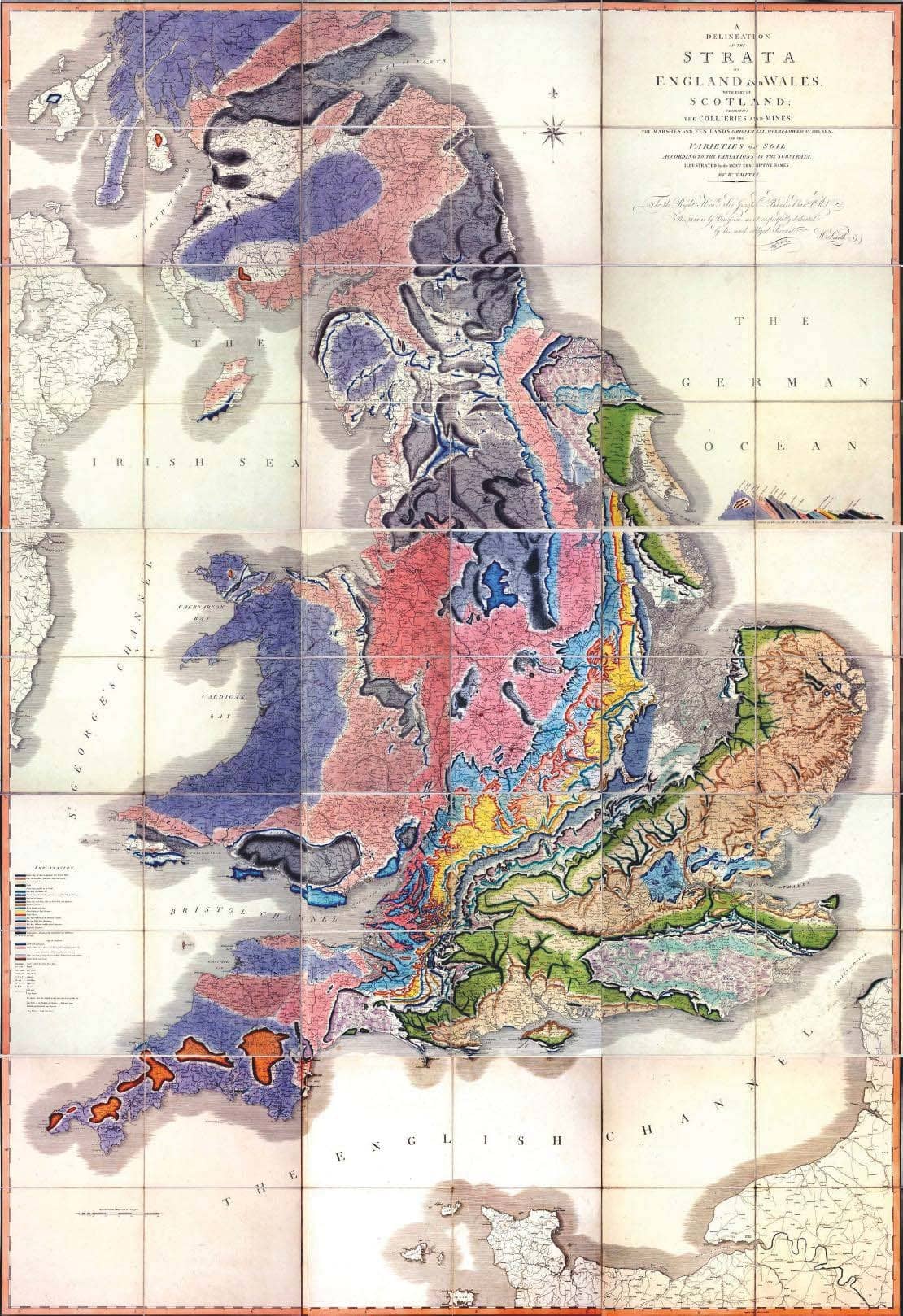
William Smith drew the first and still the most beautiful geological map of Britain. In marbled swirls of pink and purple he mapped the bands of igneous and metamorphic rocks which stretch all across the south-west and up through Wales, north-west England and into Scotland, while in shades of blue, yellow and green he mapped the progressively younger and softer sedimentary rocks which cover southern and eastern England. There’s a discernible change from one spectrum to the next and this division, which marks the transition from Triassic to Jurassic also marks an approximate change in topography between a more generally upland and a lowland Britain.

Denne historien er fra April 2020-utgaven av The Field.
Abonner på Magzter GOLD for å få tilgang til tusenvis av kuraterte premiumhistorier og over 9000 magasiner og aviser.
Allerede abonnent? Logg på
FLERE HISTORIER FRA The Field

The Field
The Holland & Holland Edition by Overfinch
This exquisitely detailed bespoke Range Rover is built for the field and showcases the best in fine British craftsmanship

3 mins
January 2026

The Field
Digging into terrier breeds
From the Jack Russell to the Australian to the Czesky, every one of the 27 recognised terrier types is either native British or has British ancestry
3 mins
January 2026

The Field
100 O years of The Browning B25 Superposed
Often imitated but rarely bettered, Browning's B25 Superposed is among the most influential and enduring shotgun designs in gunmaking history
8 mins
January 2026

The Field
A princely pair
Probably built for the Prince of Lobkowicz and dating to 1727, these handsome flintlocks boast both Spanish and Austrian influence
3 mins
January 2026
The Field
Adventure in a bottle
From lively, zingy Sauvignon Blanc to cassis-laden Cabernet Sauvignon, Chilean wine opens the door to a world of incredible value and diversity
3 mins
January 2026

The Field
Patrick Grant
The Great British Sewing Bee judge, former Savile Row tailor and founder of Community Clothing talks to Amanda Morison about nature, scything and sustainable fashion
4 mins
January 2026
The Field
The ultimate winter warmer
An exhilarating day following the Ross Harriers across picture-perfect Herefordshire countryside proves an ideal way to banish the January blues
7 mins
January 2026

The Field
An impact that can only grow
As a landmark report reveals the impressive environmental, social, economic and health benefits of gardening, Ursula Buchan hopes policymakers are taking note
3 mins
January 2026

The Field
'Karamojo Bell'
The last of his kind, elephant hunter Captain Walter Dalrymple Maitland Bell left an indelible mark on African hunting history, says Sir Johnny Scott
4 mins
January 2026

The Field
Deer manager shortage fears
Plans to make deerstalking training mandatory in Scotland risk leaving the country short of deer managers, rural groups have warned.
1 min
January 2026
Translate
Change font size