
Gå ubegrenset med Magzter GOLD
Få ubegrenset tilgang til over 9000 magasiner, aviser og premiumhistorier for bare
The Lava Birds
BBC Wildlife
|June 2019
Meet the Melanesian megapode – an avian species that starts life beneath the warm sands of the volcanic Solomon Islands.

The sound of our boat’s engine drowned out the vast silence of the South Pacific night. It was 4am and pitch black – the only thing I could see distinctly was the whiteness of the breakers crashing and spreading onto the shore. We were on the Solomon Islands, at a place called Savo, to see a bird that lays its eggs in the ground, like a crocodile. The embryos are warmed by the heat of volcanoes. When they hatch, the chicks, alone and unaided, have to scramble up – sometimes through 1.5m of sand – from the nest-grave in which their mothers have buried them. Parent and offspring will never knowingly meet.
The creature in question is called the Melanesian megapode – a ground-dwelling species, about the size of a chicken, with a small head, short brown wings and a spherical body that carries a deep, dark blue-black sheen. Its most notable feature is the size of its legs and feet, which explains that odd name – megapode means ‘big foot’.
Megapodes form a separate ancient family called the Megapodiidae that includes 22 species, which occur from the Indian Ocean across parts of Indonesia, the Philippines and New Guinea, as far as southern Australia, then way out into the central Pacific through the array of islands known as Melanesia. Savo is among that complex of archipelagos and it is no coincidence that this spot, like much of the zone in which megapodes occur, experiences some of the highest levels of seismic activity known on Earth.
Savo is a live volcano and the megapodes have probably exploited the island’s subterranean heat to incubate their eggs for millennia. In turn, the local people have learned to exploit this relationship to supply themselves with some of the most nutritious eggs produced by any avian species.
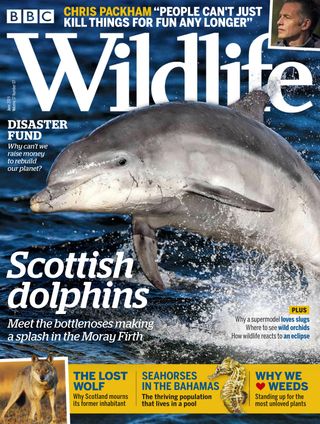

Denne historien er fra June 2019-utgaven av BBC Wildlife.
Abonner på Magzter GOLD for å få tilgang til tusenvis av kuraterte premiumhistorier og over 9000 magasiner og aviser.
Allerede abonnent? Logg på
FLERE HISTORIER FRA BBC Wildlife
BBC Wildlife
"I was terrified the elephant would ram us"
African elephant in Kenya

2 mins
January 2026
BBC Wildlife
ALL YOU EVER NEEDED TO KNOW ABOUT THE Fennec fox
THE FENNEC FOX IS THE SMALLEST fox in the world, with a body length that can be as little as 24cm.
3 mins
January 2026
BBC Wildlife
INTO THE PLASTISPHERE
A unique synthetic ecosystem is evolving in our oceans – welcome to the plastisphere
7 mins
January 2026
BBC Wildlife
“More than half of all animal life exists in a parasitic relationship, and all life lives in symbiosis”
Our survival depends on species evolving to live together - but some relationships take dark turns
7 mins
January 2026
BBC Wildlife
Are animals able to dream?
SLEEP IS A MYSTERIOUS THING. FOR A long time, we weren't sure why we do it.
1 mins
January 2026
BBC Wildlife
Does a cuckoo know it's a cuckoo?
ABSURD LITTLE BIRDS ACROSS THE world lay their eggs in the nests of other species, leaving the hapless parents to raise a changeling at the expense of their own offspring.
2 mins
January 2026
BBC Wildlife
Orcas killing young sharks
Juvenile great whites are easy prey for orca pod
1 mins
January 2026
BBC Wildlife
Ocean goes on tour
Acclaimed film touring the UK, backed by live orchestra and choir
1 min
January 2026
BBC Wildlife
Feisty bats hunt like lions
Winged mammals use a 'hang and wait' strategy to take down large prey
1 mins
January 2026
BBC Wildlife
SNAP-CHAT
Richard Birchett on magical merlins, wily coyotes and charging deer
2 mins
January 2026
Translate
Change font size