Prøve GULL - Gratis
A life lived to the full
BBC History Magazine
|October 2020
DIANE ATKINSON salutes an impressive new biography charting the action-packed life of Sylvia Pankhurst, from suffragette hunger strikes to secret missions to revolutionary Russia

Sylvia Pankhurst: Natural Born Rebel
by Rachel Holmes Bloomsbury, 976 pages, £35
On 28 September 1960, Sylvia Pankhurst’s funeral was held at the Holy Trinity Cathedral, Addis Ababa, on the orders of her good friend Haile Selassie, emperor of Ethiopia. One of Britain’s most notorious suffragettes was buried in state in the Kiddist Selassie Menbere Tsebaot Church Cemetery, reserved for Ethiopian patriots, the only non-Ethiopian to be honoured in this way (until her son was given the same treatment in 2017). It was a bizarre end for a lifelong republican atheist: chanting Orthodox bishops conducted the service; her coffin draped in gold cloth was buried by the Imperial Guard in full regalia, overseen by priests holding embroidered parasols. Haile Selassie, aged 68, stood to attention throughout the two-hour service.
Sylvia’s long life was spent in feminist, socialist, communist, anti-colonialist and anti-racist political campaigning. She was friends with Haile Selassie from the 1930s and loudly condemned Mussolini’s invasion of Ethiopia in 1935–36, having been alerted to the rising Italian Fascism in the 1920s by her lover Erasmus Silvio Corio, an anarchist, political refugee and wanted man. When Sylvia met Selassie off the train at Waterloo station in 1936 to welcome him to Britain, she saw him as a victim of white colonialism and Fascism, a man who had fought alongside his troops in the trenches before seeking exile in Britain. She became a critical friend, making clear she supported him not because he was an emperor, but because she believed in his cause – the independence of Ethiopia. Some elements of Haile Selassie’s legacy are contentious, and Sylvia’s 25-year friendship with a man who was in many ways the antithesis of her life’s work raises questions that Rachel Holmes explores in this new biography.

Denne historien er fra October 2020-utgaven av BBC History Magazine.
Abonner på Magzter GOLD for å få tilgang til tusenvis av kuraterte premiumhistorier og over 9000 magasiner og aviser.
Allerede abonnent? Logg på
FLERE HISTORIER FRA BBC History Magazine
History Extra
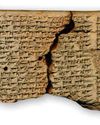
Going for gold
PATRICIA FARA recommends a globetrotting, time-travelling account of the roots of chemistry

2 mins
May 2026
History Extra
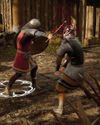
Viking revenge
JAMES OSBORNE indulges his love of Norse history in a role-playing game that scores high on the visuals but only skates over the underlying history
1 mins
May 2026

History Extra
Siena in five places
One of Tuscany's most magical hilltop cities is a medieval marvel of civic pride.
3 mins
May 2026
History Extra
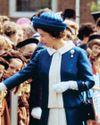
The great survivor
When Elizabeth II ascended the throne in 1952, she could barely have conceived the currents - imperial retreat, multiculturalism, de-industrialiation – that would transform the nation during her reign. On the centenary of the Queen's birth, David Cannadine explores how she navigated seven decades of dizzying change
10 mins
May 2026

History Extra
Georgian Chocolate Tart
ELEANOR BARNETT serves up a rich chocolate tart that was once fit for a recovering king
2 mins
May 2026
History Extra
Capital ideas
A Kingdom and a Village: A One -Thousand-Year History of Moscow
1 mins
May 2026

History Extra
War report
SAM WILLIS enjoys a richly detailed and entertaining account of Admiral Horatio Nelson's greatest victory and its complicated aftermath
2 mins
May 2026
History Extra
The Peasants Revolt erupts
Popular anger at rising living costs shakes feudal England to its core
1 mins
May 2026
History Extra
Tales of coexistence
HEATHER J SHARKEY is impressed by a sweeping yet nuanced book challenging the idea that Jews and Muslims have been locked in a perpetual state of war
2 mins
May 2026

History Extra
"Narratives of victimhood, resistance and sacrifice are core to the Iranian regime's identity"
Revolution, repression and recurring crisis have shaped Iran's recent past – and continue to define its volatile present
10 mins
May 2026
Translate
Change font size