
Gå ubegrenset med Magzter GOLD
Få ubegrenset tilgang til over 9000 magasiner, aviser og premiumhistorier for bare
Prøve GULL - Gratis
Disruptive Innovation - Approach For Today's Businesses
Textile Value Chain
|June 2017
Disruptive Innovation - Approach For Today's Businesses
-

Today’s business world is extremely saturated. Pick any niche and you’ll see multiple companies fighting each other for dominance. When the markets are so competitive, a business needs to do something really unique to stand out. It needs to innovate, understand its potential customers, and cater to their wants even before they realise them; it needs to disrupt the market. And this sort of thinking isn’t anything new. Companies have been doing it for years without the fancy tag attached to it. They thought outside the box and they broke the rules; and in doing so, they created a unique and unassailable position for themselves in the market and in their customer’s lives.
A disruptive innovation is an innovation that creates a new market and value network and eventually disrupts an existing market and value network, displacing established market leading firms, products and alliances. The term was defined and phenomenon analyzed by Clayton M. Christensen and coworkers beginning in 1995. Since the early 2000s, “significant societal impact” has also been viewed as an aspect of disruptive innovation.
Disruptive innovations tend to be produced by outsiders and entrepreneurs, rather than existing market leading companies. The business environment of market leaders does not allow them to pursue disruptive innovations when they first arise, because they are not profitable enough at first and because their development can take scarce resources away from sustaining innovations (which are needed to compete against current competition). A disruptive process can take longer to develop than by the conventional approach and the risk associated to it is higher than the other more incremental or evolutionary forms of innovations, but once it is deployed in the market, it achieves a much faster penetration and higher degree of impact on the established markets.
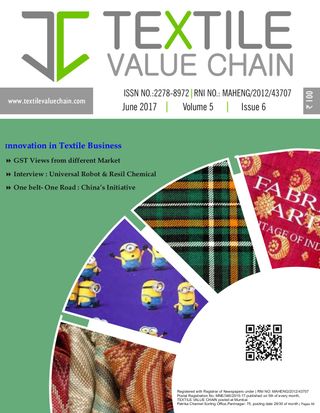

Denne historien er fra June 2017-utgaven av Textile Value Chain.
Abonner på Magzter GOLD for å få tilgang til tusenvis av kuraterte premiumhistorier og over 9000 magasiner og aviser.
Allerede abonnent? Logg på
FLERE HISTORIER FRA Textile Value Chain

Textile Value Chain
The New Age of Men's Tailoring: From Bespoke to Hybrid Models
Part 1 of the Series: The Evolving World of Men's Tailored Wear

4 mins
January 2026

Textile Value Chain
The Textile Landscape of 2025: A Year of Transformation
Navigating Policy Reforms, Trade Agreements, and Global Events
5 mins
January 2026

Textile Value Chain
Recycled Fibres vs Virgin Fibres: The Real Cost, Footprint & Business Opportunity
For decades, the textile industry asked only one question when choosing raw material:
3 mins
January 2026

Textile Value Chain
2025 in Perspective: A Stronger, Cleaner, Smarter Future for Textiles
The year 2025 reminded the textile and apparel sector that resilience now matters more than pace.
5 mins
January 2026

Textile Value Chain
Heimtextil as a Working lab for Sutlej and its Customers
When the global home textiles industry gathers in Frankfurt this January, Sutlej Textiles is approaching Heimtextil with a clear intent: to treat the fair less as a product parade and more as a live development lab with its buyers and partners.
4 mins
January 2026

Textile Value Chain
Weaving Heritage into Future: A Conversation with Ms Roop Rashi Mahapatra
In an era where fast fashion dominates the global textile landscape, Khadi stands as a timeless symbol of India's heritage, sustainability, and self-reliance.
11 mins
January 2026

Textile Value Chain
Home Textiles: Ever-growing Market to Evergreen Product Source
Indian Home textiles have always enjoyed a special market position, and demand continues to increase, capturing a premium to the budgeted market across different markets, but with one constant hunger for extraordinary design, a super comfortable feel, and the appeal of sophistication, along with changing market dynamics.
4 mins
January 2026

Textile Value Chain
The Velvet Revolution: How This Timeless Fabric is Redefining Modern Textiles
When you run your hand across velvet, something happens.
3 mins
January 2026

Textile Value Chain
SPGPrints Achieves Landmark Success at ITMA ASIA 2025 With Transformative Textile Printing Technology and Key Order Closures
SPGPrints, the global leader in innovative textile printing solutions, announced an overwhelmingly successful participation in ITMA ASIA 2025 at the Singapore Expo.
2 mins
January 2026

Textile Value Chain
Development of Home Textile Products from Post-Consumer Textile Waste
With the growing concern over textile waste and its environmental impact, sustainable approaches for fabric reuse are urgently needed.
5 mins
January 2026
Translate
Change font size