
Gå ubegrenset med Magzter GOLD
Få ubegrenset tilgang til over 9000 magasiner, aviser og premiumhistorier for bare
Prøve GULL - Gratis
Seven Key Aspects Of Overwintering In Summer Rainfall Regions
Stockfarm
|June 2021
Overwintering tends to be a general topic of discussion when, in fact, it is spring that poses the greatest challenge to producers. In the summer rainfall regions, September is known as the lean month and October (sometimes even November) as the killer month. Bridging these months successfully is therefore crucial to the livestock producer’s enterprise.

Managing your veld
There are essentially two practices that guarantee good quality grazing for overwintering, namely burnt veld (in the high rainfall sour grass veld areas of South Africa) and saved veld (particularly in the semi-arid and arid regions of the country).
In the case of burnt veld, it is best to rest the area earmarked for burning for an entire growth season before burning it. Secondly, have the good quality feed grazed after the first severe frost before burning the camp.
Not all producers see the need to rest a particular camp before burning it. Resting grass veld builds up reserves in the roots and it is these reserves that are needed to kick-start growth after the fire.
In the past the recommendation was to rest burnt veld until it reached a height of 20cm before having it grazed again. This approach, however, presents two problems. Firstly, the palatable grasses still have a competitive disadvantage over the unpalatable grasses, as they have numerous growth reserves and usually outgrow the palatable grasses. Secondly, by the time the veld has grown 20cm it has become unpalatable again, meaning the animals will only concentrate on the palatable grasses.
These days it is recommended that the veld is rested prior to burning it and that it is grazed as soon as possible after having been burned. This way, the cattle can utilise the highly palatable and nutritious regrowth of both the palatable and unpalatable grasses.
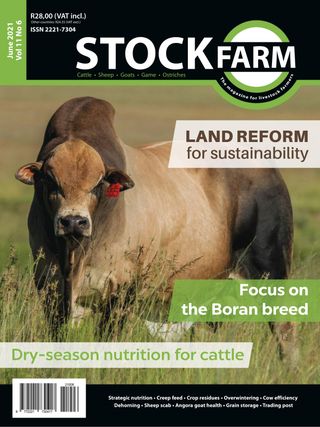

Denne historien er fra June 2021-utgaven av Stockfarm.
Abonner på Magzter GOLD for å få tilgang til tusenvis av kuraterte premiumhistorier og over 9000 magasiner og aviser.
Allerede abonnent? Logg på
FLERE HISTORIER FRA Stockfarm

Stockfarm
World School Milk Day: A national celebration of dairy
The Department of Basic Education (DBE), in partnership with Milk SA's Consumer Education Project (CEP), marked the national celebration of World School Milk Day (WSMD) at Mandlomsobo Primary School in Bronkhorstspruit on 26 September.

2 mins
January 2026
Stockfarm
A breed that you like will work with you
Data can't fix what selection broke, and your grandpa knew it.
4 mins
January 2026
Stockfarm
2025 Santam Agriculture Silage Competition: Wet conditions, winning silage
Plaas Media's twelfth Santam Agriculture National Silage Competition once again showcased impressive expertise among its participants.
4 mins
January 2026
Stockfarm
Unravelling the regulations for dairy and imitation dairy products
Regulation R1510 of 22 November 2019, which governs dairy and imitation dairy products, recently took centre stage during a webinar hosted by the Dairy Standard Agency (DSA). Thabang Rampa, manager of regulatory affairs at the DSA, provided a technical interpretation of key sections of the regulation, aimed at improving industry's understanding of the prescribed minimum compositional and labelling requirements.
3 mins
January 2026

Stockfarm
2025 ARC National Master Dairyman Awards: Top dairy farmers honoured
The Agricultural Research Council (ARC) announced the winners of its 2025 National Master Dairyman Awards during a ceremony held in November at Lanzerac Estate in Stellenbosch.
2 mins
January 2026
Stockfarm
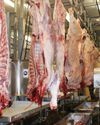
Abattoirs: The hidden pulse of meat safety
In conversations regarding the meat supply chain, the first and final links tend to take prominence, while the work performed by the middlemen often goes unnoticed. Yet every link plays a vital role. The real question is: Do we truly understand the value each link adds? Or has ‘value addition’ become shorthand for 'price addition, leaving producers and consumers feeling the financial strain?
5 mins
January 2026
Stockfarm
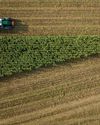
Silage equipment you can't do without
Silage is an invaluable resource on many livestock farms but producing it is not always simple or cheap.
3 mins
January 2026
Stockfarm
The value of a vaccination programme for cattle
Vaccination is essential for any cattle operation, especially given the increasing risk of disease outbreaks. According to Dr Paul Reynolds, a veterinarian at the Warden and Vrede Animal Hospitals, vaccines are never developed arbitrarily. Each exists because a specific disease threat warranted it.
4 mins
January 2026
Stockfarm
Silage competition winners: Key success factors
The Santam Agriculture National Silage Competition once again delivered impressive results, maintaining its high standards and enthusiastic participation. This year’s judging spanned six key categories: nutrient composition, fermentation quality, aerobic stability, top-layer losses, compaction or density, and visual assessment.
2 mins
January 2026
Stockfarm
Why use a silage inoculant?
Producing high-quality silage is critical for any livestock operation, especially in regions where seasonal forage shortages are common. One of the most effective ways to improve silage fermentation and preservation is with a silage inoculant.
2 mins
January 2026
Translate
Change font size