
Gå ubegrenset med Magzter GOLD
Få ubegrenset tilgang til over 9000 magasiner, aviser og premiumhistorier for bare
Superpower
Racecar Engineering
|December 2019
At long last the Class 1 global GT category lives, with DTM and Super GT’s GT500 all but merging technically and even racing against each other. But how have the three Japanese manufacturers managed to adapt to the new formula?
-

Just like the coming together of tectonic plates, the merging of the German DTM and Japanese GT500 series has taken a very long time, but finally they featured on track together at the last round of the DTM at Hockenheim in October.
For the first time the six manufacturers ran together in competition, in qualifying and in the second race of the weekend. It was not necessarily a fair fight, the Japanese had brought their old cars to compete against the latest models from the DTM, and the lap times and race results showed a comprehensive win for the Europeans on home soil.
At the time of writing BMW, Audi and Aston Martin were set to go to Fuji, Japan, in November, for a full-scale race weekend that is the next stage of integration before the Japanese Class 1 car race in 2020.
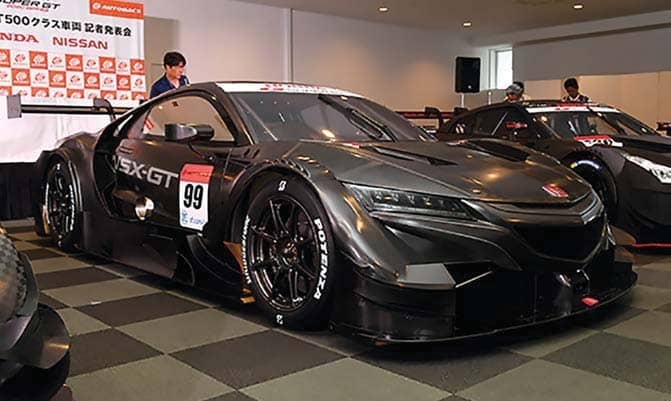
Japan’s 2020 vision
Prior to the German race the Japanese manufacturers – Honda, Nissan and Toyota – presented the new Class 1-compliant cars that will take part in next year’s joint races. Importantly, Honda, a company that said if it needed to run a front-engine layout it would leave the series, has produced a front-engined version of the NSX for next season. In doing so it has now overcome a major stumbling block that has delayed the integration of the two regulations, while also threatening the very existence of the Japanese series.

Denne historien er fra December 2019-utgaven av Racecar Engineering.
Abonner på Magzter GOLD for å få tilgang til tusenvis av kuraterte premiumhistorier og over 9000 magasiner og aviser.
Allerede abonnent? Logg på
FLERE HISTORIER FRA Racecar Engineering

Racecar Engineering
Talk the torque
More thoughts on in-wheel motors and their effects on twisting force

6 mins
December 2021

Racecar Engineering
Rolling about
An explanation of the limitations of a previous load transfer article, bringing jacking forces into the mix
5 mins
December 2021

Racecar Engineering
F1 breaks schedule records
The FIA has confirmed no fewer than 23 races on the 2022 Formula 1 World Championship schedule, the highest number of grands prix ever to be held in a single season, and that has led to criticism from some teams that will be on the road for eight months.
1 mins
December 2021

Racecar Engineering
Under pressure
Toyota may have finished first and second at Le Mans this year, but the effort required to overcome a fuel delivery problem and finish with both cars was Herculean
12 mins
December 2021

Racecar Engineering
Physics at work
Dutch company, Intrax, offers Racecar Engineering an insight into the technologies it employs to optimise its suspension products
4 mins
December 2021

Racecar Engineering
Williams' 2030 ambition
Williams Racing has committed to becoming climate positive by 2030 as part of an all-new sustainability strategy.
1 min
December 2021

Racecar Engineering
Diff'rent strokes
Racecar looks at the different types of mechanical differential, their benefits and limitations
14 mins
December 2021

Racecar Engineering
Das Boot
A curious Twitter exchange fired up a unique, hydrogen-powered, cross-country project that will contest the Baja 1000 in November 2022
8 mins
December 2021

Racecar Engineering
Air born
Every racecar engineer's dream is a blank sheet of paper design. When Hoonigan and Subaru approached Vermont Sportscars about building the next generation of Gymkhana racer, that's just what the company was given
8 mins
December 2021

Racecar Engineering
Remote control
Called variously ‘virtual garages’, ‘mission control’ or ‘race support rooms’ is the future of race engineering sitting in the warm back at HQ?
14 mins
December 2021
Translate
Change font size