Prøve GULL - Gratis
Tips To Reduce Antibiotic Usage
Farmer's Weekly
|April 19, 2019
Rising concern over antibiotic resistance is forcing livestock producers across the world to change their production management practices. Dr John Patience explains to Glenneis Kriel how pig producers can benefit from reducing antibiotic usage.
-

Lowering antibiotic usage is easier said than done, as it usually coincides with a drop in farm margins. Dr John Patience, a professor in animal science specialising in pig nutrition at Iowa State University in the US, says this is primarily due to higher mortalities, but also because, as production becomes more labour-intensive, pigs take longer to reach slaughter weights and require more vaccines and floor space to thrive than conventionally produced pigs.
The general trend, therefore, is not an outright ban on antibiotics, but a shift away from using them as growth promoters. In addition, disease treatments are becoming more focused.
“Where blanket treatments might have been given preventively in the past, the idea now is to treat only sick individual animals when the risk of infection is high,” he says. “Group treatments are seen as a last resort when all other alternatives have been exhausted.”
Greater emphasis is also being placed on correct diagnostics to ensure the right antibiotics are used at the right dosage to treat specific diseases.
The dosing procedure is also kept as short as possible, which is why antibiotics are increasingly delivered in water rather than feed. This is easier and simpler, and sick pigs tend to drink water rather than eat, especially after weaning.
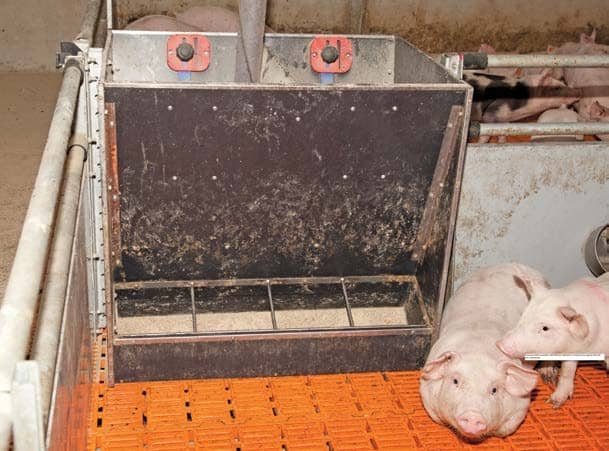
BIOSECURITY AND HYGIENE
A multidisciplinary approach involving improved genetics, animal husbandry and nutrition, as well as better health management, building engineering design and operation, is required to offset the negative spin-offs of lower antibiotic usage. Patience, however, places hygiene and biosecurity at the top of this list.
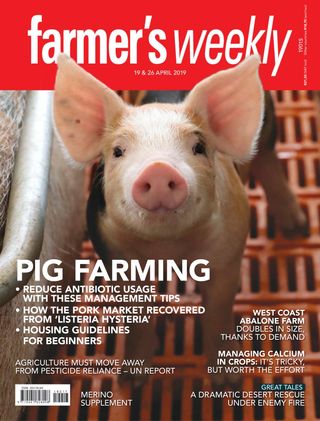

Denne historien er fra April 19, 2019-utgaven av Farmer's Weekly.
Abonner på Magzter GOLD for å få tilgang til tusenvis av kuraterte premiumhistorier og over 9000 magasiner og aviser.
Allerede abonnent? Logg på
FLERE HISTORIER FRA Farmer's Weekly

Farmer's Weekly
Sweet prospects: the current state of litchi production in South Africa
Bram Snijder, agricultural consultant and chairperson of the South African Litchi Growers' Association, spoke to Octavia Avesca Spandiel about the litchi industry embracing new opportunities, tackling challenges, implementing innovation, and reaching markets both locally and internationally.

6 mins
January 16-23, 2026

Farmer's Weekly
How AFGRI uses technology to unlock farm finance from asset to market
As modern farming becomes more capital-intensive and digitally driven, AFGRI is reinventing agricultural finance by linking technology directly to lending decisions.
5 mins
January 16-23, 2026

Farmer's Weekly
Adele's Mohair: a living tapestry of craft, colour and rural heritage
Octavia Avesca Spandiel spoke to Adele Cutten, founder of Adele's Mohair, to explore how a small spinning experiment grew into a thriving rural craft enterprise rooted in South Africa's rich mohair heritage.
6 mins
January 16-23, 2026

Farmer's Weekly
How Merino farmers are battling predation, disease and rising costs
Whether you are a stud breeder or commercial Merino farmer, environmental, operational, and infrastructural challenges have an equal impact on a farming operation. The aim of any livestock farmer, whether stud or commercial, is to keep losses at a minimum, and although farmers are facing many challenges, they implement various strategies to ensure both the survival and financial security or profitability of farming operations.
9 mins
January 16-23, 2026
Farmer's Weekly
The future of SA wool: refined infrastructure and wool traceability
As the agriculture sector starts to adapt to the fast-paced development of technology, producers and processors need to decide what to implement and what to avoid. Henning Naudé spoke to Izak Klopper, manager of shearer training at the National Wool Growers' Association, about how shearing has changed, and what the industry can expect from new research and development from international markets.
5 mins
January 16-23, 2026
Farmer's Weekly
Cannabis and marketing in South Africa
The path from cultivation to commercial success remains complicated by regulatory ambiguity. Cultivators who master compliant marketing while delivering verifiable quality will build sustainable businesses, says Thomas Walker.
2 mins
January 16-23, 2026
Farmer's Weekly
Foot-and-mouth disease project targets waste reduction and regulatory reform
A groundbreaking research collaboration between Red Meat Industry Services, the University of Pretoria, and global animal health leader Zoetis is aiming to transform South Africa's approach to foot-and-mouth disease.
3 mins
January 16-23, 2026
Farmer's Weekly
What to expect in 2026
The world faces a complex interplay of economic, geopolitical, environmental, technological, and social pressures.
3 mins
January 16-23, 2026

Farmer's Weekly
How drones are revolutionising pest and disease detection in agriculture
Drones are reshaping modern crop protection by giving farmers a powerful new vantage point: the sky. With advanced sensors, high-resolution imaging, and artificial intelligence-driven analytics, these unmanned aerial vehicles can detect early signs of disease, water stress, and pest damage long before the human eye can. Jedrie Harmse spoke to agricultural drone specialist Monique Heydenrych.
7 mins
January 16-23, 2026
Farmer's Weekly
Generic advertising in perspective
Dr Koos Coetzee explains how industry organisations and the agriculture sector actually have the ability to prudently manage the negative perceptions surrounding generic advertising campaigns.
2 mins
January 16-23, 2026
Translate
Change font size