
Gå ubegrenset med Magzter GOLD
Få ubegrenset tilgang til over 9000 magasiner, aviser og premiumhistorier for bare
Prøve GULL - Gratis
The World's Largest Canary - Sao Tome Grosbeak
African Birdlife
|July - August 2017
The São Tomé Grosbeak Neospiza concolor is a contender for being one of the most enigmatic bird species on the planet.

This Critically Endangered species is one of the rarest – or least observed – birds in the world, and its peculiar morphology resulted in it being placed in its own genus of uncertain affinities.
Based on the shape of its head and on its massive bill, the São Tomé Grosbeak was originally placed with the Thickbilled Weaver Amblyospiza albifrons. In 1903, other traits were used to place it in the true finches (Fringillidae), related to canaries and seedeaters (Serinus sensu lato). This is the current taxonomic view, but debate persisted throughout the 20th century about the true relationships of the species, with Ernest Moreau retaining the link to Amblyospiza in 1962. Genetic material was needed to confidently clarify the origins of Neospiza, but that is hard to come by for a bird that was not seen for close to a century. However, during his research on the origins of the endemic avifauna of the Gulf of Guinea, Martim Melo captured and bled four individuals between 2003 and 2011. These four samples provided sufficient material to infer the species’ evolutionary history.
In a recent paper published in Ibis (http://dx.doi.org/10.1111/ibi.12466), mitochondrial and nuclear sequences confidently identified Neospiza concolor as an Old World finch (Fringillidae: Carduelinae) within the Crithagra seedeater/ canary clade. This makes the São Tomé Grosbeak the world’s largest canary, 50 per cent heavier than the next largest species, the Thick-billed Seedeater Crith
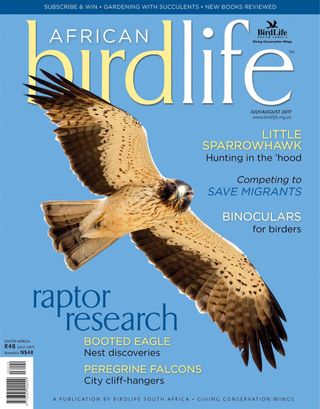

Denne historien er fra July - August 2017-utgaven av African Birdlife.
Abonner på Magzter GOLD for å få tilgang til tusenvis av kuraterte premiumhistorier og over 9000 magasiner og aviser.
Allerede abonnent? Logg på
FLERE HISTORIER FRA African Birdlife
African Birdlife
Southern SIGHTINGS
MID-JULY TO MID-SEPTEMBER 2025

2 mins
November/December 2025
African Birdlife
BLUE CRANE
A symbol of pride and vulnerability
6 mins
November/December 2025
African Birdlife
CHAOS AT THE KOM
Between 1 and 3 December 2024 there was a remarkable sardine run off Kommetjie on the Cape Peninsula.
1 min
November/December 2025

African Birdlife
Ramsar Convention on Wetlands
Whatever form they take, from peatlands to estuaries, wetlands are critical for the survival of waterbirds, such as the White-winged Flufftail, Maccoa Duck and Grey Crowned Crane. They are highly productive ecosystems that are characterised by diverse and abundant food sources and they provide essential feeding, breeding, migratory and resting habitat for numerous species. iSimangaliso Wetland Park, for example, supports more than 500 bird species.
1 mins
November/December 2025

African Birdlife
FRAMING wild feathers
WINNERS OF THE BIRDLIFE SOUTH AFRICA PHOTOGRAPHY COMPETITION 2025
4 mins
November/December 2025

African Birdlife
PITTA PILGRIMAGE
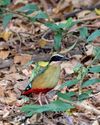
Look there - on that branch, behind those green leaves!’ Crouching in thick forest, with sweat dripping, heart pounding and eyes straining, I frantically searched with my binoculars, trying to work out which branch, which green leaves - indeed, which darned tree? I was close to panicking as we had come so far, and yet I just couldn't see where our guide was pointing.
4 mins
November/December 2025
African Birdlife
Unlocking a DIGITAL WORLD of bird stories
For more than 75 years, the South African Bird Ringing Unit (SAFRING), now hosted by the FitzPatrick Institute of African Ornithology, has woven together the complex life stories of southern Africa's birds.
1 mins
November/December 2025
African Birdlife
MIRRORLESS MARVEL
Testing Canon's R1 in the field
3 mins
November/December 2025
African Birdlife
Is NECHISAR NIGHTJAR a hybrid?
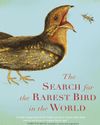
Vernon Head's award-winning book The Search for the Rarest Bird in the World brought widespread attention to the curious case of the Nechisar Nightjar. In 1992, a dead nightjar was found on a dirt road in Nechisar National Park, southern Ethiopia. A wing was collected and the bird was later described as a new species based on its distinctive large white wing patch. Its scientific name, Caprimulgus solala, attests to the fact that it is known only from a single wing.
2 mins
November/December 2025
African Birdlife
a TALL Tail
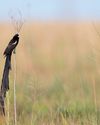
In the high grass of eastern South Africa, midsummer is when the Long-tailed Widowbird transforms the veld into a stage.
1 min
November/December 2025
Translate
Change font size