試す 金 - 無料
REVINYLIZATION - OJC rises (yet) again
Stereophile
|July 2023
Liner notes from jazz albums of the 1950s and 1960s can be shot through with naivete, hipsterism (usually faux), and callousness toward the abundance of musical talent then working. Few though are as shortsighted as the original essay by Jack Maher on the back of 1960's Workin' with the Miles Davis Quintet. Opening with "Miles Davis is the most maligned and idolized musician in modern American jazz today.
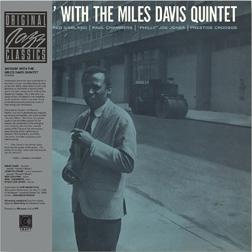
He is at once the saint and the sinner," he goes on to cite a dynamic that literally all musicians experience, especially when playing live: "He has been accused of being lackadaisical and unconcerned about his playing. When the spirit moves him, he plays with warmth and lyric beauty, at other times he plays with vague disinterest."
Once the tape was running, however, Miles rarely missed a step. Among all of Davis's recording triumphs, the pair of sessions with Rudy Van Gelder in Hackensack, New Jersey, his May and September 1956 sessions with saxophonist John Coltrane, pianist Red Garland, bassist Paul Chambers, and drummer Philly Joe Jones, remain among his finest moments on record. The 24 tracks of hard bop captured in first takes were cut into four albums with similar apostrophe-accented titles: Cookin' with the Miles Davis Quintet (released July 1957), Relaxin' with the Miles Davis Quintet (March 1958), Workin' with the Miles Davis Quintet (January 1960), and Steamin' with the Miles Davis Quintet (July 1961). All were released on the Prestige label, two of them before the release of Miles's landmark 1959 album Kind of Blue (on Columbia) and two of them after. While each album has its devotees, Workin', which with eight tracks is the longest of the four, still shines just a little brighter than the rest.


このストーリーは、Stereophile の July 2023 版からのものです。
Magzter GOLD を購読すると、厳選された何千ものプレミアム記事や、10,000 以上の雑誌や新聞にアクセスできます。
すでに購読者ですか? サインイン
Stereophile からのその他のストーリー

Stereophile
ICONS AND INNOVATORS AT DEFINITIVE AUDIO
Definitive Audio in Bellevue, Washington, near Seattle—one of the premier dealerships in the Pacific Northwest—continued its 50th anniversary celebration with an event it called “Icons and Innovators.” Highlighted by showings of the new JBL Everest series and Bowers & Wilkins Nautilus and 801 Abbey Road edition loudspeakers, the event drew a full house to the first of two sessions.

10 mins
February 2026

Stereophile
Touched-up Beatles and Ringo in color
Opinions vary, but like everything connected to The Beatles, charged arguments over Giles Martin's ongoing remastering of, and sonic tinkering with, the band’s hallowed recording catalog are unending.
3 mins
February 2026

Stereophile
Traveling through time and space
In the April 2024 issue of this magazine, a piece by Editor Jim Austin appeared in the “As We See It” space. It was titled “On assessing sonic illusions,” and it has haunted me for more than a year. Jim’s thesis was that a music recording is a “synthetic, whole-cloth creation ... a complete fabrication.” He writes: “Very few recordings correspond to an actual performance. Most are studio concoctions with pieced-together instrumental tracks and artificial ambience that document no sonic event that ever occurred.”
4 mins
February 2026
Stereophile
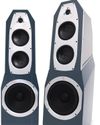
EgglestonWorks Andra 5
Big loudspeakers are where diligent hi-fi reviewers really earn their pay.
16 mins
February 2026
Stereophile
RECORD REVIEWS
Why award Recording of the Month to a project whose vocal soloists, though thoroughly committed, are in some respects less than ideal?
3 mins
February 2026
Stereophile
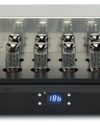
Doshi Audio Evolution Stereo
Nick Doshi is cautiously reserved when he talks about his amplifiers, preferring to let the products speak for themselves.
14 mins
February 2026
Stereophile
Sticking with it
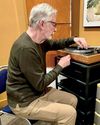
David and Alma Wilson must be doing something right. They’ve been married for 50 years, and for 36 years, they’ve owned and operated Accent on Music on Main Street in Mount Kisco, New York, about an hour north of New York City. In a recent, lively Zoom conversation with the Wilsons, it became apparent that staying the course is a viable approach, for marriage and for business.
4 mins
February 2026
Stereophile
Period-style listening
Last night, I sat on a bright yellow velveteen sofa eating red beans and rice while listening for three hours to blues and jazz from rare 78rpm records. I walked out feeling gospel-level raised up, with a head full of dreams and cultural memories.
12 mins
February 2026
Stereophile
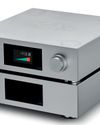
CH Precision L10
TWO-CHASSIS LINE PREAMPLIFIER
16 mins
February 2026
Stereophile
Rock don't give a shit, you know
Punk rock was never meant to grow old. For their first three studio efforts, The Replacements epitomized the punk ethos. Sorry Ma, Forgot to Take Out the Trash (1981), the EP Stink (1982), and Hootenanny (1983) are loud, bashy fun.
3 mins
February 2026
Translate
Change font size