試す 金 - 無料
JAMES FARBER
Stereophile
|May 2025
ASK THE AVERAGE JAZZ-LOVING AUDIOPHILE TO LIST HIS FAVORITE RECORDING ENGINEERS, AND SUCH ICONS AS RUDY VAN GELDER, ROY DUNANN, AND FRED PLAUT WOULD TOP THEIR LISTS. BUT IF YOU ASKED A HANDFUL OF CURRENT AND RECENT NEW YORK CITY JAZZ MUSICIANS TO CITE THEIR FAVORITES, ONE NAME WOULD LEAP TO THE FRONT OF THE PACK: JAMES ALLEN FARBER.

Farber's engineering and mixing credits span nearly 1000 albums, dating from the mid-1970s to the present day. He has won five Grammy Awards, in the Best Jazz Instrumental Album, Best Large Jazz Ensemble Album (three times), and Best World Music Album categories. The New Jersey native has worked with jazz artists as diverse as Michael Brecker, Melissa Aldana, Paul Motian, Bill Frisell, Brad Mehldau, Joshua Redman, Ravi Coltrane, Jerome Sabbagh, John Scofield, Joe Lovano, Pat Metheny, and Dave Holland. And many more.
Farber got his start in the 1970s as an assistant at New York City's famed Power Station. He went on to work at Sear Sound and Reservoir Studios (formerly Skyline). Soon, Farber found high-profile favor with such mainstream artists as Nile Rodgers, Bruce Springsteen, James Taylor, Philip Glass, Rickie Lee Jones, Talking Heads, Traffic, Carly Simon, Madonna, Laurie Anderson, Diana Ross, Patti Austin, and Graham Parker.
During a recent visit to Power Station, one step into the studio's large, wood-paneled Studio A revealed the sound that Farber has so beautifully captured. Yes, this is the room—the sound—with its honest acoustics and the purity. This is how Farber is able to avoid the capsule-like sheen of studio production. It starts with the room. On such albums as Michael Brecker's Impulse! debut, Melissa Aldana's Visions, Joshua Redman's Wise, and Jerome Sabbagh's Vintage, Farber masterfully—magically—seemed to remove production artifice, leaving only the communicative spell of master jazz players.
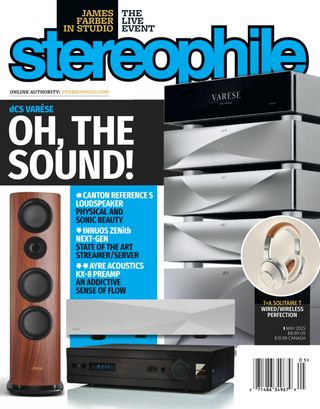

このストーリーは、Stereophile の May 2025 版からのものです。
Magzter GOLD を購読すると、厳選された何千ものプレミアム記事や、10,000 以上の雑誌や新聞にアクセスできます。
すでに購読者ですか? サインイン
Stereophile からのその他のストーリー
Stereophile
Wattson Emerson Digital
My story with Wattson Audio began about three years ago. It was my first encounter with a network bridge, at least within the context of our hobby.

12 mins
April 2026
Stereophile
Magico S2
When I was about 12 years old, my mother and I watched a movie on TV in which a ship closed in on a swimmer.
12 mins
April 2026
Stereophile
Current events
Hi-fi dealerships need to find creative new ways to get customers into their stores—to stoke their interest and to help new people feel welcome.
3 mins
April 2026
Stereophile
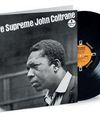
You can never have too much Trane on vinyl
As I listened to the newly remastered edition of John Coltrane's Complete 1961 Village Vanguard Recordings, I read through some critics' takes, which make it apparent just how far critics tend to trail the musicians they cover, the great ones at least.
3 mins
April 2026
Stereophile
HiFi Rose RD160
Lord knows I try to keep an open mind, but those good-measuring delta-sigma chip DACs rub me the wrong way.
13 mins
April 2026
Stereophile
MANUFACTURERS' COMMENTS
We extend our sincere thanks to Stereophile and to Jason Victor Serinus for their deeply engaged and perceptive evaluation of the M10. It is especially meaningful to see the amplifier’s core principles—control, stability, dynamic authority, and system matching through precise feedback and bias management—so clearly experienced and conveyed in listening.
2 mins
April 2026
Stereophile
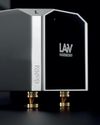
LAiV Audio's Harmony GaNM monoblock
The first thing I noticed about the LAiV Audio GaNM monoblock amplifier¹ is its unusual shape and size; it occupies space differently than the other, more basic amplifiers on my rack.
11 mins
April 2026

Stereophile
RECORD REVIEWS
There are times when songwriters, particularly those who have been at it for a while, need a jolt, a shock to the system that gets their creative juices flowing again.
3 mins
April 2026
Stereophile
The Nighthawk soars
When people ask me what I do for a living, I reply that I'm a turntable setter upper.
11 mins
April 2026

Stereophile
Engagement vs sound quality
The more I listen to gear I'm reviewing as well as other people's hi-fis-the more I believe in intangibles. One of these intangibles is the art of system building.
12 mins
April 2026
Listen
Translate
Change font size