
Magzter GOLDで無制限に
10,000以上の雑誌、新聞、プレミアム記事に無制限にアクセスできます。
試す 金 - 無料
Revolutionizing rehabilitation: Redefining mobility with exoskeleton technology
PCQuest
|February 2025
What if technology could help people walk again? A revolutionary exoskeleton is making it possible-blending Al, robotics, and smart materials to turn limitations into possibilities. The future of mobility is here, and it's learning with every step
-
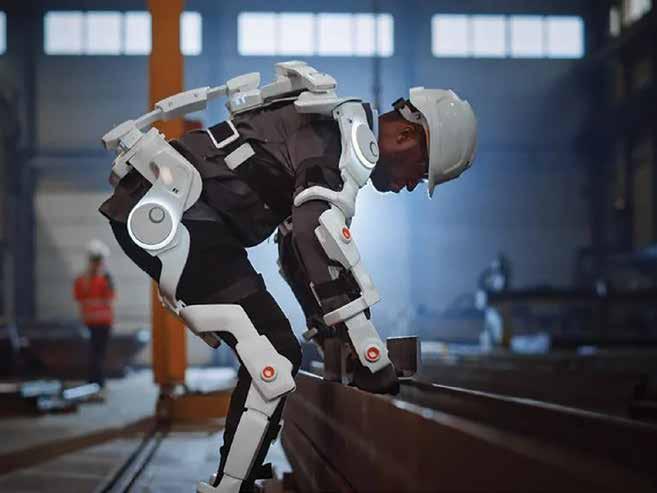
In a world where technological advancements are revolutionizing healthcare, Astrek Innovations is at the forefront of assistive robotics, pioneering next-generation mobility solutions for individuals with disabilities. A new exoskeleton is enabling people to walk again. It combines AI, robotics, and smart materials to help those with mobility issues stand up and take steps. Every time someone uses it, the device learns and improves.
At the heart of this transformation is Robin Kanattu Thomas, CEO of Astrek Innovations, whose vision is deeply rooted in personal experience and a commitment to inclusivity.
“Modern medicine is incredibly advanced, yet the rehabilitation sector lags decades behind. That’s where we wanted to make a difference,” said Robin.
This realization led Astrek to develop cutting-edge exoskeletons—wearable robotic devices that help mobility-impaired individuals walk again. By integrating robotics, artificial intelligence (AI), and modular engineering, Astrek is making rehabilitation technology more affordable, precise, and adaptable.
The Inspiration: Bridging the Rehabilitation Gap
Robin’s journey began with a deeply personal incident.
“My grandfather was incredibly healthy, but after a small accident, he lost his ability to walk. Even after successful surgeries and treatment, he couldn’t regain mobility—not because of medical limitations, but due to the lack of effective rehabilitation.”
This experience highlighted a critical gap in rehabilitation care. While the world is designed for the 80% of able-bodied individuals, the 20% with disabilities remain underserved.
Determined to bridge this gap, Robin and his team focused on exoskeleton technology—a breakthrough designed to help patients regain independence through robotic-assisted movement.


このストーリーは、PCQuest の February 2025 版からのものです。
Magzter GOLD を購読すると、厳選された何千ものプレミアム記事や、10,000 以上の雑誌や新聞にアクセスできます。
すでに購読者ですか? サインイン
PCQuest からのその他のストーリー

PCQuest
When Software Drives the Machine Need for Enterprise-Grade Software
Cars used to fail because of broken parts.Now they fail because of broken code. As vehicles become rolling computers, enterprise-grade software, ruthless testing, and fail-safe architecture decide one thing: whether a car keeps moving safely at 100 km/h

2 mins
March 2026

PCQuest
AI on the ground Practical use cases of AI in large enterprise operations
AI isn't a side project anymore, it's the quiet operator inside global giants. It reads invoices, senses machine fatigue, tailors every customer moment, flags risk in real time, and feeds leaders sharper instincts. Scale just got smarter
3 mins
March 2026

PCQuest
From AI experiments in 2025 to enterprise scale in 2026: Why data foundations will decide the winners
Everyone's betting big on Al, but most are burning cash instead of building value. The hidden culprit? Dirty data, clunky processes, and missing context. What if fixing your foundation, not your algorithms, was the real AI game-changer?
4 mins
March 2026

PCQuest
How automation at the periphery is accelerating digital transformation
Digital transformation is not tearing down the core anymore. It is happening at the edges. With AI and automation layered onto existing systems, companies are cutting costs, boosting productivity by up to 40%, and scaling smarter without risking operational chaos
2 mins
March 2026
PCQuest
When AI moves from chips to racks
AI performance is no longer just about faster chips. It is about how racks, power, networking, and orchestration work together. As agentic AI grows, infrastructure must become predictable, open, and built for scale from day one
4 mins
March 2026

PCQuest
Designing enterprise AI systems that stay fair
In 2026, bias is no longer treated as a communications issue or a public relations headache.
6 mins
March 2026

PCQuest
HALO smart sensor
What if bathrooms, locker rooms, and isolated spaces could become safer without adding cameras?
2 mins
March 2026

PCQuest
Building enterprise AI that doesn't discriminate
Bias in enterprise AI is not a side issue. It starts in data pipelines, training systems, product design, and engineering workflows. As AI scales, fairness, transparency, and accessibility are becoming core software requirements
4 mins
March 2026

PCQuest
Bias travels faster than code
Bias in enterprise AI is not a surface issue. It enters through data, features, model training, APIs, and UI logic, then spreads across the stack. The technical response is shifting from audits to architecture, observability, and deployment controls
6 mins
March 2026

PCQuest
How hospitals can use AI without risking patient data
With the fast pace of adoption of Artificial Intelligence (AI) and digital health systems in Indian hospitals, issues related to the security of patient data are also increasing at an equal rate.
2 mins
March 2026
Listen
Translate
Change font size