試す 金 - 無料
WHERE ARE YOU ON THE AUTOMATION CURVE?
OEM Update Magazine
|August 2025
Automation has gradually become a part of our daily lives, from automatic bill payments to email auto-replies. Everyone at the household level now deploys the rudimentary automation. The concept becomes more complex as we discuss larger businesses that operate in extensive spaces where they manage multiple bills and salary deposits. These businesses must understand what works best for them. Companies should strive to develop adaptive systems that support their workforce while addressing challenges such as workforce shortages, legacy integration, and sustainability goals, all while being mindful of costs.
-
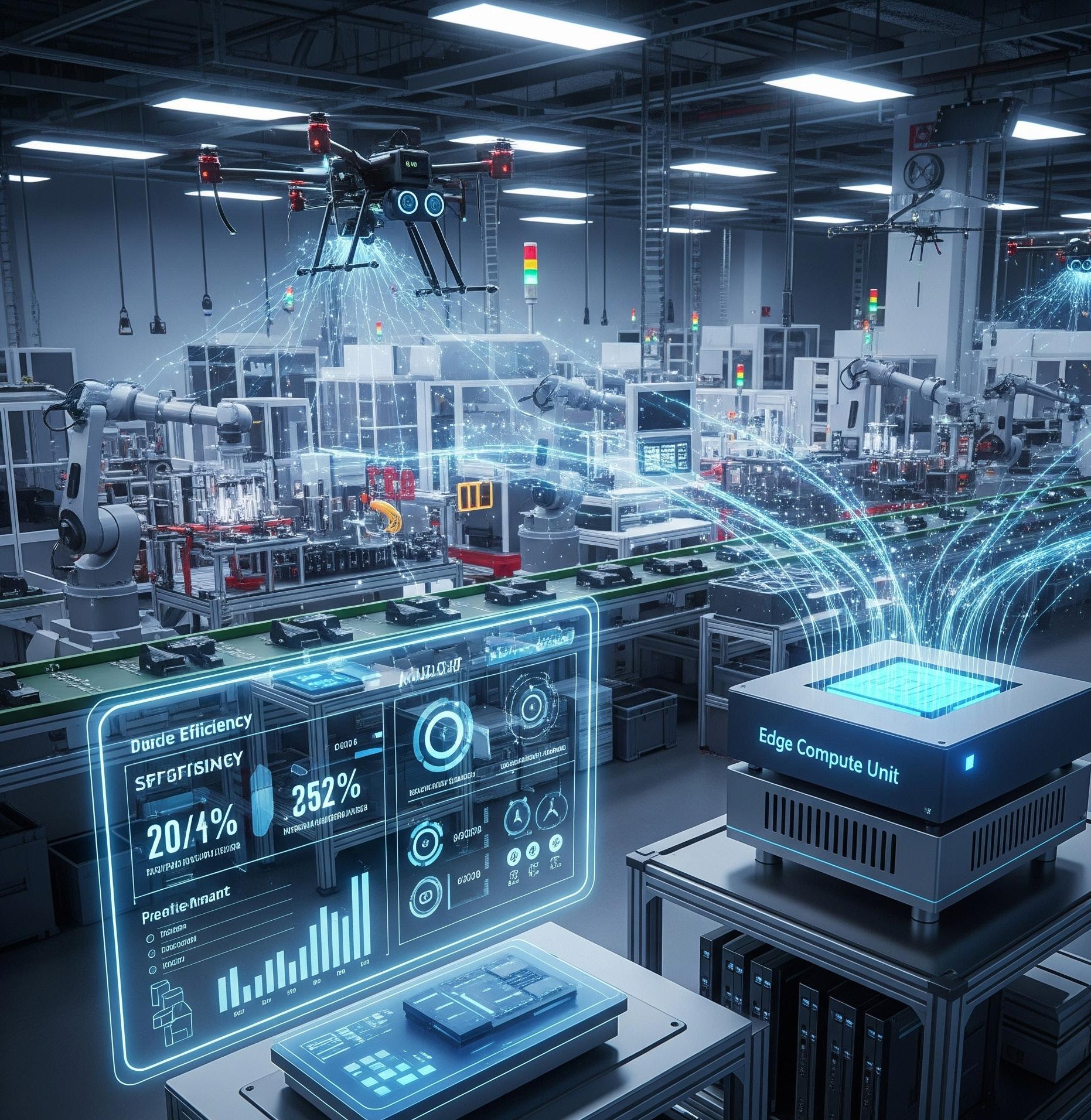
Companies are on a fervent search for automation solutions because they want to become more flexible and faster. There is a lingering question about which solutions will best suit us and reduce the documentation flow. How can the shortage of skilled employees be filled? But, firstly, we need to understand what automation brings with it and how the systems and data help the manufacturing processes in the long run.
Addressing the pain points
When we talk about adapting autonomy, several concerns need to be addressed first. While speaking to Dr. Sanjeev Srivastava, Head of Industrial Automation at Delta Electronics India, he explained that Indian manufacturers, especially small and medium-sized enterprises (SMEs), face challenges in adopting automation. These challenges include high upfront costs, a lack of skilled workers, old infrastructure, and limited knowledge about return on investment (ROI). Additionally, resistance to change and unclear decision-making processes hinder the implementation of new technologies.
The industrial sector often combines old systems with new technologies, making it difficult and expensive to introduce automation solutions. There is also a shortage of professionals skilled in both operations and information technology, which is crucial for properly maintaining and improving advanced systems. Furthermore, issues like data silos and a lack of system compatibility limit the effectiveness of automation. Some organisations find it hard to show a clear ROI, particularly if they are reluctant to make large upfront investments. This challenge is related to the complexity of automation and the skills gap, leading to longer and resource-heavy initial deployments.

このストーリーは、OEM Update Magazine の August 2025 版からのものです。
Magzter GOLD を購読すると、厳選された何千ものプレミアム記事や、10,000 以上の雑誌や新聞にアクセスできます。
すでに購読者ですか? サインイン
OEM Update Magazine からのその他のストーリー

OEM Update Magazine
Metrology moves from end-of-line inspection to process intelligence
Metrology is becoming more practical and production-friendly. Paul Weaver, Director, Sales and Marketing at Renishaw India, also spoke about how simple automation, such as on-machine probing, enables measurement to occur naturally as part of the machining process rather than as a separate activity.

4 mins
April 2026

OEM Update Magazine
Deburring and surface finishing in modern manufacturing
In today's competitive manufacturing landscape, processes like deburring and edge rounding are no longer secondary considerations; they are critical to ensuring product quality, performance, and safety.
2 mins
April 2026

OEM Update Magazine
Ergonomic vacuum technology in textile workflows
India's textile industry is a vital economic engine, yet the manual handling of heavy yarn packages continues to strain workers and slow production.
3 mins
April 2026

OEM Update Magazine
Mahr highlights the strategic role of precision metrology in modern automated manufacturing
From high-accuracy laboratory systems to production-integrated online solutions like OptoSurf, Mahr's technologies help manufacturers achieve consistent, data-driven, future-ready quality control.
3 mins
April 2026

OEM Update Magazine
Transition towards smarter, faster, and resilient tooling ecosystems
The integration of technologies like 5-axis machining and CAD/ CAM is enhancing precision and efficiency in mould production. Thilar K., Product Head, Die & Mould Sector, at AceMicromatic Group, discusses the evolution of India's die & mould industry amid a changing manufacturing landscape, which is growing at a 11.6% CAGR.
3 mins
April 2026

OEM Update Magazine
Policy support and innovation to power next automotive leap
Rising disposable incomes are significantly reshaping vehicle ownership patterns across India. Rajiv Gandhi, Chief Executive Officer of Maruti Suzuki India, also spoke about how, in urban markets, consumers are increasingly upgrading to premium vehicles equipped with advanced safety, connectivity, and comfort features.
3 mins
April 2026

OEM Update Magazine
Orbital welding systems for complex tube & pipe applications
Semiconductor industries have a very high demand for orbital welding. Rucha Anand Kanade, MSC in Welding Engineering from Cranfield University, also spoke about the micro-fittings and gas distribution pipelines used in semiconductor manufacturing that require orbital welding.
3 mins
April 2026

OEM Update Magazine
The aerospace and defence sector is the fastest-growing globally
The aerospace and defence industry is currently among the fastest-growing sectors globally.
2 mins
April 2026

OEM Update Magazine
India's aerospace boom to drive surge in demand for advanced cutting tools
There will be strong demand for advanced tools that can handle difficult-to-cut materials such as titanium and aluminium, as the production of airframes is expected to ramp up at the domestic level. Prashant Sardeshmukh, Managing Director, Mitsubishi Materials India, also spoke about the high demand for specialised cutting tools because of the proliferation of drones and defence equipment under the 'Make in India' initiative.
2 mins
April 2026

OEM Update Magazine
Connected technologies reshape the future of toolmaking in India
The latest advancements in high-speed machining and 5-axis technology are transforming die Et mould manufacturing by delivering greater precision, faster cycle times, and superior surface finishes. D. M. Sheregar, President, TAGMA India, also spoke about how high-speed machining now benefits from improved spindle technologies, advanced toolpath strategies, and vibration-dampening features, allowing toolmakers to machine complex cavities and cores more efficiently while reducing tool wear and production time.
3 mins
April 2026
Listen
Translate
Change font size