試す 金 - 無料
Balancing the Brew: Fermentatior Dynamics of Saccharomyces and Combined Yeast Cultures
Food & Beverages Processing
|September 2025
Yeast, a eukaryotic unicellular microorganism essential for fermentation, is a low-cost raw material for alcoholic products such as wine, beer, and spirits and has more than 700 identified species (Sandefur, 1998).

1. Introduction
The industrial importance Saccharomyces species have been adequately defined, whereas many others are barely characterized (Sandefur, 1998). Yeast fermentation of various plant carbohydrates is one of our earliest human inventions, which started in the Neolithic era (Dashko et al., 2014). Fermentation is a vital metabolic process in distilleries, where yeast produces alcohol or acid from starch or sugar. It's a natural process used for thousands of years in making alcoholic beverages, bread, and byproducts (Maicas, 2020a).
The baker's yeast Saccharomyces cerevisiae is utilized extensively to produce ethanol for both industrial and commercial purposes because it has the ability to convert sugars to ethanol and carbon dioxide in both anaerobic and aerobic conditions (Dashko et al., 2014). Under aerobic conditions, respiration is possible with oxygen as the final electron acceptor, but S. cerevisiae exhibits alcoholic fermentation until the sugar level reaches a low level, a phenomenon known as the Crabtree effect (Dashko et al., 2014). Fermentation was not well understood in ancient times, but through experimentation, people discovered its potential, leading to the rich and diverse array of alcoholic beverages known today.
2. Fast facts about yeast
Over 1,500 species of yeasts have been described, and this number is rapidly increasing due to advances in molecular and genomic sequencing techniques (Kurtzman et al., 2011). Yeasts carry out different types of fermentation based on species and conditions, including alcoholic fermentation by Saccharomyces cerevisiae, lactic acid production by Candida kefyr, mixed acid fermentation under stress in non-Saccharomyces strains, glycerol production for stress protection, and volatile aroma compound formation by wine yeasts like Torulaspora delbrueckii (Maicas, 2020b).
2.1. Why Saccharomyces cerevisiae?

このストーリーは、Food & Beverages Processing の September 2025 版からのものです。
Magzter GOLD を購読すると、厳選された何千ものプレミアム記事や、10,000 以上の雑誌や新聞にアクセスできます。
すでに購読者ですか? サインイン
Food & Beverages Processing からのその他のストーリー
Food & Beverages Processing
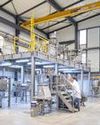
Food and Beverage Powder Producers Gain Scale-Up
Advantage with Tetra Pak's New Product Development Centre in France

2 mins
December 2025

Food & Beverages Processing
Eco-friendly Food Packaging Market Set to Surge Amid Growing Demand for Sustainable Solutions
The global eco-friendly food packaging market is poised for significant growth, driven by rising environmental awareness, stricter regulatory frameworks, and increasing consumer demand for sustainable packaging solutions.
2 mins
December 2025
Food & Beverages Processing
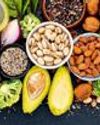
Functional Food Ingredients Market to Reach USD 232.40 Billion by 2034
The global functional food ingredients market is experiencing dynamic expansion as consumers increasingly prioritize nutrition, preventive health, and overall well-being.
3 mins
December 2025
Food & Beverages Processing
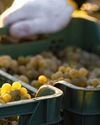
Digitizing Sustainability: A Path to Preventing Food Waste in the Supply Chain
Food waste is a pervasive issue that spans the entire journey of our meals, from the fields to our homes.
4 mins
December 2025

Food & Beverages Processing
Powerhouse Ranveer Singh unveils RANGEELA Vodka
ABD Maestro Pvt. Ltd., the super-premium and luxury spirits subsidiary of Allied Blenders and Distillers Limited (ABD), today announced launch of its homegrown RANGEELA Contemporary Indian Vodka.
1 mins
December 2025

Food & Beverages Processing
Kaatil Launches Hot Barbeque Sauce
Kaatil, one of India's leading hot condiments brands, has announced the expansion of its product portfolio with the launch of Hot Barbeque Sauce No. 9.
1 mins
December 2025

Food & Beverages Processing
Markem-Imaje Helps Catering Giant Elior Implement A Robust Rfid Solution to Reduce Food Waste and Gain Efficiency
Markem-Imaje, the global provider of end-to-end supply chain solutions and industrial marking and coding systems, has provided a printing and data management solution for catering expert Elior to reduce food waste and improve production efficiency.
2 mins
December 2025

Food & Beverages Processing
Driving Efficiency & Sustainability through Advanced Power Transmission Systems
In today’s industrial landscape, efficiency and sustainability are no longer optional; they're essential.
2 mins
December 2025

Food & Beverages Processing
CavinKare Strengthens its Beverages Portfolio With Nostalgia-Inspired Milkshakes for Children's Day
CavinKare, under its beverage division, has strengthened its Cavin's portfolio with the addition of Orange Cream Biscuit Milkshake and Premium Malt Milkshake variants.
1 mins
December 2025
Food & Beverages Processing
Tetra Pak launches Integrated Heat Pump system to electrify pasteurization and cut energy use by up to 77%
New Tetra Pak® Integrated Heat Pump system delivers combined heating and cooling to pasteurization, enabling up to 77% energy savings while reducing CO₂ emissions and operating costs1 Markem-Imaje, the global provider of end-to-end supply chain solutions and industrial marking and coding systems, has provided a printing and data management solution for catering expert Elior to reduce food waste and improve production efficiency. Elior is a very well-established business in Italy with a long history of foresight, strategy and innovation, which was born in the Genoa shipyards in 1954, and has today ten thousand collaborators, two thousand restaurants and over 106 million customers every year. Part of their strategy to approach new markets is through the Division called SMB (Small-Medium-Business), offering innovative and modular solutions for small and medium-sized food outlets. The SMB Division of the company has identified four formats which focus on the line of products in a protective atmosphere without the addition of chemical preservatives, which offers - among the first, main courses and side dishes - over two hundred recipes prepared by Elior nutritionists and chefs. The gastronomic offer varies according to seasonality and ranges from traditional Italian dishes such as lasagna Bolognese, to light and genuine dishes, such as sliced chicken and steamed spinach, all the way to vegan, or vegetarian dishes. Elior thus offers different distribution modules to accommodate different needs and environments. Urban 360, for example, involves the installation of a smart fridge, which allows the distribution of ready meals 24/7 without the obligation to book. The intelligent locker opens when you make a payment through an application or by approaching a debit card or ticket card. The display case, equipped with RFID technology, recognizes the user and the identification number of the dish. The Market, on the other hand, is an open space with a display fridge, where you can choose dishes on the spot, a real “mini market” where the employee can select their lunch menu at their convenience, always supported by the availability of the staff at the cash register. All this information and data management is today managed automatically in a production hub in Zola Predosa with the help of Markem-Imaje's CoLOS® software. “We needed a partner to help us to connect the product digitally and, in Markem-Imaje, we identified the skills and products necessary to move in this direction. What convinced us was the possibility of having a single implementor for all technological areas, with efficient Print & Apply labellers, software with proven stability and robustness, RFID Technology, and knowledge of IT industrial environments,” says Luca Lomolino, IT Application Manager at Elior Italy. “The Elior project immediately thrilled us because it includes some of the core values of the Markem-Imaje philosophy, such as the fight against food waste. Thanks to this project, Elior can automatically establish which dishes need to be replenished and send only what is consumed, as well as manage deadlines in a predictive manner,” explains Gianluca Angelici, Solutions Architect at Markem-Imaje Italy. “Thanks to our knowledge of industrial IT environments and the versatility of the CoLOS® software, we were able to communicate directly with Elior's ERP, managing production in real time, coding the human-readable information on the label, storing other data on the RFID antenna and marking the lot on the edge of the tray.” Additionally, two 2200 Series Print & Apply systems have been installed on the production lines. These systems ensure the precise application of labels that include both human-readable information and data encoded on RFID tags, significantly improving product traceability, and ensuring compliance with European regulations. “We are deeply proud to be an integral part of the innovative food-to-consumer solution developed by Elior,” Angelici adds. through smarter heat recovery and reuse. The new Tetra Pak® Integrated Heat Pump system builds on the company's existing pasteurization technology by introducing a high-efficiency electric heat pump that recovers and reuses heat from the pasteurization process. For every 1 kWh of electricity used, the system can recover up to 2 kWh of otherwise wasted heat – making it up to three times more efficient than a traditional boiler2. By combining heating and cooling in one integrated solution, the system also optimises energy use across the pasteurization process. It upgrades low-temperature waste heat to higher temperatures and generates ice water for cooling. This dual function helps lower total energy consumption and operating costs1, while supporting producers in reducing reliance on fossil fuels and exposure to volatile energy prices2. F&B producers operating large scale pasteurization processes, such as fruit juice, chilled milk, cheese and ambient milk pre-treatment pasteurization, stand to achieve substantial savings. A typical dairy production line, for example, could reduce energy consumption for pasteurization by up to 77%, making operating expense (OPEX) savings of up to €230,000/year and reducing CO2 emissions by up to 650 tonnes/year.3 Nicole Uvenbeck, Director Factory Sustainable Solutions and OEM Components at Tetra Pak, comments: \"Food and beverage producers need smarter ways to reduce energy use without compromising performance. The new heat pump system delivers up to three times the efficiency of conventional boilers, recovering 2 kWh of heat for every 1 kWh of electricity4. By combining deep processing expertise with a global network, we work closely with customers to select the right solution and ensure seamless integration into their operations, supporting their shift toward more resilient, energy-efficient production.\" Fiona Liebehenz, Vice President Key Components, Plant Solutions and Channel Management at Tetra Pak, comments: \"We're proud that our longstanding experience in developing processing solutions for the food and beverage industry, together with a strong focus on innovation, has led to another important step forward. By blending advanced technology with a deep understanding of the daily challenges F&B producers face, we've developed a solution designed to make one of the most energy-intensive stages of food production more efficient.\"
2 mins
December 2025
Listen
Translate
Change font size