試す 金 - 無料
Memristors And Their Application In NEUROMORPHIC COMPUTING
Electronics For You
|August 2024
Venturing into memristor technology brings us nearer to brain-like Al. This leap could reshape how we think about computing.

Memristors, a portmanteau of ‘memory’ and ‘resistor,’ are a groundbreaking class of passive two-terminal circuit elements. First theorised by Leon Chua in 1971 and physically realised by HP Labs in 2008, memristors retain a state of resistance based on the history of voltage and current passed through them. This unique property makes them similar to synapses in the human brain, enabling them to play a crucial role in neuromorphic computing.
Fundamental principles of memristors
At their core, memristors operate on the principle that their resistance can change when an electric current is applied. This resistance remains until another current is applied to change it again, thanks to the movement of ions or vacancies within the memristor’s material, typically a thin film of metal oxide.
Key characteristics of memristors include their non-volatility, allowing them to retain their resistance state even when the power is off, which is essential for memory storage. They are also highly scalable, with the ability to be manufactured at nanoscale dimensions, facilitating high-density integration. Moreover, memristors consume less power compared to traditional memory devices due to their efficient operation.
Neuromorphic computing: An overview


このストーリーは、Electronics For You の August 2024 版からのものです。
Magzter GOLD を購読すると、厳選された何千ものプレミアム記事や、10,000 以上の雑誌や新聞にアクセスできます。
すでに購読者ですか? サインイン
Electronics For You からのその他のストーリー
Electronics For You
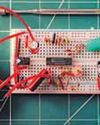
FM RADIO RECEIVER Using TDA7000
This FM radio receiver demonstrates the practical application of RF engineering and analogue signal-processing techniques.

4 mins
July 2026

Electronics For You
Latest 3D chip stacking method could extend Moore's Law
Engineered by a team at the University of Illinois Grainger College of Engineering in Urbana-Champaign, the process uses ultrathin single-crystalline silicon nanomembranes transferred at temperatures below 200°C, avoiding heat damage to underlying circuits.
1 min
July 2026
Electronics For You
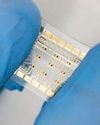
Stretchable patch detects heart failure risks
Researchers at the University of Chicago's Pritzker School of Molecular Engineering in Chicago have developed an AI-powered stretchable computing patch capable of processing health data directly on the body in milliseconds, eliminating the need for external servers or wireless connections.
1 min
July 2026

Electronics For You
Simple 12V To 24V VOLTAGE DOUBLER
Many electronic circuits require a voltage higher than that available from the power supply.
3 mins
July 2026
Electronics For You
Crystal stress method reshapes nanochip manufacturing techniques
Research conducted at Rice University in Houston, Texas, demonstrated that alpha-molybdenum trioxide crystals can deform under an electron beam, generating highly ordered nanoscale wrinkles that function as optical gratings for guiding and manipulating light on chips.
1 min
July 2026

Electronics For You
Hidden Costs In IoT PRODUCT DEVELOPMENT
Hardware mistakes do not show up early in development. The most expensive hardware mistakes are rarely the obvious ones. Decisions made during design, testing, and architecture shape costs for years.
7 mins
July 2026
Electronics For You
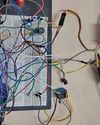
Temperature-Based DUAL SAFETY SYSTEM For Smart Homes
A temperature-based dual safety system addresses common household risks through intelligent control.
4 mins
July 2026
Electronics For You
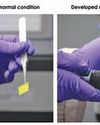
Smart material developed to fight counterfeiting
Engineered by a team at the Indian Institute of Technology Guwahati, the technology uses perovskite nanocrystals with a double-layer protective coating that improves resistance to heat and chemicals while maintaining optical performance.
1 min
July 2026

Electronics For You
President Murmu inaugurates semiconductor training fab at IISc
On June 3, 2026, President Droupadi Murmu inaugurated IISc Bengaluru’s Semiconductor Training Fab at CeNSE, established with support from the Ministry of Tribal Affairs.
4 mins
July 2026

Electronics For You
Quantum Li-Fi secures networks
Research conducted in Germany by a consortium led by KEEQuant and supported by Fraunhofer IPMS highlights a pathway toward flexible, high-security next-generation wireless networks.
1 min
July 2026
Listen
Translate
Change font size