
Magzter GOLDで無制限に
10,000以上の雑誌、新聞、プレミアム記事に無制限にアクセスできます。
試す 金 - 無料
31/ATLAS INTERCEPTOR: HOW STARSHIP BOOSTERS COULD REACH THE EDGES OF OUR SYSTEM
AppleMagazine
|February 27, 2026
The concept sounds reckless at first glance: send a spacecraft plunging toward the Sun, skim the corona at blistering speed, then ignite solid rocket boosters at the moment of closest approach to slingshot outward in pursuit of an interstellar object already racing away from our solar system.
-
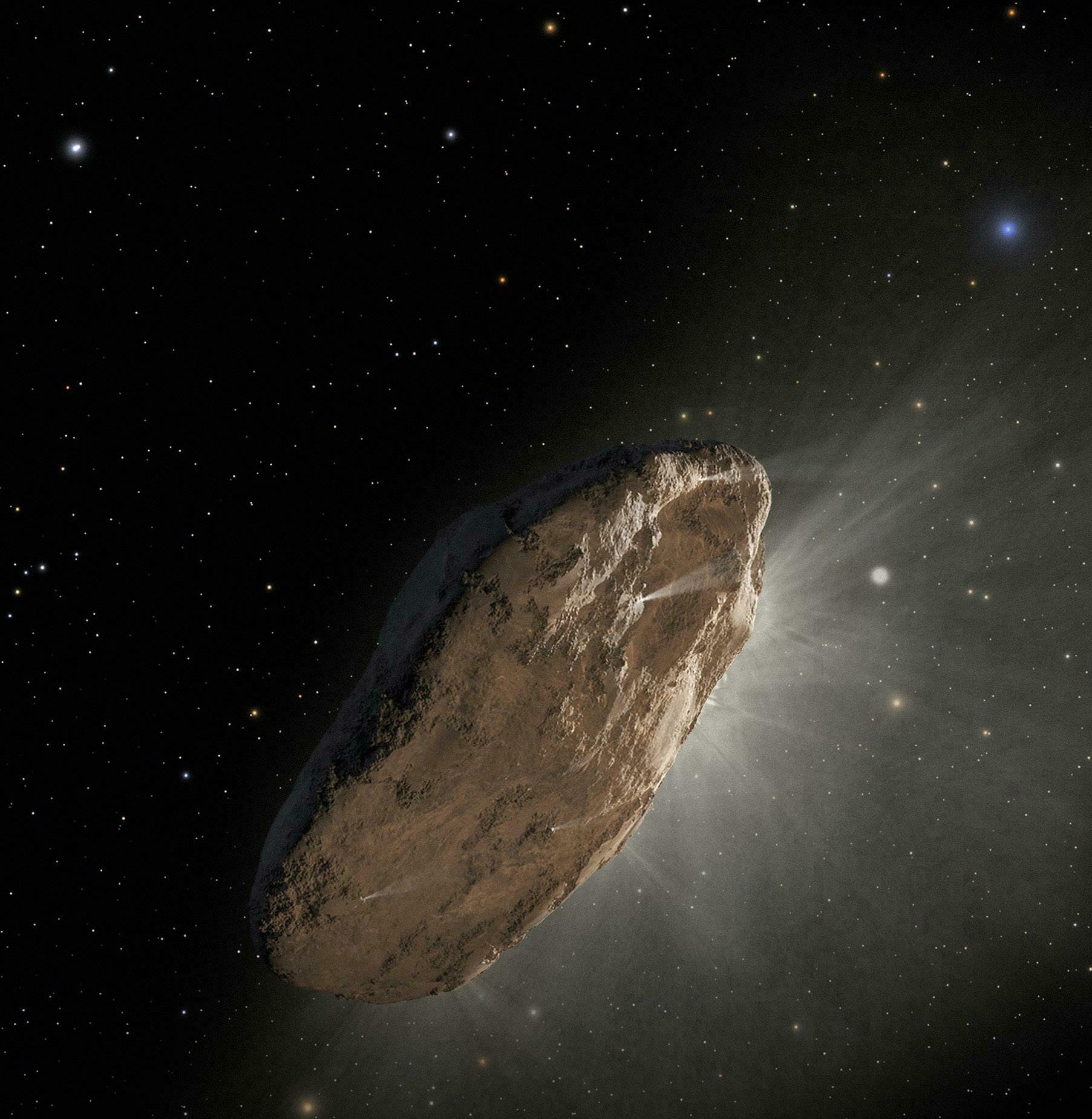
Yet behind that audacious profile lies serious orbital mechanics — and a growing interest in whether humanity could still catch 3I/ATLAS, the third confirmed interstellar visitor ever detected.
A RARE COSMIC TARGET
3I/ATLAS joins a very short list of known objects that originated beyond our solar system. The first, 1I/'Oumuamua, stunned astronomers in 2017 with its unusual shape and acceleration. The second, 2I/Borisov, discovered in 2019, behaved more like a conventional comet but confirmed that interstellar wanderers pass through our system more often than previously assumed.
Now 3I/ATLAS — detected by the ATLAS sky survey — is already outbound, moving on a hyperbolic trajectory that guarantees it will never return. Like its predecessors, it is traveling at extraordinary speed relative to the Sun. That velocity makes any intercept mission technically daunting.
By the time a spacecraft could launch under conventional mission timelines, the object would be far beyond the orbit of Jupiter, heading toward the outer reaches of the solar system and beyond.
Still, some mission designers believe there may be a narrow window — if propulsion and trajectory design push beyond traditional limits.
THE SOLAR DIVE STRATEGY
The boldest concept centers on a maneuver known as a solar Oberth burn.
In orbital mechanics, a rocket burn executed at the point of highest velocity in a gravitational field produces the greatest change in energy. For a spacecraft orbiting the Sun, that point would be at perihelion — its closest approach.
The idea is to send a probe inward first, falling toward the Sun to build up enormous speed. At that closest approach, when the spacecraft is moving fastest, it would ignite high-thrust boosters. The result could be a dramatic increase in outbound velocity, potentially enough to match or exceed the escape speed needed to chase 3I/ATLAS.

このストーリーは、AppleMagazine の February 27, 2026 版からのものです。
Magzter GOLD を購読すると、厳選された何千ものプレミアム記事や、10,000 以上の雑誌や新聞にアクセスできます。
すでに購読者ですか? サインイン
AppleMagazine からのその他のストーリー

AppleMagazine
RIVIAN TEAMS WITH REDWOOD MATERIALS ON BATTERY STORAGE AT ILLINOIS PLANT
Rivian is extending the life of its electric-vehicle batteries in a new partnership with Redwood Materials, the battery recycling and energy company founded by Tesla co-founder JB Straubel.

4 mins
April 17, 2026

AppleMagazine
THIS IS WHY TIM COOK RECOMMENDS USING THE SMARTPHONE LESS
In an industry built on screen time, engagement metrics, and constant connectivity, Apple CEO Tim Cook has taken a notably measured stance: people should not spend all their time on their smartphones.
2 mins
April 17, 2026

AppleMagazine
NEW HUAWEI FOLDABLE ECHOES DESIGN OF APPLE'S RUMORED IPHONE FOLD
Huawei has unveiled the Pura X Max, introducing what it describes as the industry's first “wide-format” foldable smartphone — a design choice that closely resembles ongoing speculation about Apple's long-rumored iPhone Fold.
2 mins
April 17, 2026

AppleMagazine
META POISED TO SURPASS GOOGLE IN DIGITAL AD REVENUE FOR FIRST TIME, REPORT SAYS
Meta Platforms is on track to overtake Alphabet's Google in global digital advertising revenue for the first time, according to new industry forecasts.
3 mins
April 17, 2026

AppleMagazine
UBER'S ROBOTAXI BET AND WHAT IT COULD MEAN FOR DRIVERS
Uber’s decision to commit more than $10 billion to robotaxis marks one of the clearest signs yet that the company no longer sees autonomous vehicles as a side experiment.
6 mins
April 17, 2026
AppleMagazine
AMAZON STRIKES $11.57 BILLION GLOBALSTAR DEAL TO STRENGTHEN SATELLITE PUSH AGAINST STARLINK
Amazon has agreed to acquire satellite communications company Globalstar in an $11.57 billion transaction, giving the e-commerce and cloud giant a major new foothold in the increasingly strategic low-Earth-orbit connectivity race.
5 mins
April 17, 2026

AppleMagazine
PRIME VIDEO BUNDLES APPLE TV AND PEACOCK IN LIMITED-TIME OFFER
Amazon is introducing a new streaming bundle that brings together Apple TV and Peacock Premium Plus under Prime Video for a discounted monthly price.
2 mins
April 17, 2026

AppleMagazine
OPENAI LAUNCHES GPT-5.4-CYBER FOR VETTED SECURITY PROFESSIONALS
OpenAI has introduced GPT-5.4-Cyber, a specialized version of its GPT-5.4 model built for defensive cybersecurity work, while also significantly expanding its Trusted Access for Cyber program to reach thousands of verified individual defenders and hundreds of security teams.
5 mins
April 17, 2026

AppleMagazine
WHY MORE AMERICANS ARE TURNING TO AI FOR HEALTH ADVICE
A growing number of Americans are beginning to treat artificial intelligence as a first stop for health questions, even as most still place greater trust in doctors, nurses, and other licensed professionals.
5 mins
April 17, 2026

AppleMagazine
WDC26
WHAT APPLE IS EXPECTED TO REVEAL DURING ITS ANNUAL DEVELOPER EVENT
4 mins
April 17, 2026
Listen
Translate
Change font size