試す 金 - 無料
ROAR POWER
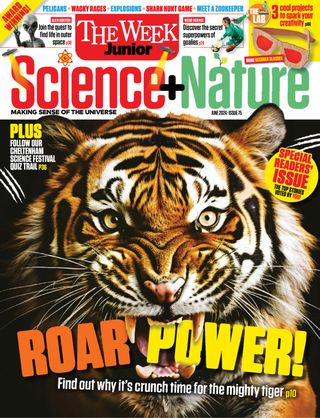
The Week Junior Science+Nature UK
|Issue 75
Scratch the myths - Isabel Thomas earns her stripes and reveals the truth behind tigers' extra-ROAR-dinary powers.
-
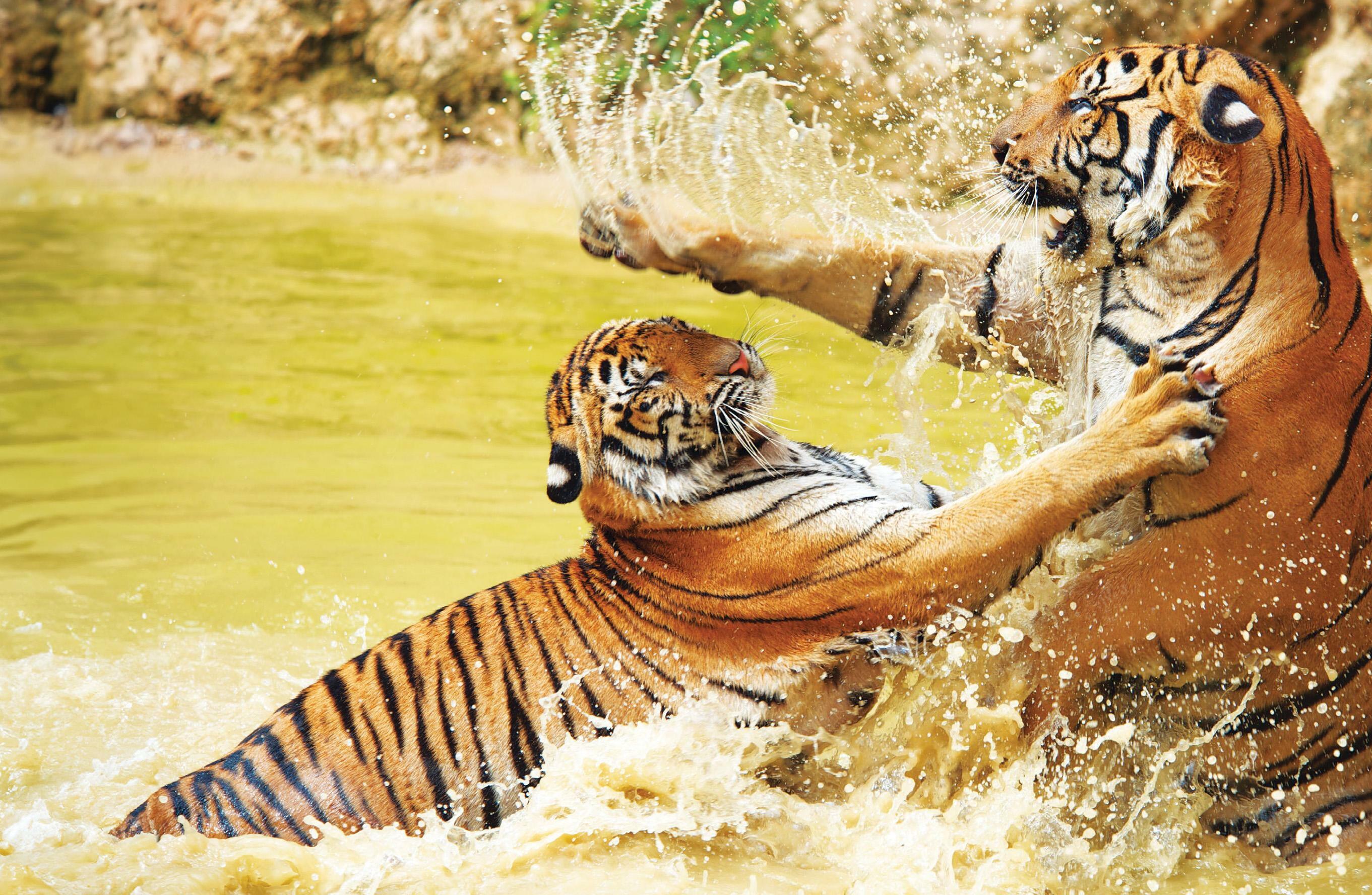
In March, we asked you what would make a truly un-put-downable issue of Science+Nature. We put you in the editor’s seat and you voted for the subjects you most love reading about. Animal stories were by far your favourite, and tigers came out on top.
These mighty predators have inspired awe and wonder since ancient times. Today, scientists are discovering that tigers are stranger than myths and even more epic than legends. Let’s follow the tracks of these fascinating and fierce creatures to find out why fact beats fiction every time.
Biggest of the big
Big cats come in lots of shapes and sizes, but tigers take the crown. Their bodies are up to three metres long, with another metre of tail on top. A male tiger standing on its hind legs towers above a typical human, and weighs more than a motorbike.
Despite their size and power, tigers don’t get lucky every time they hunt. They can accelerate to up to 40 miles per hour, but are only built for short bursts of speed. Most of their prey have evolved to run fast too, and can mostly go for longer. It is estimated that for every 20 animals a tiger chases, it only catches one.
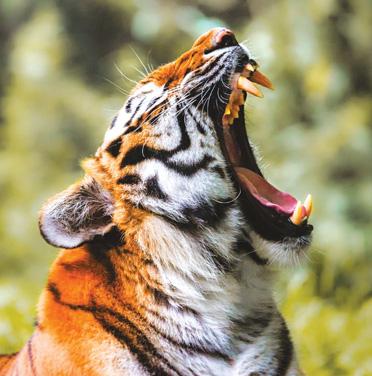
However, being supersized does give tigers a wider choice of food. Pouncing up to eight metres on powerful back legs, they use their huge bodies to attack deer and wild boar. Larger tigers are strong enough to tackle crocodiles, buffalo and even young elephants. To increase their chances, the cats ambush their prey, creeping up as close as possible before striking.
On the prowl

このストーリーは、The Week Junior Science+Nature UK の Issue 75 版からのものです。
Magzter GOLD を購読すると、厳選された何千ものプレミアム記事や、10,000 以上の雑誌や新聞にアクセスできます。
すでに購読者ですか? サインイン
The Week Junior Science+Nature UK からのその他のストーリー
The Week Junior Science+Nature UK
ANIMAL ISLANDS
Hop aboard as Daisy Dobrijevic sets sail to discover the world's most unusual beasts.

5 mins
March 2026

The Week Junior Science+Nature UK
Wildlife watch
Take a walk on the wild side with Jenny Ackland.
1 mins
March 2026

The Week Junior Science+Nature UK
Pushmeet Kohli
Meet the tech genius who trains the smart computers that are changing your world.
3 mins
March 2026

The Week Junior Science+Nature UK
New map reveals secrets hidden under Antarctic ice
A new map of Antarctica has A revealed thousands of hills Are revealed thousands of hills and valleys buried under its thick layers of ice.
1 min
March 2026

The Week Junior Science+Nature UK
Why do dolphins jump out of the water?
Discover what makes these graceful ocean mammals leap for joy.
2 mins
March 2026
The Week Junior Science+Nature UK
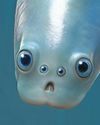
Ancient fish had four eves
Ancient vertebrates (animals that have backbones) had four eyes that worked a lot like ours, new research shows.
1 min
March 2026

The Week Junior Science+Nature UK
How? What? Why?
Set your curiosity free as Mike Rampton explains how asking questions changes the world.
5 mins
March 2026

The Week Junior Science+Nature UK
Bye-bye bitter grapefruits
Scientists have found a way to make grapefruits less bitter.
1 min
March 2026
The Week Junior Science+Nature UK
Spreading seeds of hope
Meet the scientists who are using drones to seed lost landscapes.
1 mins
March 2026
The Week Junior Science+Nature UK
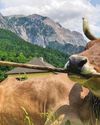
Udderly brilliant cow seen using tools
A talented Austrian cow has shecked researchers by using both ends of a broom as a grooming tool.
1 min
March 2026
Listen
Translate
Change font size