試す 金 - 無料
Scientists as Strangers
Scientific American
|July/August 2026
Researchers have an image problem
Scientists, in the popular imagination, are oddballs. A chemist or geologist may be a genius, it is generally agreed, but the heightened mental acuity comes at great social and emotional cost, rendering the scientist a misfit, a weirdo, a robot in human clothing. This perception troubles me.
In a 50-year career spent writing about science, I have interviewed hundreds of scientists, from young postdocs to elderly laboratory directors, including several Nobel Prize winners. None of them fit within the confines of the stereotype.
True, a few proved obnoxious, even insufferable, but not in a stereotypical way. So why do I continue to bump into this cliché wherever I go? The following statement, for example, jumped out at me from a New York Times obituary for slain Massachusetts Institute of Technology physicist Nuno Loureiro: "Far from the stereotypical scientist holed up in his lab with little to say to the outside world, Dr. Loureiro was known for being warm, down to earth-even stylish." Apparently such attributes are so out of place in the personality of a scientist as to merit special mention.
Recently a group of high school physics teachers joined me via Zoom for a discussion of two of my books. The first question on their prepared list was, "How are the people who made big contributions to science similar to and different from 'normal' people?" Actor Jim Parsons, who played string theorist Sheldon Cooper in nearly 300 episodes of CBS sitcom The Big Bang Theory between 2007 and 2019, won four Emmy Awards and a
Golden Globe for his portrayal of the archetypal socially inept scientist. Children asked to create a picture of a scientist most often draw a white man wearing a lab coat and glasses, Marie Curie and George Washington Carver notwithstanding.
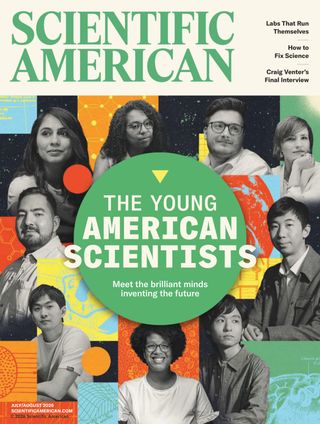

このストーリーは、Scientific American の July/August 2026 版からのものです。
Magzter GOLD を購読すると、厳選された何千ものプレミアム記事や、10,000 以上の雑誌や新聞にアクセスできます。
すでに購読者ですか? サインイン
Scientific American からのその他のストーリー
Scientific American
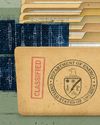
Let There Be Weapons
The Department of Energy’s new Genesis Mission promises AI-accelerated discovery. Seven of its first 26 challenges focus on nuclear weapons and national security

4 mins
July/August 2026

Scientific American
How to Fix Science
The federal funding system for scientific research in the U.S. needs reform
9 mins
July/August 2026

Scientific American
Robots Can Now Fold Your Laundry
Home-helper tasks are becoming easier for robotic assistants
4 mins
July/August 2026
Scientific American
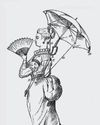
50, 100 & 150 Years
NATURAL FISSION REACTOR
3 mins
July/August 2026

Scientific American
Anna Ho
Describing the characteristics of short-lived astrophysical events
1 mins
July/August 2026
Scientific American
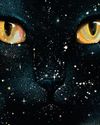
THE SOLILOQUY OF SCHRÖDINGER'S CAT
A MEDITATION ON LIFE AND THE VON NEUMANN–WIGNER INTERPRETATION OF QUANTUM MECHANICS
1 min
July/August 2026

Scientific American
Mikhail Kolmogorov
Developing software to reveal large genetic changes that lead to cancer
1 mins
July/August 2026

Scientific American
Jaye Gardiner
Learning how the matrix around cells and tissues impacts cancers
1 mins
July/August 2026

Scientific American
Timnit Gebru
On safeguarding independent research in the age of big tech
3 mins
July/August 2026
Scientific American
A Youthful Illusion Sharpens Memory
By making people feel as if their face is a younger version of itself, researchers can bring childhood memories into sharper focus
4 mins
July/August 2026
Listen
Translate
Change font size