
Magzter GOLDで無制限に
10,000以上の雑誌、新聞、プレミアム記事に無制限にアクセスできます。
試す 金 - 無料
Prevention Intervention
Scientific American
|October 2025
The evidence is clear that racial discrimination, physical health and the environment contribute to Alzheimer's and other dementias. Now researchers are looking for ways to intervene
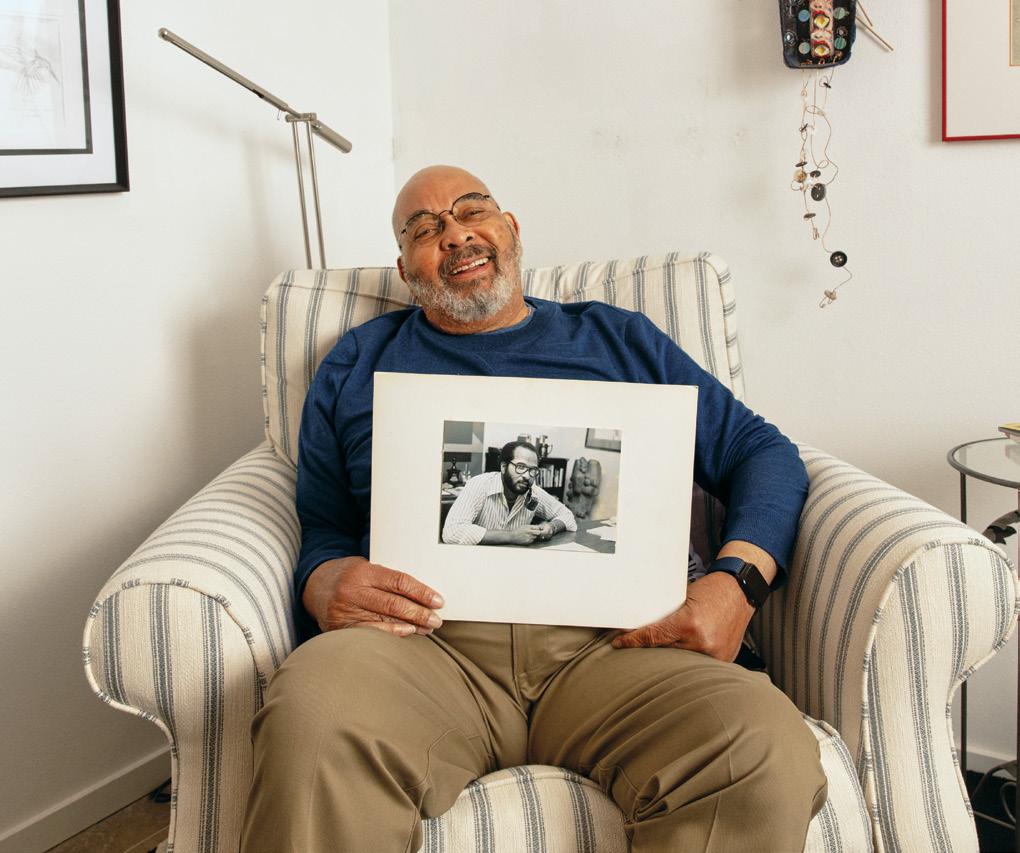
ABOUT FOUR YEARS AGO Clifford Harper, then 85, announced to his wife that he was quitting alcohol. Harper wasn't a heavy drinker but enjoyed a good Japanese whiskey. It was the first of a series of changes Linda Kostalik saw in her husband. After he'd cleared out the liquor cabinet, Harper, a prolific academic who has authored several books, announced he was tired of writing. Next the once daily runner quit going to the gym. Kostalik noticed he also was growing more forgetful.
The behaviors were unusual enough that, at an annual physical, the couple's physician recommended they consult a neurologist. A battery of medical tests and brain scans revealed that Harper's surprising actions and memory loss were the result of dementia.
Harper's neurologist at Oregon Health Sciences University (OHSU) asked whether he might like to enroll in a long-running study of dementia in African Americans. The study's focus on Black health piqued Harper's interest, and he decided to participate for as long as he could. "I hope it will help other men like me," Harper says.
As a Black American, Harper faces a risk of Alzheimer's disease and other dementias that is twice that of white Americans his age. The reasons for this disparity are still unclear, but researchers know Black Americans are particularly vulnerable to a number of confirmed risk factors, such as living in areas with higher rates of air pollution and encountering difficulties accessing healthy foods and high-quality education. Some studies suggest that experiencing racism and other forms of discrimination contributes to a higher risk of cognitive decline. Race or gender discrimination also raises a person's risk of heart disease and, as a result, some forms of dementia.

このストーリーは、Scientific American の October 2025 版からのものです。
Magzter GOLD を購読すると、厳選された何千ものプレミアム記事や、10,000 以上の雑誌や新聞にアクセスできます。
すでに購読者ですか? サインイン
Scientific American からのその他のストーリー
Scientific American
Earthquake Life
Yellowstone quakes spark bursts of microbial growth underground

2 mins
March 2026
Scientific American
Sailing the Sun
By designing vertical panels that move in a gale, two Swedish inventors are unlocking a solar future for the windswept north
9 mins
March 2026
Scientific American
Covered in Bees
Ancient bees burrowed deep into discarded mammal jawbones
2 mins
March 2026
Scientific American
Fire Starters
Ancient humans were making fire 350,000 years earlier than thought
3 mins
March 2026
Scientific American
Relativity Revealed
Physicists have observed a bizarre prediction of special relativity for the first time
8 mins
March 2026

Scientific American
Everything You Wanted to Know about Polyamory (but Were Afraid to Ask
The practice is not a faddish excuse to sleep around, research shows. And it has deep roots in American culture
14 mins
March 2026

Scientific American
Let the Rivers Run
An investigation into the rights of nature
4 mins
March 2026

Scientific American
Hidden Proof
\"Effective zero knowledge\" beats long-standing cryptographic impossibilities
2 mins
March 2026

Scientific American
The Universe's Weirdest Optical Illusions
Sometimes the farther away an object is, the bigger it seems to be
4 mins
March 2026

Scientific American
Living in the COPILOT SOCIETY
The promise and peril of artificial intelligence everywhere
2 mins
March 2026
Listen
Translate
Change font size