
Magzter GOLDで無制限に
10,000以上の雑誌、新聞、プレミアム記事に無制限にアクセスできます。
試す 金 - 無料
Ready for power shift
Down To Earth
|March 16, 2025
An unprecedented drought forces hydropower- dependent Zambia to diversify its energy portfolio, embrace solar power
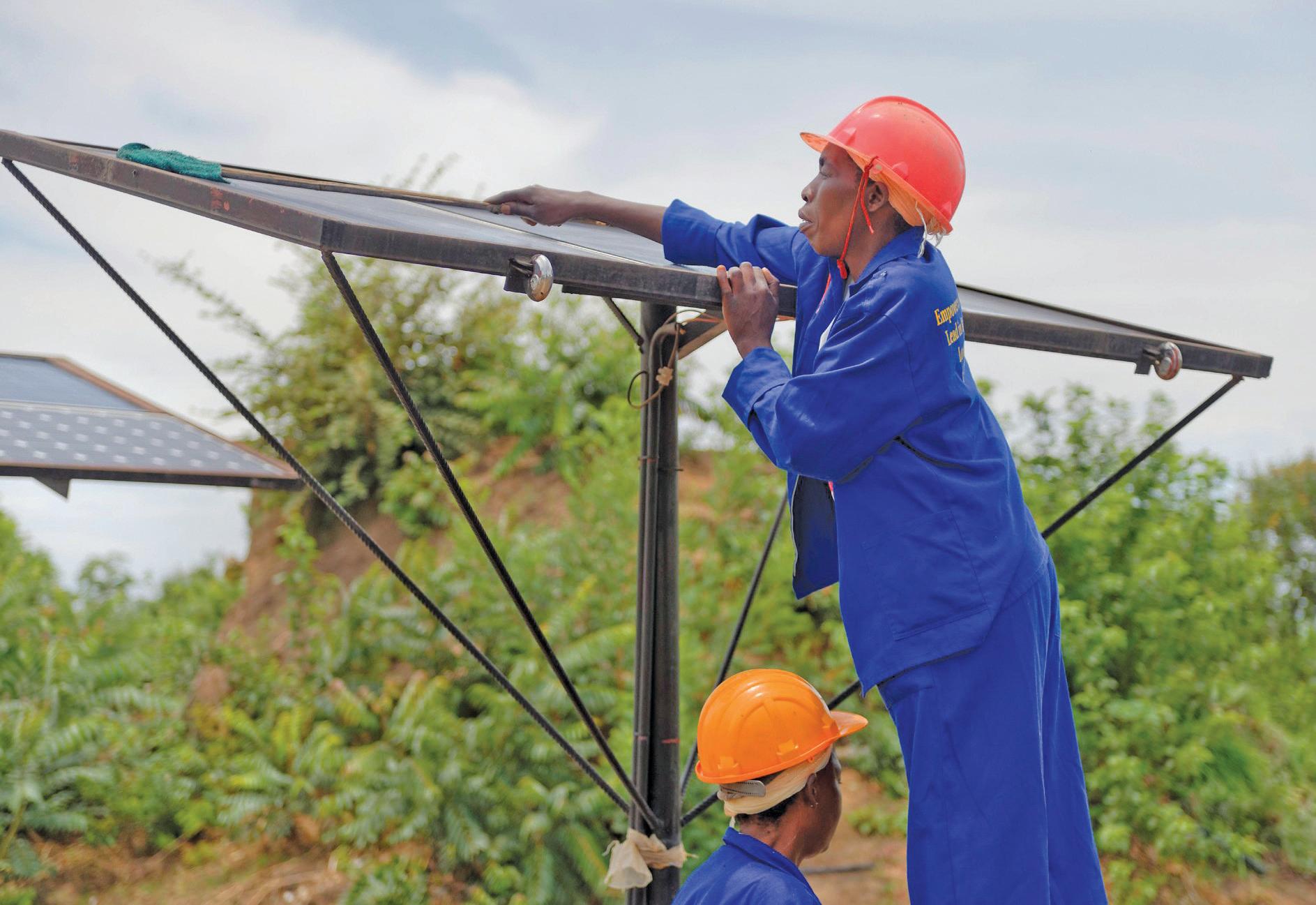
ZAMBIA, ENDURING the worst drought in at least half a century, is scrambling for ways to avert a humanitarian catastrophe and an economic collapse. Despite a few spells of rain in January and February, large parts of the country continue to reel from severe food and energy crises. Estimates by the UN Office for the Coordination of Humanitarian Affairs show that the drought, which forced the government to declare a national emergency in February 2024, has affected over 1 million farming families (6.6 million people) who depend on rain-fed agriculture. Millions of people are in urgent need of assistance as hunger is rising along with the burden of waterborne diseases like cholera.
In a significant blow to Zambia's economy, which is among the poorest in the world and is recovering from a debt crisis, the drought has throttled its hydropower plants that cater to 83 per cent of the country's electricity demand. Major facilities like the 1,080 megawatt (MW)-Kariba dam faced near total shutdown as the lake Kariba approached record low levels. Though the recent spells of rain raised the lake's water level to 477.82 m by February 20, it is just 7.27 per cent of its usable storage capacity, according to the Zambezi River Authority, and does little to improve the prolonged hours of power disruptions across the country. This has disrupted small-scale industries and businesses, which, according to Zambia’s finance ministry, contribute 70 per cent to GDP (gross domestic product) and provide 88 per cent of employment.
In Garden Chilulu, a slum in Lusaka, the capital of Zambia, Joel Sanyo tells

このストーリーは、Down To Earth の March 16, 2025 版からのものです。
Magzter GOLD を購読すると、厳選された何千ものプレミアム記事や、10,000 以上の雑誌や新聞にアクセスできます。
すでに購読者ですか? サインイン
Down To Earth からのその他のストーリー

Down To Earth
THINK TWICE BEFORE FELLING SAL TREES
Many trees considered to be affected by sal borer in the 1990s are still alive today

1 mins
February 16, 2026

Down To Earth
EDGE OF SURVIVAL
Caste divides deny marginalised communities land, resources and essential aid, leaving them more vulnerable to climate disasters
6 mins
February 16, 2026

Down To Earth
A WISH LIST?
Union Budget for 2026-27 conveys the impression of a roll-call of intentions and ambitious proposals, with little detail on their formulation
6 mins
February 16, 2026
Down To Earth
Break down the gender wall
THE RULING National Democratic Alliance (NDA) government has been heavily invested in the goal to make India a developed economy by 2047.
2 mins
February 16, 2026

Down To Earth
MENSTRUAL HEALTH, NOW A FUNDAMENTAL RIGHT
In a landmark judgement, the Supreme Court has recognised menstrual health and hygiene as a fundamental right under Article 21 of the Constitution of India, which guarantees the right to life and dignity.
8 mins
February 16, 2026

Down To Earth
Of devolution and new disasters
The 16th Finance Commission pushes for changes in view of new fiscal and climatic conditions
11 mins
February 16, 2026
Down To Earth
Rising risks of plastics
NEGATIVE IMPACTS on human health due to emissions linked to the plastic lifecycle could double by 2040, according to a study published in The Lancet Planetary Health in January.
1 min
February 16, 2026

Down To Earth
GAP BETWEEN EPIDEMICS NARROWING
A watershed-based and landscape-level approach is needed to address forest degradation
2 mins
February 16, 2026
Down To Earth
WAITING TO STRIKE
Sal heartwood borer is considered the biggest threat to forestry in India, especially to the sal tree, where it lives and breeds.
11 mins
February 16, 2026

Down To Earth
A SPRING DELIGHT
Mustard flowers are not meant only for the eyes. Invite them to your plate once in a while
3 mins
February 16, 2026
Listen
Translate
Change font size