
Magzter GOLDで無制限に
10,000以上の雑誌、新聞、プレミアム記事に無制限にアクセスできます。
Disturbed frontier
Down To Earth
|April 01, 2023
Restoration of degraded forests is the only way to curb monkey menace in Karnataka and to tackle the outbreaks of monkey fever in humans

THE COVID-19 pandemic has demonstrated the devastating impact of a zoonotic disease. While the way to avert such pandemics is to break the chain of transmission from wildlife to humans, such efforts do not always receive due attention nor are implemented with scientific rigour. One such zoonotic illness where spillover events appear to have increased, resulting in recurring outbreaks, is Kyasanur forest disease (KFD) or monkey fever. The illness, named after Kyasanur forest in the Western Ghats, where it originated, is a haemorrhagic fever borne by the tick, Haemaphysalis spinigera. It has a fatality rate of 3-5 per cent. Researchers believe that the disease was for centuries endemic to the forests of the Western Ghats, circulating silently among primates and ticks. It was first identified in 1957 after an outbreak in a Kyasanur forest village in Shivamogga district of Karnataka. Though outbreaks have remained largely confined to the area, the disease in the past few decades has begun to spread to other states, with Tamil Nadu and Kerala reporting KFD for the first time in 2013, followed by Goa in 2015 and Maharashtra in 2016. Today, India records 400-500 cases a year, as per a 2019 study published in the journal GeoHealth. What's worrying is that an article published in Reviews in Medical Virology in 2006 highlighted rising cases of KFD in Karnataka from January 1999 through January 2005, despite routine vaccination.

このストーリーは、Down To Earth の April 01, 2023 版からのものです。
Magzter GOLD を購読すると、厳選された何千ものプレミアム記事や、10,000 以上の雑誌や新聞にアクセスできます。
すでに購読者ですか? サインイン
Down To Earth からのその他のストーリー
Down To Earth
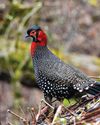
KING OF BIRDS
Revered for centuries, western tragopan now needs protection as its forests shrink, human pressures mount

3 mins
December 16, 2025
Down To Earth
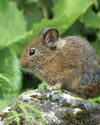
WHISKERS ALL AQUIVER
Climate change threatens creatures that have weathered extreme environments for thousands of years
2 mins
December 16, 2025

Down To Earth
GOLDEN SPIRIT
Survival of the shy primate is closely tied to the health of Western Ghats
3 mins
December 16, 2025

Down To Earth
RINGED EYES IN THE CANOPY
Rapid habitat destruction forces arboreal langur to alter habits
2 mins
December 16, 2025

Down To Earth
HANGING BY THE CLIFF
The Himalaya's rarest wild goat is on the brink of local extinction
2 mins
December 16, 2025

Down To Earth
ANGEL OF THE BEAS
Conservation reserves, citizen science, and habitat protection give the Indus River dolphin a fighting chance in India
2 mins
December 16, 2025
Down To Earth
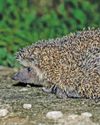
UNDER MOONLIT SCRUB
Survival of this hidden guardian tells us whether our scrublands still breathe
2 mins
December 16, 2025
Down To Earth
SYMBOL OF SILENT VALLEY
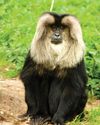
Lion-tailed macaque remains vulnerable despite past victories
2 mins
December 16, 2025

Down To Earth
THE APE IN OUR STORIES
India's only non-human ape species is a cultural icon threatened by forest fragmentation
2 mins
December 16, 2025

Down To Earth
SENTINEL OF THE HIGH COLD DESERT
The bird's evocative call may not continue to roll across the cold desert valley for long
3 mins
December 16, 2025
Translate
Change font size